Get Full Government Meeting Transcripts, Videos, & Alerts Forever!
Lago Vista board reviews how to handle variances and special exceptions in training session
Summary
At an Aug. 11 special meeting, Lago Vista’s Board of Adjustment received training from City Attorney Brad Bullock on the differences between variances and special exceptions, application completeness, timelines and appeals, plus practical guidance on height exceptions, privacy considerations and floodplain measurement.
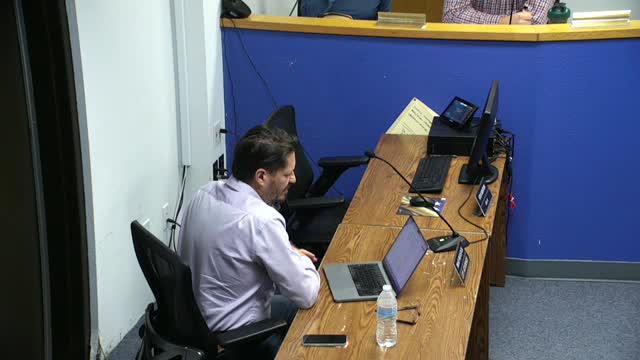
Lago Vista’s Board of Adjustment held a special training session Aug. 11 to review the board’s powers and procedures for handling variances and special exceptions, including application requirements, decision timelines and appeal paths.
City Attorney Brad Bullock led the session and told the board that, under the city ordinance, both variances and special exceptions are requests by a property owner to deviate from zoning or development standards. “Variances and special exceptions are really two flavors of the same thing,” Bullock said. He explained that the ordinance treats certain matters (for example, specific accessory‑structure standards and height exceptions up to a defined threshold) under the special‑exception process, while other departures use the variance procedure.
The training emphasized procedural rules and the applicant’s responsibilities. Bullock said applications must be administratively complete before the city’s review timeline begins and that staff should not put incomplete applications on an agenda. “If all of the material is not submitted and that is the duty of the applicant, then they don't get on an agenda,” he said. He told the board that the ordinance gives staff some discretion in determining what ancillary information is necessary, but the applicant bears the burden to provide the information and pay fees.
Bullock reviewed the statutory and ordinance timeframes the board must respect: once a complete application is filed the board normally must consider variances and special exceptions within a 60‑ to 180‑day window. If the board fails to act within that period, an applicant may have legal recourse; failure to act does not automatically approve an application. He…
Already have an account? Log in
Subscribe to keep reading
Unlock the rest of this article — and every article on Citizen Portal.
- Unlimited articles
- AI-powered breakdowns of topics, speakers, decisions, and budgets
- Instant alerts when your location has a new meeting
- Follow topics and more locations
- 1,000 AI Insights / month, plus AI Chat