Get Full Government Meeting Transcripts, Videos, & Alerts Forever!
Get email alerts on the Vapor Intrusion Tce Via Marina topic
No spam. Unsubscribe anytime.
Via Marina residents hear update on decades‑old TCE contamination; city and water board to expand investigation
Summary
Doug Talber briefed the INCO on trichloroethylene (TCE) vapor intrusion in Via Marina and surrounding neighborhoods, highlighting high soil‑gas readings at two probes, possible sewer‑line conduits, and calls for indoor testing and updated state screening standards.
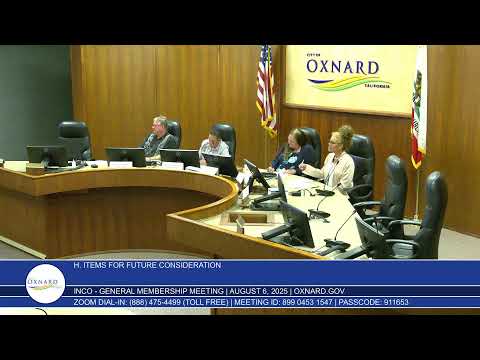
Doug Talber, chair of the Via Marina Neighborhood Council, updated the Inter‑Neighborhood Council on July 9 about continuing concerns over trichloroethylene (TCE) vapor intrusion tied to historical contamination in the Via Marina area.
Talber said the contamination traces to a former aerospace site that used cleaning solvents, which leaked into groundwater and soil decades ago. "They they test ground water for what they call trichloroethylene and a bunch of other what they call volatile organic compounds," Talber said, explaining the testing regime for groundwater and soil vapor probes.
Talber identified two nearby soil‑gas probes on Fifth Street where concentrations have spiked well above screening levels used by regulators. He described a pattern of readings that fell after heavy rains—when probes became saturated—and then rose in subsequent sampling cycles. Talber gave specific probe readings reported by the regional water quality district: one probe registered about 74,000 (units reported in the GeoTracker record) in mid‑July, while an adjacent probe was reported at about 120,000; by comparison the environmental screening level cited for residential indoor air is 16 parts per billion and the commercial screening level is about 100 parts per billion per cubic meter.
Water board staff and Talber told the council they are investigating possible pathways, including a cracked sewer line that may be acting as a conduit for vapors near the area where sewer mains turn at Patterson. Talber said the water board’s Jim Ryan tested water and emphasized that groundwater monitoring does not directly substitute for indoor air testing. Talber also said schools tested to date showed no TCE at indoor sampling but noted regulators have identified other volatile compounds, such as benzene, that may come from outdoor sources like vehicles.
Talber said regulators currently require multiple screening thresholds to be met before indoor testing is authorized and that some residents want more direct indoor sampling. He proposed pressing the state to update screening rules and testing methods and said he is working to arrange briefings with state Sen. Monique Limón’s office and others. Talber also said he invited a geohydrochemist to help the community understand the technical reports on GeoTracker, which he described as lengthy and difficult for nonexperts.
Council members asked about testing timing, risks to children and pregnant women, and whether barometric pressure was being considered in sampling. Talber said short‑term exposure guidelines are designed to protect pregnant people because prenatal exposure to TCE has been associated with fetal heart defects, and that pressure changes can substantially alter soil‑gas migration and short‑term indoor air concentrations.
Talber asked that the water board present a fuller briefing to the INCO in a future meeting once the agency compiles the next sampling results. The INCO did not take any formal action at the July 9 meeting; Talber said stakeholders are exploring expanded investigation and outreach to state officials to consider modernized testing protocols.
Attribution: Quotes and attributions in this report come from Doug Talber, Via Marina neighborhood council chair; Jim Ryan, water board staff (referenced); Michael Wolf (referenced); and others who spoke during the presentation.