Get Full Government Meeting Transcripts, Videos, & Alerts Forever!
Get email alerts on the Education topic
No spam. Unsubscribe anytime.
Central SD 13J reviews summer-school outcomes and warns funding uncertainty could affect programs
Summary
Board members heard a summer-school recap from Executive Director Julie Heilman, learned the district lost a $90,000 summer grant that was backfilled from other sources, and received back-to-school logistics including registration, transportation rules and start dates.
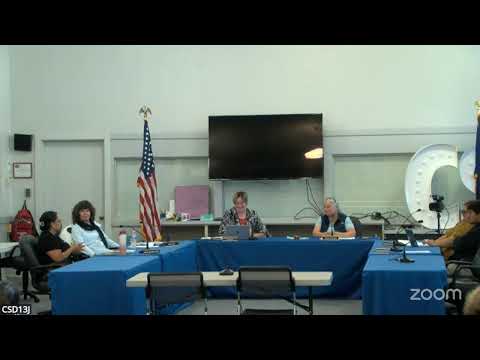
Julie Heilman, Central School District 13J’s executive director of teaching and learning, told the board at its regular meeting that summer-school programming ended last week with steady participation but an unexpected $90,000 state shortfall.
The presentation detailed enrollment and program partnerships and noted some of the lost grant money will be paid from other grants and carryover funds; district leaders cautioned that the gap could affect future planning and carryover into the 2025–26 year.
Heilman said district planners began preparing late in the school year and budgeted for multiple grants: state summer learning funds, the district’s migrant education grant, the federal 21st Century Community Learning Centers funding (passed through the state), the state Student Success Act funds and high-school-success grants. “We lost about $90,000 in our projected plan,” Heilman said. She described staff adjustments that preserved staffing levels and student counts while using other grant sources to cover the shortfall.
Superintendent Cease (listed in meeting discussion) added the loss was sudden: “That was not expected. It was an email that I got on a Friday, and Julie and I had to pivot pretty quickly because the next week, we were going into summer school,” and said some of the funds being used can carry into the school year.
Nut graf: The district presented participation numbers and community partnerships while warning that late state and federal allocations are delaying final budget decisions for the upcoming school year.
Most-critical details and outcomes - Enrollment: 167 elementary students (students who were kindergarten–fourth grade last year) attended summer programming at Independence Elementary; 31 students attended the middle-school track at Talmadge. - High school credit recovery: an online program served “almost 134” students; Heilman said about four students met graduation credit requirements over the summer. An on-site credit-recovery cohort of 28 students worked with two teachers for multiple weeks; many earned a half-to-full credit. - Partnerships: Western Oregon University (pool access after YMCA pool closure), YMCA, Independence Library, Independence Theater, the district’s migrant education program and LaCima were named as partners for curriculum, enrichment and field trips.
Heilman described programming highlights: K–5 literacy and enrichment, middle-school open-gym and two-week swim lessons at Western, culinary and automotive CTE-style clubs run in cooperation with the gate partner, and a LaCima residential leadership program for Latinx youth (held out-of-state) that district staff described as “life changing” for participants. The district said it applied for a grant to bring LaCima-style programming to Oregon but that application was not funded.
Back-to-school logistics presented by Communications Coordinator Emily Mentzer included these items: - First day of school: Sept. 3 (k–5, 6 and 9 noted in presentation); full schedule resumes Sept. 4 for other grades; late-start/early-release schedule begins Sept. 10. - Registration: families must register students and, for kindergarten, provide proof a child is 5 on or before Sept. 15 (this is contingent on a registration policy referenced in the meeting). The district will centralize registration materials on the district website and add information to individual school pages per a board request. - Transportation: families must register annually for bus service. Mentzer reiterated the district’s summary of state eligibility: elementary students qualify if they live more than 1 mile from school; secondary students (grades 6–12) qualify if they live more than 1.5 miles from school. The presenter said, “that is state law, not Central School District driven.” Families should register for transportation by Aug. 17. - Communications: ParentSquare will be the district’s primary notification tool (email, text, app and automated voice for some emergency alerts). Mentzer said staff will help parents set language and notification preferences during registration.
Questions and board feedback Board members praised staff and community partners for the summer programming and for creating leadership opportunities for teacher-leaders during summer sessions. Board Director Jan said the community often does not know how broadly the district partners with local organizations and praised the diversity of offerings, including trips to the Independence Theater that exposed some students to a movie for the first time.
District cautions and next steps District leaders said they are still awaiting final federal allocations for the 2025–26 year (Title I-C, Title II-A, Title III-A, Title IV-A and Title IV-B) and final state allocations for early literacy, Student Investment Account (Student Success Act) and high-school-success grants. The superintendent and staff said they were reluctant to finalize staffing or programming changes until the ODE releases final numbers and allocations. The district will report updates in its Friday report and monitor whether budget revisions are needed.
Ending Board members requested that fall registration materials be posted on individual school websites in addition to the district site and asked staff to continue pursuing external grants for LaCima-style programming and expanded partnerships. The board held no formal action on program funding during the meeting; discussion will continue as allocations are finalized.