Get Full Government Meeting Transcripts, Videos, & Alerts Forever!
Get email alerts on the Elections Voting Centers topic
No spam. Unsubscribe anytime.
Denton County residents and election workers divided over countywide voting centers; commissioners take no action
Summary
More than a dozen residents and election workers urged the Denton County Commissioners Court on July 29 either to adopt countywide voting centers for election day or to preserve the county’s precinct-based system; the court did not take action on the proposal that day.
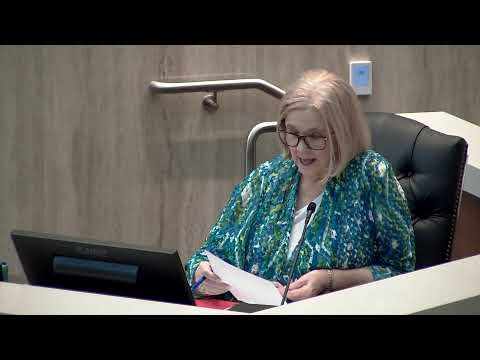
DENTON, Texas — More than a dozen residents and election workers urged the Denton County Commissioners Court on July 29 either to adopt countywide voting centers for election day or to preserve the county’s precinct-based system, with speakers sharply divided over convenience, turnout and election integrity. The court heard roughly 17 public commentators but took no formal action on creating voting centers at the meeting.
Proponents said voting centers would let voters cast ballots at any polling site in the county on election day and would reduce the number of people turned away for being at the wrong precinct. “I’m here today to speak in support of county wide election day voting centers,” said Fawn Monroe, a registered Denton County voter and election clerk, adding that neighboring counties already use the system.
Speakers urging change pointed to counts compiled by local election workers showing sizable shares of voters redirected on election day. “On election day 2024 primary runoff, 15% of all voters were turned away at least once,” Monroe said. Jane Scholes, an election worker from Robson Ranch, said the county started counting redirected voters only after local election workers requested it and urged commissioners to publish the data going forward. “Stop messing with the Texans of Denton County on election day. Give us the voting centers now,” Scholes said.
Opponents countered that precinct-based voting preserves local accountability and reduces the risk of long lines and administrative problems. Melinda Preston, chair of the Republican Party of Denton County, said precinct voting “strengthens election integrity, reinforces local accountability, and ensures that all eligible voters have a practical and reliable way to cast their ballots.” Jaques Jones, a 17-year-old student clerk, cited the Texas Election Code when warning that precinct sizes and oversight matter: “Section 42.006(a) of the Texas Election Code limits voting precincts to just 5,000 registered voters,” he said.
Other opponents cited operational experience. Carrie Huffman, who has served as an election judge at high-turnout precincts, said she normally redirects only a “minimum number” of voters and that precinct-based staffing helps poll workers spot irregularities and resolve issues quickly. “Precinct level voting and reporting can more quickly detect irregularities,” Huffman said.
Several speakers asked the court to direct election staff to produce formal counts and analysis. Dan Burnham, an election worker, urged a formal count of redirected voters across polling sites rather than relying on anecdotes: “We need facts. Take an official count instead of he-said/she-said type thing,” he said.
Commissioners did not make a motion or take a vote on changing county practice at the July 29 meeting. The public-comment segment was followed by other agenda items (including land-use public hearings and procurement approvals) on which the court did vote. The clerk’s office, which manages elections, and commissioners’ staff were present during the meeting, but no staff recommendation to adopt voting centers was presented to the court that day.
Votes at a glance
The court did take votes on numerous unrelated agenda items after public comment. Items the court approved at the July 29 meeting included special-use permits for properties in the Lake Ray Roberts planning district, creation of a temporary community diversion coordinator position for County Criminal Court No. 4, purchases and budget transfers tied to fire and public-safety investments, and routine interlocal and service agreements. Where the record shows the outcome, the court recorded the motion as “carried unanimously.” Examples recorded during the session: 1) three special-use permits for properties in the Lake Ray Roberts zoning district — approved unanimously; 2) creation of a temporary community diversion coordinator position for County Criminal Court No. 4 — approved unanimously; 3) purchase approval for a Pierce aerial and pumper (through cooperative contract) for approximately $3.18 million — approved unanimously; 4) budget action to transfer $9.5 million of unanticipated tax revenue to permanent improvement contingency — approved unanimously; 5) renewal of the county jail and juvenile detention food service contract with Trinity Food Services Group, Inc. — approved unanimously.
Why it matters
The choice between precinct-based election-day voting and countywide voting centers affects voter convenience, administrative cost and how election staff handle irregularities. Supporters say centers reduce the incidence of voters being redirected and may improve access for people who cannot get to their assigned precinct. Opponents say precinct-based voting preserves local accountability and can limit lines and technical problems by spreading turnout across many neighborhood locations.
What happened next / What to watch for
No ordinance, order or formal direction to staff about voting centers was introduced or voted on during the July 29 meeting. Several speakers asked the commissioners to request and publish formal counts of redirected voters; if the court chooses to direct staff to compile that data, it would likely appear on a future agenda. The county’s elections office schedules election-related agenda items and staff reports; any proposal to change election-day procedures would require formal court action in a future meeting.