Get Full Government Meeting Transcripts, Videos, & Alerts Forever!
Get email alerts on the School Transportation topic
No spam. Unsubscribe anytime.
Lorain City board approves purchase of 10 buses to bring contracted routes in-house
Summary
The Lorain City School Board voted 4-1 to approve purchasing 10 buses (nine full-size, one orthopedic) for about $1.3 million to transition contracted student-transportation routes in-house; officials say the district expects to break even in roughly 3.27 years.
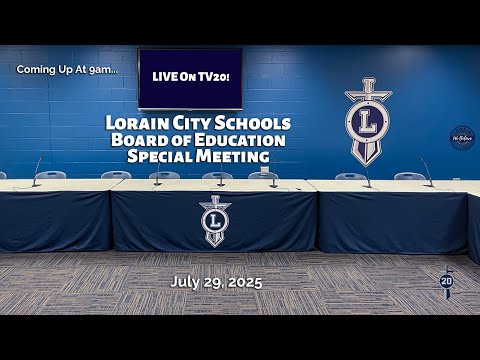
The Lorain City School Board on July 29 approved the purchase of 10 school buses — nine full-size and one orthopedic — for just under $1,300,000 and directed staff to begin shifting contracted routes to district operation.
Superintendent Doctor Graham introduced the transportation analysis and asked Mary Mays to present the proposal. "We're asking for consideration, of purchasing 10 buses this morning. That would be 9 full size buses and 1 orthopedic bus," Mays said, presenting the financial comparison between the district operating routes and the current contracted service.
The district has been contracting some routes, including transportation to private charter schools, and officials told the board that buying buses and operating those routes directly would require an up-front capital outlay but produce ongoing savings. District staff reported a projected payback of about 3.27 years for the initial investment and estimated annual savings in the range of roughly $300,000 to $330,000 during the first three years compared with the contracted arrangement. Over an 11-year assumed vehicle life, staff estimated the district could save nearly $2.3 million by making the upfront investment.
Mary Mays and other staff said the district has verified the numbers, noting differences in how vendors price services (per driver versus per route) made apples-to-apples comparisons more complex. "When we put out those RFPs, we're trying to get the best number ... based on the one that wants to make a lot of money and other ones that are really considering the transportation," a staff presenter explained during board questions.
Board members asked about bus life and driver recruitment. Staff said typical useful life assumptions run about 11 years and that many current contracted drivers could be recruited to district positions. The district is also offering CDL training to build a pipeline of drivers.
The board first approved a walk-on resolution to add the bus purchase to the agenda; the motion to add the resolution passed on roll call with four votes in favor and one against (Missus Nazario). The subsequent motion to approve the purchase passed with the same 4-1 tally: Mister Sergio — yes; Doctor Ballard — yes; Mister Ferguson — yes; Missus Nazario — no. No mover or seconder names were recorded in the meeting transcript for the motions beyond the generic "So moved. Support." The transcript does not specify financing source details for the purchase beyond the quoted purchase price and the staff cost-savings analysis.
District leaders said they were weighing the bus purchase in the context of uncertainty about upcoming state and federal funding levels; Superintendent Graham told the board that revised projections from the state and federal government had reduced expected revenues and that the timing of savings influenced the decision to invest now.
Board members and staff framed the purchase as a capital investment that converts ongoing contracted operating costs into district-controlled assets and labor. The board's vote authorizes procurement to proceed under the terms described at the meeting.
The board also discussed other agenda items later in the meeting, including personnel and parking-lot repairs, which were handled in separate votes.