Get Full Government Meeting Transcripts, Videos, & Alerts Forever!
Get email alerts on the Foster Care Rights topic
No spam. Unsubscribe anytime.
Guam senator advances bill to codify foster children and foster parents bill of rights
Summary
The Legislature advanced Bill 139-38 COR, which would establish statutory rights for children in foster care and protections for foster parents; author defended confidentiality and due-process language retained after agency review and moved the measure toward third reading.
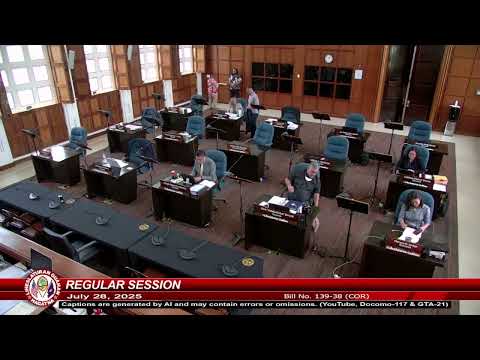
The Legislature advanced Bill 139-38 COR, the Foster Children’s and Foster Parents’ Bill of Rights, after the bill’s author described the measure as a first step to codify protections for children and caregivers in Guam’s foster care system.
The bill’s author — identified on the floor as the Lady from Barovada — told colleagues the measure would establish distinct rights for foster youth, including access to safe housing, education, health care and family connection when appropriate. She said the bill also spells out rights for foster parents: transparency, access to child welfare information, support services and participation in case planning.
The author addressed concerns raised earlier about a provision ensuring the right to make and receive confidential telephone calls and unopened mail. She said subsection (f) was “deliberately retained” to protect due process and personal dignity, noting testimony from the Bureau of Social Services Administration (BOSA) that such communications “may be restricted by court” and that BOSA had authority to impose restrictions. The author said BOSA did not provide the procedural framework it would use to impose limits, and the committee kept the language so the rights would be publicly and legally clear rather than only informal guidance.
The author told the chamber she convened a markup session with BOSA leadership and that the bill’s language was informed by current practice and trauma‑informed, culturally responsive care principles. She said the statute is intended to work with, not replace, family court jurisdiction and that courts provide a pathway to resolve grievances and enforce protections.
The measure includes references to access to transitional services beyond age 18; the author said she would work with colleagues and federal partners to pursue post‑care housing, workforce training, mental‑health supports and mentorship funding but did not detail specific funding sources or timelines.
On the floor the author moved to add several cosponsors to Bill 139‑38 COR and then moved the bill “as amended” to the voting file; floor remarks recorded “no objections” and the measure was ordered to third reading.
The bill now proceeds to the Legislature’s third reading schedule with cosponsors recorded on the floor.