Get Full Government Meeting Transcripts, Videos, & Alerts Forever!
Get email alerts on the Homelessness Shelter Siting topic
No spam. Unsubscribe anytime.
Committee OKs amended ordinance to limit shelter concentration; exemptions, reporting and confidentiality clarified
Summary
An ordinance that would restrict where San Francisco may site certain city‑funded homeless shelters and low‑barrier behavioral health treatment facilities cleared the Budget and Finance Committee on July 23 after the author and colleagues accepted a set of clarifying amendments.
An ordinance that would restrict where San Francisco may site certain city‑funded homeless shelters and low‑barrier behavioral health treatment facilities cleared the Budget and Finance Committee on July 23 after the author and colleagues accepted a set of clarifying amendments.
The committee voted 3‑0 to accept the amendments and forward the ordinance to the full Board of Supervisors. The ordinance would prohibit siting a new city‑funded homeless shelter, transitional housing facility, or specified low‑barrier behavioral health residential care and treatment facilities in neighborhoods where the neighborhood’s share of the city’s shelter and transitional housing beds exceeds that neighborhood’s share of the city’s unsheltered population. It also prohibits siting a new city‑funded homeless shelter within 300 feet of an existing shelter, subject to a Board waiver finding that a placement is in the public interest; the ordinance would sunset on Dec. 31, 2031.
The ordinance’s author, Supervisor Ahsha Mahmoud, told the committee he was introducing “a set of non substantive clarifying amendments” and emphasized they do not change the bill’s “intent or core mechanics.” Mahmoud said the changes narrow the definition of “behavioral health residential care and treatment facility” to city‑funded, low‑barrier facilities such as respite centers, sobering centers and crisis stabilization units and explicitly exclude state‑licensed psychiatric health facilities and residential care homes for the elderly. He also said the amendments exempt Proposition 1 projects from the ordinance’s fair‑share rule; move reporting triggers to six months after the ordinance’s operative date; add a reporting requirement showing steps taken to identify sites in neighborhoods without existing shelters; and add a section preserving confidentiality protections for family violence shelters.
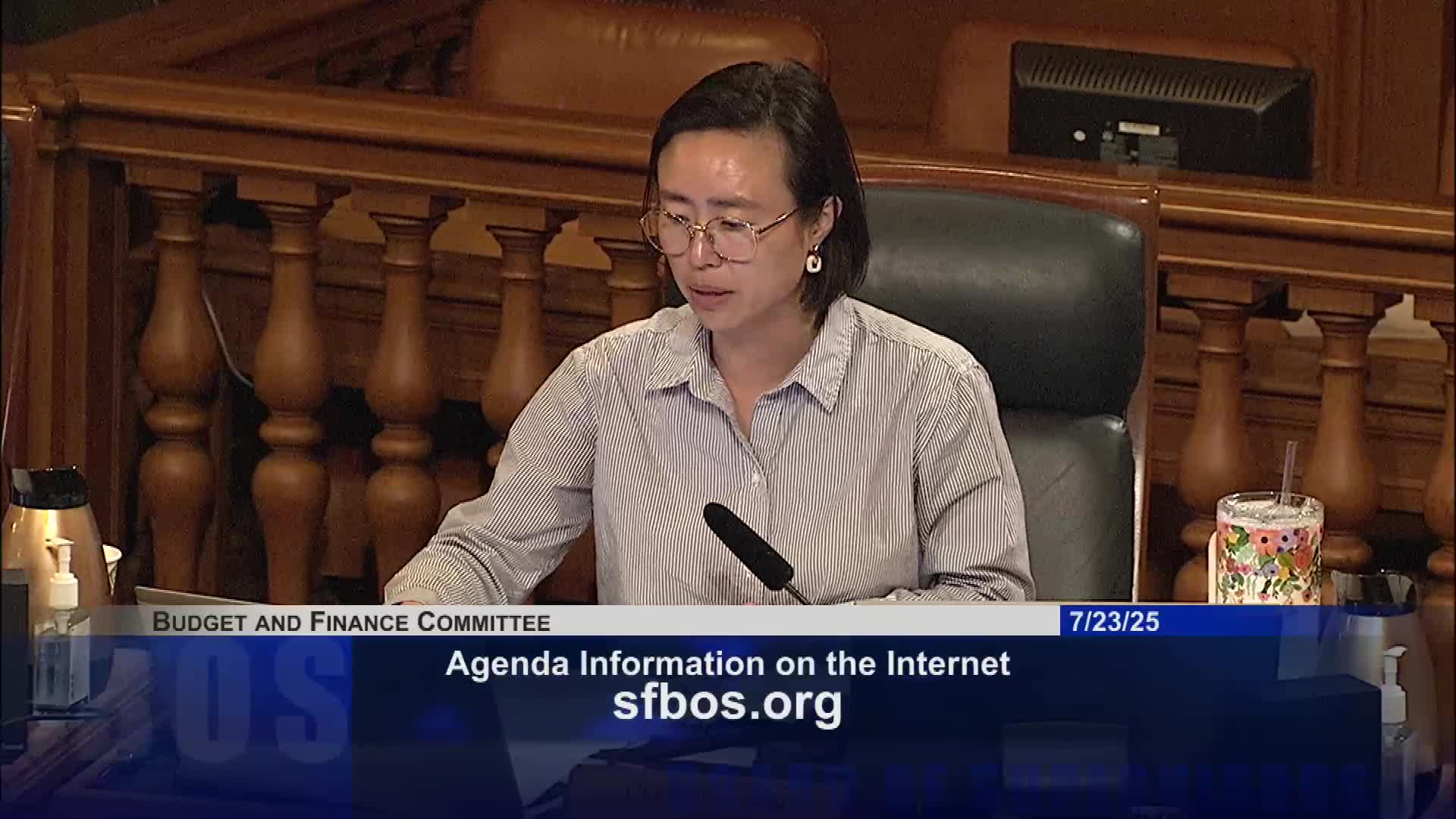
Supervisor Connie Chan, committee chair, and Vice Chair Matt Dorsey both praised the collaborative process. Dorsey said he wanted to “commend the supervisor for his leadership in sweating the details and rolling up his sleeve and working with everybody to get to a place where we got this right.”
Supervisor Rafael Engardio (recorded in the transcript as member Engadio/En Gardio) described initial reservations about the ordinance’s earlier drafts, saying he feared a rigid geographic requirement could isolate people by locating shelters far from wraparound services. Engardio said the legislation had “evolved significantly” through amendments and mayoral cooperation and supported forwarding the item to the full Board for consideration.
The amendments adopted in committee (as described by the author) include: - Narrowing the targeted facilities to city‑funded, low‑barrier behavioral health treatment sites and not state‑licensed psychiatric health facilities or residential care homes for the elderly. - Exempting projects that applied for Proposition 1 funding from the fair‑share requirement. - Clarifying that reporting obligations start six months after the ordinance becomes operative. - Requiring the city to report, for each shelter approved in a neighborhood that already contains one, the steps taken to identify and develop a site in a neighborhood without an existing shelter. - Adding a section (proposed Section 124.5) confirming the ordinance does not override federal, state or local confidentiality protections for family‑violence shelters. - Reducing a previous 1,000‑foot separation requirement to 300 feet.
Committee clerk Brent Halepa said items acted on at the committee are expected to appear on the Board of Supervisors agenda on July 29 unless otherwise stated. There were no members of the public who spoke during the item at committee.
What happens next: The measure, as amended, will be considered by the full Board of Supervisors on the Board’s next agenda. The ordinance text referred to a December 31, 2031 sunset and provided the Board authority to waive siting prohibitions if doing so is in the public interest.
Key quotes from the record: “These amendments do not change the intent or core mechanics of the legislation,” Supervisor Ahsha Mahmoud said when introducing the changes. “I just want to commend the supervisor for his leadership in sweating the details and rolling up his sleeve,” Vice Chair Matt Dorsey said in support.
Ending: The committee recorded a 3‑0 recorded vote (Dorsey, Engardio, Chan) to accept the amendments and forward the ordinance to the full Board with a positive recommendation. The ordinance’s author and staff said the changes respond to feedback from departments, the City Attorney’s Office and community partners and are intended to target shelter siting where the city has meaningful siting discretion.