Get Full Government Meeting Transcripts, Videos, & Alerts Forever!
Get email alerts on the Roads And Infrastructure topic
No spam. Unsubscribe anytime.
Muskego officials weigh borrowing, tax impacts to address deteriorating roads
Summary
City staff and aldermen discussed growing road deterioration and options to fund repairs, including multi‑year borrowing that officials say would spread costs but raise property tax bills.
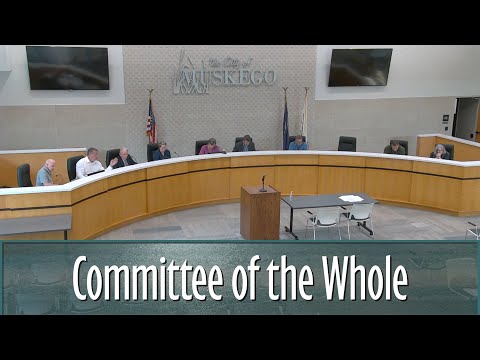
MUSKEGO, Wis. — City staff and aldermen spent the Committee of the Whole meeting July 22 laying out the scale of Muskego’s road‑maintenance backlog and discussing financing options that could include borrowing and a possible referendum.
City public‑works staff presented a PASER‑based condition analysis and budgeting scenarios showing an increase in low‑rated roads and a shrinking ability to keep up under the current funding plan. Officials said the city’s regular operating allocation for roads is $750,000 and that, even with an occasional one‑time capital boost of $1 million every three years, the program falls short of what’s needed to prevent more pavement from slipping into poor condition.
The presentation matters because staff reported that, by the PASER system, roughly 65 miles of city streets currently rate between 1 and 4 (poor to failed)—a portion that is growing—and 87 miles rate between 5 and 10. “We are losing that battle where you are just seeing more and more going to ones to fours,” said Scott, a public works staff member, describing the shift toward failure ratings. The presenters said the city’s current replacement “cycle” is about 71 years at present production rates, compared with about 67 years two years ago.
Officials reviewed several financing options. One scenario discussed was a $4 million borrowing for roads structured as a 20‑year bond; staff said that, under that illustrative plan, the impact on the average Muskego home assessed at $500,000 would be roughly $45–$60 annually. “If we were to borrow, say, $4,000,000 for roads this year, on the average home in Muskego, which is $500,000, it's gonna be between 45 and 50 and $60 on their tax bill,” said the Chair. A $5 million borrowing was presented as costing roughly $55–$70 on that same illustrative tax bill. Staff noted interest rates and the city’s relatively strong credit rating would affect final costs.
Speakers stressed limits to what operating dollars can cover. Staff said the road program currently paves about two miles per year on the current $750,000 operating allocation and that contractors told city staff they could manage $4–$5 million of work in a season if the city chose to borrow for larger projects. Ryan, a public works staff member, said drones and GIS are used to collect condition data, but the city must follow the PASER visual rating methodology required by state guidance when reporting conditions.
Council members and staff also discussed broader budget constraints. The presenters said landfill revenue brings roughly $2 million a year to the city’s capital program but that operating budget pressures — including a projected $2 million shortfall and health‑insurance costs currently around $2.2 million that could increase — limit what can be shifted to roads without cuts elsewhere. Staff explained levy‑cap limits and net new construction factors affect the amount the city can raise under operating levy rules.
Aldermen asked for follow‑up materials: a short list of the seven worst candidate roads for substantial repair, and a financing presentation from the city’s financial adviser. Staff recommended that the council have Baird (the city’s financial adviser) present options and structure a capital improvement/borrowing plan showing tax impacts and multi‑year scenarios during the upcoming budget process. “I think at this point, my recommendation is we have Baird come in and explain the financing part of it and the different options,” the Chair said.
Discussion also touched on related infrastructure and maintenance items: curb/gutter versus open‑ditch reconstruction needs, heavier vehicle traffic in the industrial park, and trail maintenance. Staff cautioned that some streets are now too degraded for two‑inch overlays and will require full reconstruction, a much more costly option. Staff asked for direction to assemble specific project lists and cost scenarios to show what different borrowing amounts (for example, $3–$5 million) would accomplish.
No formal vote on a financing plan occurred at the meeting. The committee directed staff to produce the requested project lists and for Baird to return with structured borrowing estimates during the budget cycle, which staff said will run through October.
Ending: The committee scheduled further discussion as part of the budget process and asked staff to return with a ranked project list and detailed financing scenarios for council consideration.