Get Full Government Meeting Transcripts, Videos, & Alerts Forever!
Get email alerts on the Budget topic
No spam. Unsubscribe anytime.
South San Antonio ISD outlines 2025–26 budget, proposes targeted pay increases tied to state allotments
Summary
District staff presented a balanced 2025–26 budget framework that holds the tax rate steady, relies on a mix of recurring and one‑time funds, and proposes modest pay increases funded partly by state allotments and grants while warning of longer‑term structural pressure for 2026–27.
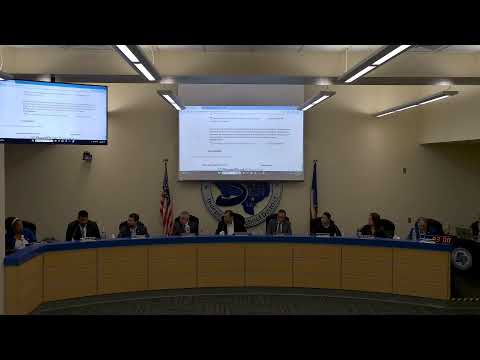
Tony Kingman, a district finance presenter, opened a July 21 budget workshop for the South San Antonio Independent School District Board of Trustees with a review of the 2025–26 revenue and expenditure assumptions.
"The combined local and state and federal revenue for the general fund will be at 76,500,000.0," Kingman said, adding that total revenue including a disaster penalty projection is about $81,400,000.
The presentation placed payroll at the center of the budget. Kingman said current payroll before any proposed increases is about $66,700,000, and that general‑fund expenditures total roughly $81,200,000 under the district’s assumptions, leaving a projected surplus of about $233,000 before benefit impacts and one‑time uses are finalized.
Why it matters: the district is proposing pay adjustments that rely in part on state allotments created under recent legislation and on one‑time grants. Staff warned that without additional recurring revenue, the district could face a structural deficit in 2026–27 when several temporary funding sources expire.
Key numbers and assumptions - Tax rate: Kingman presented a proposed maintenance & operations (M&O) rate of roughly 0.6969 and an interest & sinking (I&S) rate of 0.499 per $100 value (49.9¢) and said the proposed 2025–26 tax rate would be the same as 2024–25, reflecting little or no certified property‑value growth in the district’s certified roll. - Revenue: combined general‑fund revenue (local, state, federal) shown as $76.5 million; total revenue including disaster penalty projections about $81.4 million. - Payroll and expenditures: current payroll $66.7 million; non‑salary costs about $12.9 million; total projected expenditures $81.2 million. - Fund balance: Kingman reported an approximate fund balance of $25 million at the end of 2023–24 and said the district expects to close 2025–26 with about $23 million under the current plan; TEA minimum guidance cited in the presentation was about $23 million.
Compensation details and constraints Kingman walked the board through state allotments and limits. He said House Bill funds provide a teacher retention allotment the district expects to pass along to qualifying classroom teachers and a support‑staff retention allotment that is limited in how it may be spent: - Kingman said the district expects new House Bill 3 state aid of about $1.6 million plus roughly $249,000 intended to offset benefit increases. He cautioned the $249,000 is targeted to benefits and the state allotment for teacher retention does not cover benefit costs for staff not explicitly in the state allotment. - The support staff retention allotment was described as roughly $45 per ADA, amounting to about $159,713 in the district’s projections; Kingman said that equates to about a 1.53% base salary increase for eligible support staff if fully applied to salaries. - For teachers, Kingman showed the teacher retention allotment structure: $2,500 for teachers with 3–5 years’ experience and $5,000 for those with five or more years. He said the salary cost of those teacher increases is about $1.8 million and the related benefit cost of $219,000 would have to come from the district general fund.
One‑time grant support and timing Kingman identified several one‑time funding sources the district plans to use to balance 2025–26, including a strong‑foundations grant (LASSO) and the Safe Schools grant cycle. He said those grants together provide several hundred thousand dollars of one‑time support (Kingman cited amounts of $485,000 and $779,000 in the presentation) but emphasized they are not permanent revenue.
Attendance and enrollment assumptions Kingman described average daily attendance (ADA) as a key revenue driver. For budget modeling he used a conservative ADA assumption of 91.6% with the same enrollment as the prior year and set a district goal to raise ADA to 94% over time to offset lost revenue when temporary disaster penalties end.
Board discussion and next steps Superintendent Dr. Hinojosa and board members discussed recruiting and retention strategies, including targeted pay for high‑performing teachers, the potential use of sign‑on bonuses, and grants such as 21st Century and federal after‑school funds that the district plans to pursue.
Kingman told the board that certified property values from the Bexar County appraisal district are still pending and that the district will bring a proposed compensation plan and final budget items to the board for action at the next regular meeting. He emphasized the timeline is tight: "next month is when, you know, we actually have to propose a budget and that timeline is going to be very tight to adopt the compensation plan to adopt the budget, in September," he said.
Ending: The board used the workshop to give staff direction on funding priorities; staff will return with a proposed compensation plan, the public hearing on the proposed tax rate, and final budget documents in the coming weeks.