Get Full Government Meeting Transcripts, Videos, & Alerts Forever!
Get email alerts on the Historic Preservation And Museums topic
No spam. Unsubscribe anytime.
Cook County Historical Society asks county for increased operating support as professional staff expands
Summary
The Cook County Historical Society requested roughly $79,000 in county support for 2026, an increase from roughly $72,000, citing growing professional staff, rising preservation costs and plans to complete restoration of the Chippewa City Church.
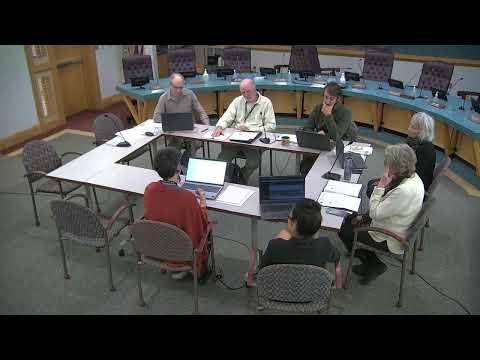
The Cook County Historical Society asked the county on Oct. 21 for an increase in its 2026 operating allocation, seeking roughly $79,000, up from about $72,000 in recent years, citing the transition to professionally trained staff and rising preservation costs.
The society’s president, Margaret Hedstrom, told the board that the group recently celebrated its 100th anniversary and has hired a new director, Catherine James, a museums and collections manager, Annie Burish, and a manager for the Johnson Heritage Post, Victoria Lewandowski. Hedstrom said the organization’s request focuses on operating the county-owned museum and keeping five historic sites — the Johnson Heritage Post, Chippewa City Church, the fishing tug Neechi, Bali’s Blacksmith Shop and the museum/gallery — open and professionally maintained.
Hedstrom said the society’s request “goes beyond keeping the doors open” and reflects a broader shift away from relying primarily on volunteers. She said the society’s budget request would cover an estimated 65% of museum operating costs with other revenue coming from donations, grants and program fees. “History is not discretionary,” Hedstrom said, adding that preservation standards and professional restoration work have become “very, very expensive.”
The society described a planned multi‑year restoration of the Chippewa City Church with a goal of completion by 2028. Hedstrom said the group submitted a pre‑application to a “legacy fund for historical and cultural resources” for about $305,000 and has set aside roughly $300,000 from a prior legislative appropriation as matching funds. She said a recent public bid to do the restoration produced a single bid that exceeded $1 million — roughly $300,000 more than the society’s $700,000 estimate for the survey and construction drawings — and the society will reapply for grants and split the work into phases.
Catherine James, identified in the meeting as the society’s new director, gave a brief anecdote about a child’s enthusiasm for artifacts discovered in the society’s collection to illustrate public value and the educational role of museum staff and volunteers.
Commissioners asked clarifying questions. Commissioner White asked about a prior $700,000 allocation mentioned earlier in the presentation; Hedstrom described that sum as a legislative appropriation originally intended for archival storage work that the society now believes should be spent more flexibly, and said about $300,000 of that appropriation has been set aside for the Chippewa City Church. Hedstrom said the society is reluctant to use those funds for routine operating expenses except under duress, preferring to reserve them as matches for capital grants.
Hedstrom also said the society received about 78 research requests last year, hosted school field visits and volunteers, and provided materials used by outside institutions, including a recent curator request from the Metropolitan Museum of Art.
The board did not take a vote at the committee meeting; the item was presented for information and will be considered as part of the county’s budget process.