Get Full Government Meeting Transcripts, Videos, & Alerts Forever!
Get email alerts on the Utilities Water Sewer topic
No spam. Unsubscribe anytime.
Crockett council approves consumption-based water and sewer rate increases to cover infrastructure debt
Summary
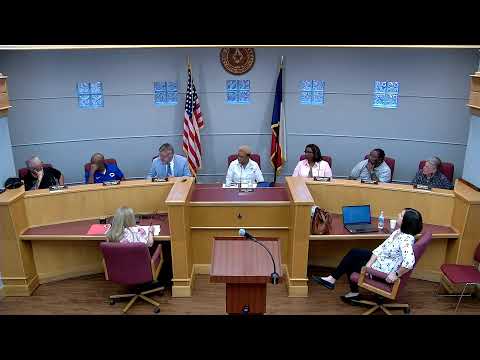
The Crockett City Council approved an ordinance raising consumption-based water and sewer rates to help pay the city’s portion of a multi-million-dollar water and sewer infrastructure project; the vote was 3-2.
The Crockett City Council voted to approve an ordinance increasing consumption-based water and sewer rates to help pay the city’s share of a multi-million-dollar water and sewer infrastructure project, city staff said.
City staff told council the change does not increase base service rates but raises consumption charges so that users who use more water pay more of the cost. Staff said the change was intended to produce roughly $328,000 in additional revenue the adopted budget assumed would be collected by raising utility rates rather than by increasing property taxes.
Staff member: “There’s no base rate increase on water or sewer, but there is a consumption rate increase. That basically means that the people that will be paying for the increase are the ones that use the water and the sewer,” the presenter said during the council meeting. The staff presentation included examples for an “average user” and said households that use very little water — “less than a thousand gallons” in the example — would see no increase.
The ordinance keeps water and sewer charges within their respective utility funds, staff said, and is intended to cover debt service tied to Texas Water Development Board loans for work including replacement of lines and upgrades to the North Plant. Staff said the overall project cost cited during discussion was $14,000,000 and that the city is responsible only for a portion of that total; staff cited a line-item sewer debt payment of $168,626 for the coming year as part of the utilities budgets.
Several residents and council members pressed staff on related issues including the city’s relationship with the regional water district, water quality complaints, and whether legal options exist to address perceived poor service from the supplier. Resident Trina said her household had recently been billed $400 after a leak and complained that water quality had caused skin irritation: “My water bill $400… the water breaks me out,” she told the council during public comment.
Council discussion also included an objection to a provision in the posted ordinance that sets out-of-city rates at twice the in-city rate. Staff read the posted language aloud: “Rates for water service furnished outside city limits shall be twice the inside city rates,” followed by sample charges the staff read into the record (residential base $49.34 plus $1.26 per 100 gallons; commercial base $69.42 plus $1.26 per 100 gallons).
A motion to adopt the ordinance was moved from the floor and seconded. The council voted to approve the ordinance; the meeting record shows one councilmember (identified in the minutes as Mike) voted no. The clerk announced the final tally as 3 in favor and 2 opposed; the ordinance carries and the consumption-rate increases will go into effect as provided in the ordinance.
Council and staff noted that the adopted fiscal year budget (effective Oct. 1) had been balanced assuming the revenue from the rate increases and that if the ordinance failed, staff would need to identify roughly $328,000 in cuts to the water and sewer budgets — a reduction staff said could require layoffs and “essentially” eliminate a functioning water and sewer department.
Staff also urged the council that while the rate change proceeds, the city continues work on an assessment of the city’s contractual relationship with the water district and on potential legal steps, and that any such steps would be separate from the rate ordinance.
The ordinance text, as read at the meeting, contains severability and repealing clauses and covers increases to both residential and commercial water and sewer consumption charges.
What’s next: the ordinance is approved and will be implemented according to the effective date set in the ordinance; staff said they will continue work on the assessment of regional water contracts and on communicating with affected customers.