
Golf Manor planning panel approves 8-foot rear-setback variance for 2507; final plans required
Get AI-powered insights, summaries, and transcripts
Sign Up Free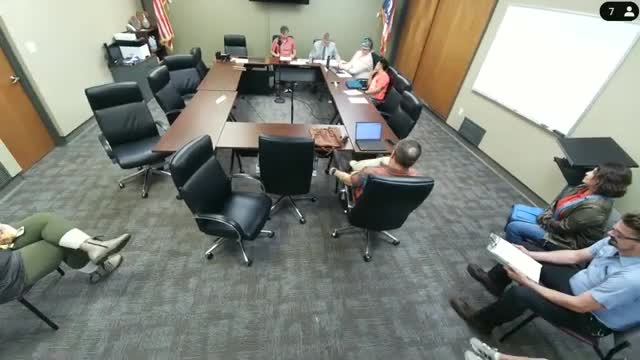
Summary
The Golf Manor Planning Commission approved a variance allowing an 8-foot, 1-inch rear setback for a house addition at 2507, provided the applicant submits a final survey, elevation drawings and other materials. Neighbors spoke in support and staff noted the request departs from the usual 40-foot standard.
The Golf Manor Planning Commission approved a zoning variance allowing an 8-foot, 1-inch rear setback for an addition at 2507 (street not specified) after hearing from the applicant and nearby residents and requiring final survey and elevation drawings before administrative sign-off.
The commission’s decision allows the homeowner to proceed with design intent but makes the variance conditional on submission of a property survey, final architectural elevations and other final drawings. Planning staff told the commission the proposal departs from the code’s typical 40-foot rear setback and had been denied administratively before referral to the commission.
The applicant, homeowner Ross Kazi, described the project as an addition to the rear of a small house to create a larger family home. “We want to be able to do that. We believe that, you know, happiness is a small house with a big kitchen,” Kazi said, adding that the frontage and roofline would not change and that the addition is intended to keep parking off the street.
Kazi said the existing house has three bedrooms and the addition would bring the total to five. He also said he drafted the initial plans himself and that he would obtain professional architectural and engineering drawings if the commission granted the variance.
A nearby resident who identified herself as Chelsea said she hoped to meet the applicants informally and described the neighbors’ concerns as largely limited to clarifying property lines and the proposed new driveway. “It sort of seemed like the only thing that would kind of be encroaching a little bit is this proposed new driveway,” Chelsea said.
Planning staff advised the commission that prior variances in the village had reduced rear setbacks by smaller amounts—generally four to eight feet—rather than to the degree requested in this case. Staff told commissioners the code’s typical rear setback is 40 feet and that the applicant’s requested setback is 8 feet, 1 inch; because of that discrepancy staff had denied the permit and referred the matter to the commission.
After discussion about whether final survey and elevation drawings were needed before approval, the commission agreed it could grant a conditional variance based on design intent. The motion approved the variance allowing an 8-foot, 1-inch rear setback “pending presentation of the final drawings, architectural design, [survey] and elevations,” with staff to verify those materials for zoning compliance. Commissioners indicated the final administrative approval could be handled without returning to a full planning hearing if the required documents matched the design intent presented to the commission.
The motion passed on voice vote; the chair announced, “Aye. Motion carries.” The commission scheduled its next regular meeting tentatively for Nov. 3 at 7 p.m.
Clarifying details provided at the hearing: the addition would be at the rear of the property, the street frontage would remain unchanged, the current house has three bedrooms and the proposed configuration would have five, and the applicant intends to retain significant mature trees and setback distance from shared boundaries. The exact street number in the transcript was read as “25 0 7”; the commission and applicant referred to the property address as 2507 during the hearing.
The decision is limited to a zoning variance for setback and does not itself grant building permits or other approvals required by county permitting and inspections.