Get Full Government Meeting Transcripts, Videos, & Alerts Forever!
Get email alerts on the Mental Health Services topic
No spam. Unsubscribe anytime.
Officials detail mental-health capacity, crisis receiving center and Medicaid billing considerations
Summary
County community-services leaders described federal grant support, a SAMHSA System of Care grant, plans to open a local crisis receiving center with beds for youth and adults, and concerns that Medicaid or federal changes could reduce reimbursements and strain local services.
Prince William County Community Services and county leaders discussed local behavioral health capacity, a federally funded children’s mental-health grant, an opening of a crisis receiving center and the financial and operational risks if Medicaid reimbursements or federal block grants are reduced.
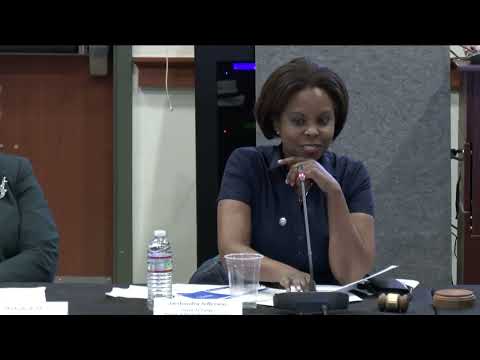
Georgia Bachman, acting director of Community Services (the local Community Services Board), said the county has a five-year, $5,000,000 System of Care Expansion and Sustainability grant funded by the Substance Abuse and Mental Health Services Administration (SAMHSA) that serves youth with complex behavioral health disorders. "We have just received our third year renewal," Bachman said, and she added the grant supports six full-time staff for that initiative.
Bachman and other officials warned that any reductions in Medicaid reimbursement could force staffing cuts or increased local funding to maintain positions that support developmental disability programming and other services. She said recent Medicaid redeterminations and coverage changes could create gaps that would affect people the county serves and revenue for providers.
Officials outlined a near-term expansion of crisis services. County staff and board members said a new crisis receiving center (CRC) will hold adult and youth crisis stabilization beds and observation spaces; supervisors noted a grand opening was scheduled the following day. According to the presentation, the facility will include 16 youth beds and 16 youth observation chairs, and an additional 16 adult beds and 16 adult observation chairs (16 each for youth and adults). Supervisor comments in the meeting identified Connections Health as the vendor selected to operate the CRC and described the facility as part of a regional network supported with opioid abatement and other funding.
Board members and staff urged continued collaboration across county, school and state partners to address longstanding psychiatric bed shortages and to expand community-based capacity. "If there were to be a loosening of commitment laws and more people going back into public hospital beds, there could be a reallocation of funds back into the public hospital system as opposed to community-based treatment," Bachman said, summarizing risks tied to potential federal executive actions. Several board members described the CRC as an important, but not sole, element of crisis transformation; they said the CRC should reduce boarding in emergency departments and jails but would not be a panacea.
Officials said they are monitoring a Medicaid waiver application related to billing for services at the CRC; staff said they are awaiting a federal response from CMS. County leaders also said workforce shortages and credentialing for behavioral health providers remain constraints to rapidly expanding services.
Ending: Community Services staff said they will continue to monitor federal and state developments, coordinate with Department of Medical Assistance Services and the Department of Behavioral Health and Developmental Services, and report updates to boards and partners as the CRC opens and grant/billing decisions evolve.