Get Full Government Meeting Transcripts, Videos, & Alerts Forever!
Get email alerts on the Labor Unions topic
No spam. Unsubscribe anytime.
Davenport leaders clash over whether Civil Rights Commission jobs belong in AFSCME contract
Summary
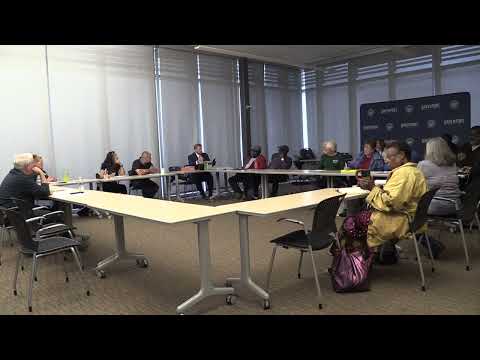
Davenport officials met in a special joint session Oct. 14 to decide how to fill newly approved positions in the Davenport Civil Rights Commission and whether those jobs fall under the AFSCME Chapter 20 collective bargaining agreement.
Davenport officials met in a special joint session Oct. 14 to decide how to fill newly approved positions in the Davenport Civil Rights Commission and whether those jobs fall under the AFSCME Chapter 20 collective bargaining agreement.
Sam, corporation counsel for the city, told the commission and council that the positions the commission approved have “material overlap” with existing union job classifications and that “moving forward with these positions with different salaries, and not talking to the union would run us a foul chapter 20 and also, potentially put us in a grievance process with the union over these positions.” He advised that the city should either negotiate salary changes with the union, seek a side letter, or pursue a unit-clarification process to remove the positions from the bargaining unit.
The dispute centers on five new or reorganized roles the commission approved earlier this year: a part-time civil rights mediator, a civil rights intake specialist, a part-time civil rights analyst or senior civil rights analyst, a full-time senior civil rights analyst and a civil rights legal intern. Commission members and staff said vacancies and low salaries have left workloads backlogged and that at least one staff member recently quit after covering multiple roles.
Doreen (commission member) criticized the pace of staff action and described the delay as harassment, saying the commission had repeatedly asked for steps to be taken since June. Commissioners and several council members said the commission and the City Council passed a July resolution and an ordinance (cited in the meeting) that, in their view, make the commission responsible for setting salaries for commission employees. Several commissioners said they had provided direction in June and August about desired salary ranges but that the changes had not been implemented by city human resources.
Mike Gelson, chair of the Davenport Civil Rights Commission, said at the meeting, “I want the position filled,” urging faster action to address the backlog.
Council members and the commission debated sequencing: some urged counsel to ask the union first whether it would accept the new salary ranges; others said the positions should be clarified as not belonging in the union and removed. Counsel said both paths carried risks: negotiating with the union could succeed or fail; seeking unit clarification could provoke litigation or a grievance. Multiple speakers asked counsel to proceed and report status to the commission and council within two weeks.
The meeting concluded after a motion to adjourn, which passed by voice vote. Counsel agreed to contact the union and provide a short status update in two weeks and to pursue the option(s) the commission and council directed as appropriate.
Because no formal ordinance or contract change occurred during the meeting, officials framed the session as direction and status-setting rather than final action. The only recorded formal action was a motion to adjourn, carried by voice vote.