Get Full Government Meeting Transcripts, Videos, & Alerts Forever!
Get email alerts on the Virtual Meeting Policy topic
No spam. Unsubscribe anytime.
Manufacturing Commission adopts updated virtual meeting policy, votes 7-0
Summary
The Manufacturing Development Commission voted unanimously Aug. 20 to adopt a revised virtual meeting policy that aligns commission rules with state statute, clarifies when a member is considered absent if audio/visual connectivity fails and raises the cap on all-virtual meetings from 25% to 50%.
The Manufacturing Development Commission on Wednesday, Aug. 20, adopted an updated virtual meeting policy to align the commission’s procedural rules with state statute and to clarify how audio‑visual failures affect quorum. The motion passed by roll call, recorded as 7‑0 in favor.
The revisions require the commission to adopt a meeting policy at least annually; clarify that a member will be considered absent for quorum purposes during any portion of a meeting when visual communication is voluntarily disconnected or when audio communication involuntarily fails; and raise the limit on how many meetings may be conducted entirely virtually from 25% to 50% of meetings.
Nikhil, a staff member who summarized the changes for the commission, said, “There are 3 changes made to the policy from the prior policy. These are just to update the policy to match the statutes. It requires the commission to adopt any meeting policy at least once annually ... [and] it changes from 25% of meetings to 50% of meetings, for which the public body can have an all virtual meeting.”
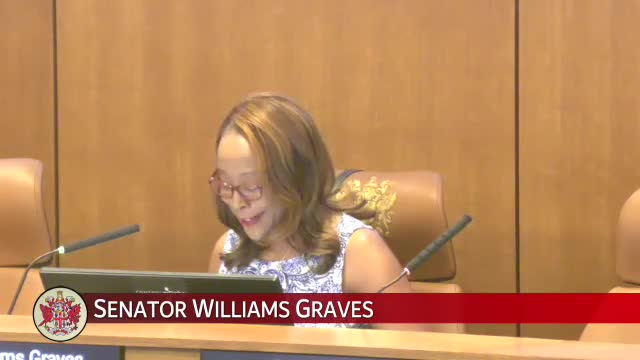
Sen. Angela Williams Graves, chair of the Manufacturing Development Commission, called for a voice motion to accept the policy and then directed a roll call vote. When asked if the adoption required a voice vote or roll call, the chair said, “Call the roll for the vote,” and the clerk recorded the roll call and the unanimous outcome.
The commission’s staff framed the update as a technical alignment with statute rather than a substantive change in how meetings will be run; commissioners did not propose amendments during the discussion. The adopted language formally ties quorum status to members’ audio‑visual connectivity and raises the commission’s maximum allowable frequency of entirely virtual meetings to half of its meetings in a given year.
Commissioners and staff did not elaborate on planned operational changes or specific instances in which the new absence definition will be invoked. The chair did not schedule additional action items related to the policy during the meeting.
The adoption took place at the Senate Committee Room A305 in Richmond and was the first formal agenda item after opening remarks and roll call. The commission moved on to legislative updates and a workforce presentation after the vote.