Get Full Government Meeting Transcripts, Videos, & Alerts Forever!
Get email alerts on the County Finance topic
No spam. Unsubscribe anytime.
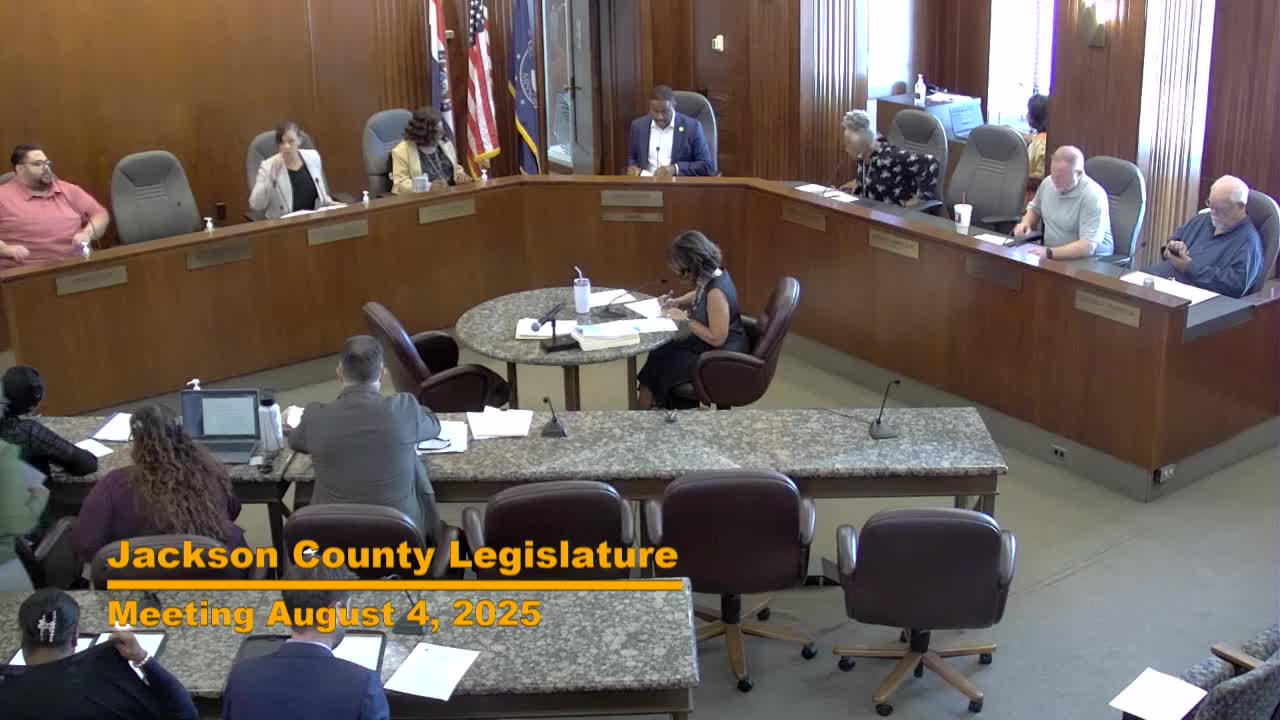
Jackson County auditors issue clean opinion but note internal-control deficiency; legislators press for follow-up on missing funds
Summary
Auditors presenting Jackson County’s 2024 annual comprehensive financial report told the legislature they issued an unmodified (clean) opinion but identified a significant internal-control deficiency and flagged a roughly $3,000,000 increase in compensated-absence liability after implementing a new accounting standard and a software conversion.
Auditors presenting Jackson County’s 2024 annual comprehensive financial report told the legislature they issued an unmodified (clean) opinion but identified one significant internal-control deficiency and other matters staff should address.
Cheryl Coulter of the county finance department introduced auditors Jonathan Nybarger and Brian Holst, who said the audit team issued a clean opinion — the highest level of assurance — and highlighted several governance items, including a roughly $3,000,000 increase in the county’s compensated-absence liability after implementing a new accounting standard and a software conversion that delayed the report’s issuance.
The governance letter noted the county implemented a Governmental Accounting Standards Board change related to compensated absences and said the change required the county to estimate the portion of accrued leave employees are likely to use. The auditors also reported one material audit adjustment: about $10,000,000 related to construction-in-process amounts on a detention center project that had not been previously recorded.
Auditors told the legislature the county elected to record the compensated-absence change as a current-year expense rather than a prior-period adjustment; the auditors said that choice increased current-year expenditures and is the approach most of their clients have taken.
The governance letter included an internal-control observation the auditors classified as a significant deficiency. The finding, the auditors said, related to the journal-entry process after the county’s new accounting software went live: certain interfund bank transfers were not reviewed in the system or by an outside reviewer before posting. Management included a response in the letter, and the auditors said the county put new processes in place that should address the deficiency for the 2025 audit.
Auditors also recommended a broader review of policies and procedures, and they called attention to rising fraud risks tied to electronic fund and wire transfers, ongoing cybersecurity threats and the need to update policies as software and tools evolve.
Legislators pressed auditors and county staff for additional detail. Legislator Smith said she was concerned about apparent errors and inconsistency in the audit letter and the quality of the product provided to the legislature. “This is extremely concerning as to the quality of work product that I’m seeing,” Smith said, and asked auditors to provide dates and times of their discussions with the legislative audit staff and a list of persons the auditors identified as affiliates, directors or officers in county disclosures.
When asked whether the auditors had spoken with the legislative audit staff, the auditors said those conversations are typically confidential but said they do follow up if concerns are raised. Smith also noted errors in the letter — including a reference that called the county a city and an incorrect fiscal-year end date — and asked the auditors to provide additional follow-up information to the legislature.
Legislator Baraka raised concerns that certain settlement and dedicated revenues — including opioid settlement funds and marijuana sales tax receipts — were not appearing in the county’s budget documents and asked whether the auditors had examined how those funds are recognized. The auditor replied that Baraka’s question was too general without more specifics and encouraged the legislator to clarify which funds and documents he was referencing. Baraka said the amounts in question could range from about $1,000,000 to $12,000,000 and urged follow-up by the legislature and the legislative audit staff.
A county executive office staff member identified in the record offered to provide information about those funds.
Votes at a glance
- Ordinance 5994 (appropriating $82,500 from the 2025 grant fund and accepting a High Intensity Drug Trafficking Area Program grant from the U.S. Office of National Drug Control Policy for the Drug Task Force): placed on the consent agenda and adopted; roll call recorded 8 yes, 1 absent.
What this means next
Legislators asked the auditors and county staff for follow-up materials, including the auditors’ contact dates with legislative audit staff, a list of persons the auditors considered when describing county officers/affiliates, and clarification about how settlement and restricted revenues are recorded in budget documents. The audit letter noted management’s planned corrective actions for the journal-entry control deficiency; auditors said those steps should be reflected in the 2025 audit.
The legislature moved on after the audit discussion to routine business and committee reports; legislators signaled intent to seek additional detail and follow-up in subsequent communications and meetings.