Get Full Government Meeting Transcripts, Videos, & Alerts Forever!
Get email alerts on the Land Use Rezoning topic
No spam. Unsubscribe anytime.
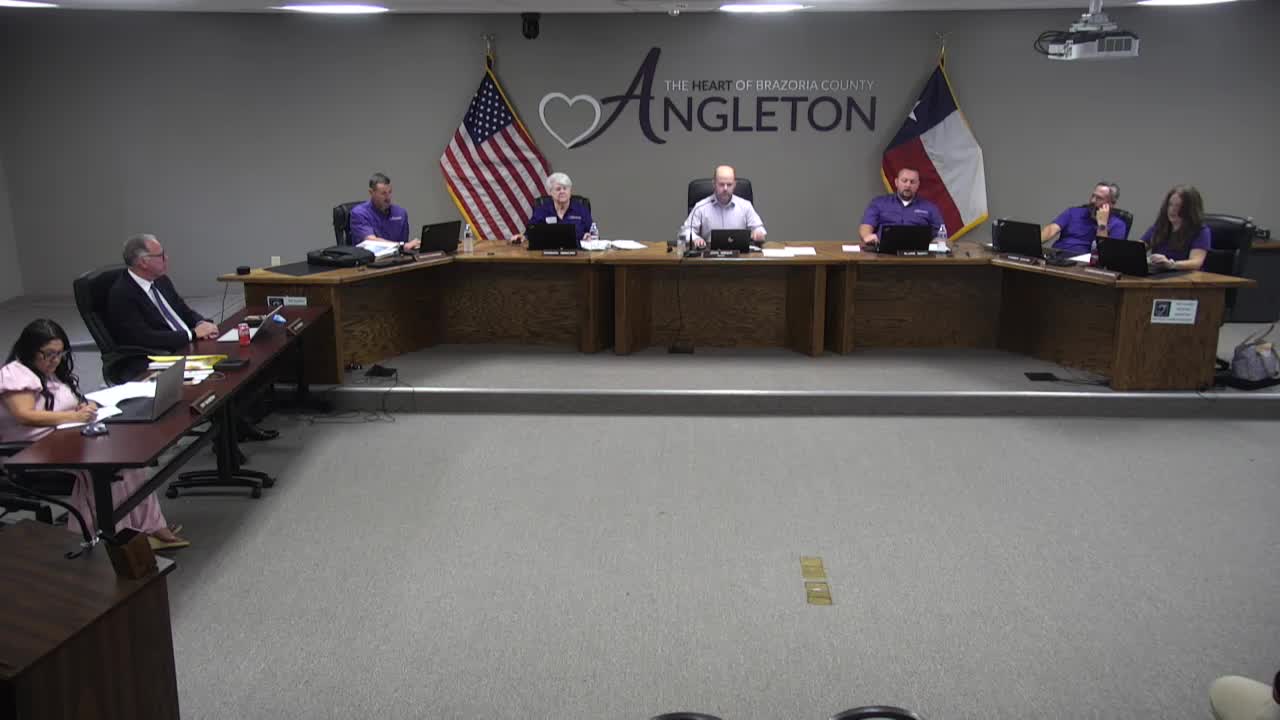
Angleton council approves rezoning of 1.69 acres on East Orange Street amid resident drainage concerns
Summary
The council rezoned about 1.69 acres on East Orange Street from light industrial to single-family 7.2 and approved the item after a public hearing in which a longtime resident described recurring backyard flooding and asked the city to address drainage on Orange Street.
The Angleton City Council voted to rezone roughly 1.69 acres on the 1,000 block of East Orange Street from light industrial to Single-Family Residential (7.2) after a public hearing and a motion to approve the ordinance.
The applicant sought to develop the parcel into single-family lots; city staff told the council the planning commission unanimously recommended approval after reducing the proposed lots from six to five because of lot-depth requirements. Otis, a city staff member, said the rezoning deviates from the city’s comprehensive plan designation of industrial because the parcel does not front on a major arterial and the surrounding area is single-family in nature.
At the public hearing, Miss DuBose, a resident of the neighborhood, urged the council not to allow additional homes on Orange Street until the city addresses long-running drainage problems. She said her family has lived on Evans and Orange for more than 60 years and described repeated backyard flooding, damage to a storage structure and a pattern of increased runoff since nearby development (referred to in the hearing as Kyber/Cover Reserve). “If they build houses on the upper end of Orange, the drainage will still come to the east toward us along Orange Street unless there is major work done to the Orange Street,” Miss DuBose said.
Otis and other staff told the council they will inspect the drainage described in DuBose’s photographs and coordinate with the drainage district. Otis said the developer, Mr. Candler, must submit a drainage plan with platting and that the drainage district and engineering review would occur at that stage. He also said any sidewalk-waiver request would be returned to council as a separate item.
Mayor Pro Tem Townsend moved to approve the rezoning; Councilman Smith seconded. After brief discussion the council voted in favor and the motion carried.
Why it matters: rezoning changes what types of development are permitted on the property and will require subsequent plat and drainage reviews that can affect neighboring properties. Residents flagged immediate neighborhood drainage problems they say predate the rezoning and asked the city to pursue maintenance and larger drainage improvements.
What happens next: the applicant must submit plats and engineered drainage plans for review by city development staff and the drainage district; any sidewalk-waiver request will return to council for separate action.