Get Full Government Meeting Transcripts, Videos, & Alerts Forever!
Get email alerts on the Domestic Violence Shelter topic
No spam. Unsubscribe anytime.
City of Austin opens new shelter for domestic violence survivors, unveils public-art installation
Summary
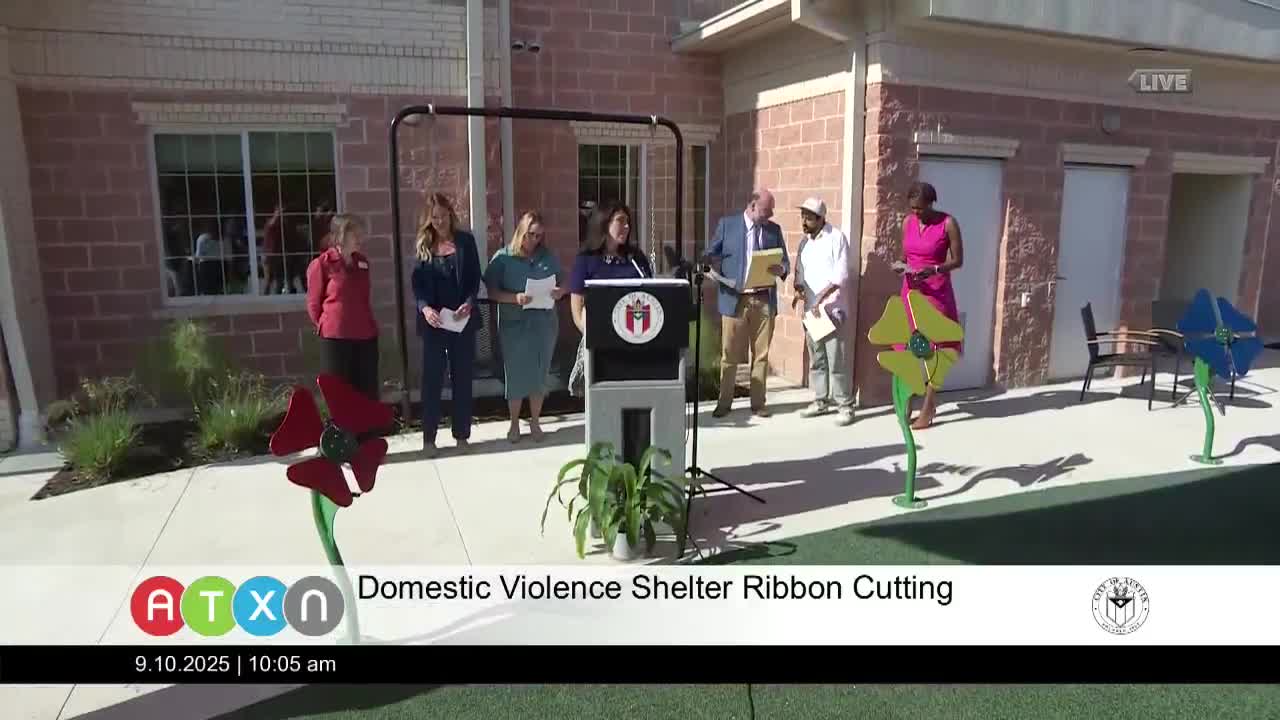
The City of Austin held a ribbon-cutting ceremony Sept. 10, 2025, to open a new shelter for survivors of domestic violence and their families, city officials said.
The City of Austin held a ribbon-cutting ceremony Sept. 10, 2025, to open a new shelter for survivors of domestic violence and their families, city officials said. Safe Alliance will operate the facility, which was converted from a motel and includes on-site case management, counseling, pantries and community spaces, officials said.
Vanessa Fuentes, Austin mayor pro tem, opened the ceremony and called the opening “a powerful moment for our community,” saying the shelter will offer a "healthy and safe place to rest, heal and reclaim power for our future." Fuentes spoke alongside Councilmember Chito Vela and other city and community leaders at the dedication.
The shelter is a city-managed capital delivery project converted from a motel. Cara Browse, director of Capital Delivery Services, said construction and design teams addressed structural and environmental challenges during the conversion and credited architects McKinny York and general contractor STR Constructors. Browse said the design prioritizes safety, dignity and healing and aimed to make the facility welcoming and sustainable.
Eddie Sterep, director of Austin Public Health, said the facility is intended to reduce the time survivors spend in unsafe conditions by streamlining access to services. “Survivors will no longer need to remain in danger or be unhoused,” Sterep said, announcing that Austin Public Health will coordinate with Safe Alliance on operations and equity-focused services.
Julie Span, executive director of Safe Alliance, described services the organization will provide: case management, peer support, counseling and material supports including on-site pantries. Span said city leaders and Safe Alliance officials had worked together after the council directed investment in an additional shelter. “When you walk through those doors you have an immediate sense of safety,” she said, describing security measures planned for the site.
Artist Felipe Gmez unveiled a three-part public artwork titled Ofrendas that officials said was created with input from survivors who attended community workshops. Gmez said the sculptures incorporate layered organic forms intended to invite interaction and reflection; city arts staff described the piece as a living, community-centered work meant to support healing.
Morgan Mesick, deputy director for ACME (arts, culture and music program), and other cultural partners praised the integration of public art into the project, saying the artwork provides long-term community value and amplifies survivor voices.
Officials acknowledged additional city staff and partners who contributed to the project, including public-safety agencies, the Austin Office of Public Information and several named public-health staffers. The ceremony concluded with a formal ribbon cutting and an offer of building tours and media interviews by Safe Alliance.
The city did not specify the shelter's bed capacity, annual operating budget or exact funding sources at the ceremony. Officials did say the project incorporated lessons learned from prior interim restrictions on motel-based shelters, and they credited a roughly five-year period of interim policies that informed the conversion.
Media requests for tours and one-on-one interviews were invited following the ceremony.