Get Full Government Meeting Transcripts, Videos, & Alerts Forever!
Get email alerts on the Open Meetings Task Groups topic
No spam. Unsubscribe anytime.
Commission keeps informal event task‑group model after review of Ohio Open Meetings rules
Summary
After a staff legal briefing on the Ohio Open Meetings Act, the commission voted to keep its task‑group approach to event planning while agreeing to procedures to avoid unintended public‑meeting violations, including using an event leader and one‑on‑one communications instead of joint emails or meetings.
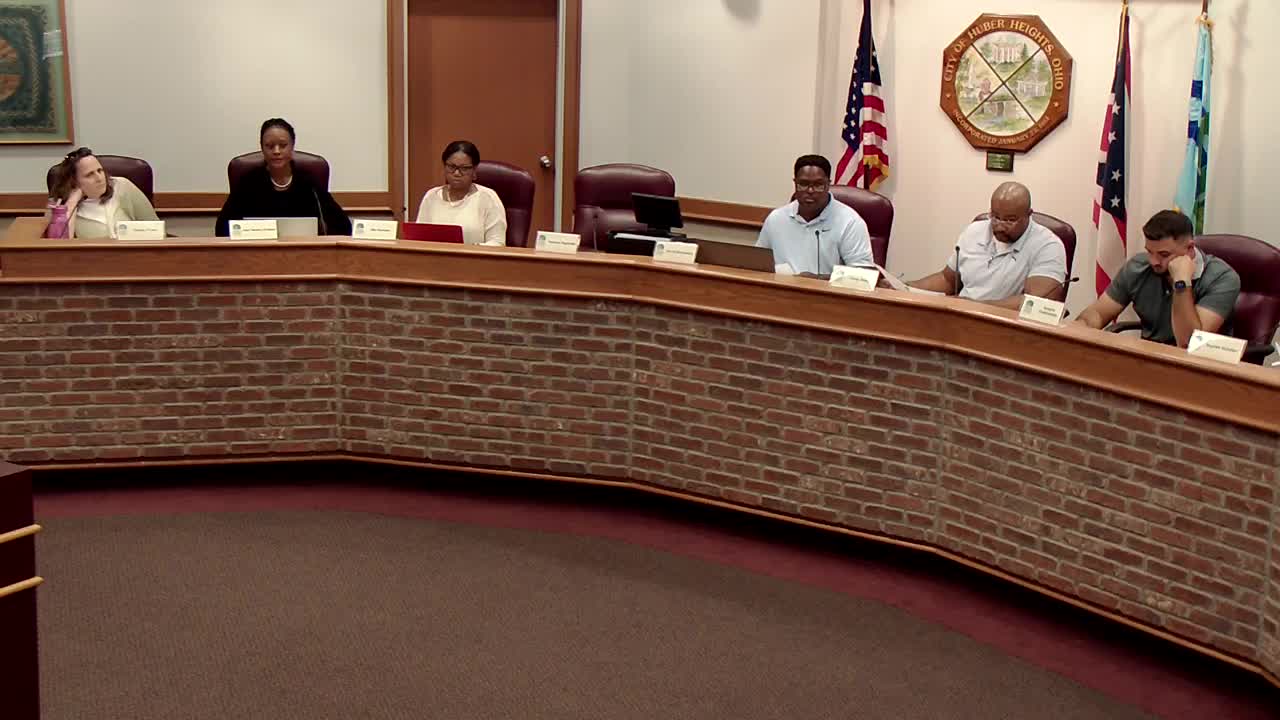
The Huber Heights Culture and Diversity Citizen Action Commission discussed how to plan events without creating improperly noticed public meetings and voted to retain its task‑group planning model while adopting staff guidance on communications.
Tony Rogers, Clerk of Council, and city staff explained the constraints of the Ohio Open Meetings Act: groups of commissioners meeting repeatedly for the same public‑business purpose may constitute a public meeting, which triggers legal requirements such as published notice, agendas and minutes. Rogers told commissioners that organized subgroup meetings that set dates and agendas are treated as public meetings and must be noticed.
To reduce administrative burden while remaining compliant, staff proposed an operational approach: designate an event leader (one commissioner) who may communicate individually with other commissioners to assign tasks, instead of using joint emails, group calls or three‑way conversations that could be interpreted as a meeting. Rogers explained the practical limits: "You can't have a joint email. You can't have a 3‑way phone call. Gotcha. You can't have a sit down meeting at a restaurant. All those constitute meetings." The council clerk also said the minimum public notice for a formally noticed subgroup meeting is 24 hours, though staff typically recommends more advance notice.
Commission members debated the tradeoffs between formal, noticed committees and lighter event‑lead coordination. Some members said they preferred formal, recorded subgroup meetings held at city facilities; staff noted city conference rooms and limited recording options are available if the commission chooses formal task groups and said Jeffery (the staff liaison) would manage notices and minutes for formally noticed subgroups.
After discussion the commission moved and seconded a motion to "not change the task groups" — effectively keeping the current model — and completed a roll call in which attending commissioners recorded their votes in favor. Commissioners also instructed staff to prepare a consistent process going forward, including designating event leaders, informing the staff liaison so notices can be posted if a formal subgroup meeting is required, and using one‑on‑one communications for informal coordination.
Staff clarified consequences: if the commission opts for formal task groups in the future, meetings must be publicly noticed, recorded and minutes maintained; if the commission prefers informal planning, the event‑leader/one‑on‑one approach avoids those requirements but places more onus on the leader to coordinate and on staff to advise.
The guidance will shape planning for upcoming events discussed that evening, including MLK Day planning, Juneteenth and the multicultural festival. Staff said they will publish a consistent internal process and support whatever structure the commission chooses for future events.
Tony Rogers and the staff liaison (Jeffrey) provided the legal explanation; commissioners who spoke included Christy Trotter, Jane Newby Alvasair, Yolanda Stevens and others.