Get Full Government Meeting Transcripts, Videos, & Alerts Forever!
Get email alerts on the Citizen Complaint Review Board topic
No spam. Unsubscribe anytime.
Culture and Diversity commission backs broader membership for Citizen Complaint Review Board and sends amendment to council
Summary
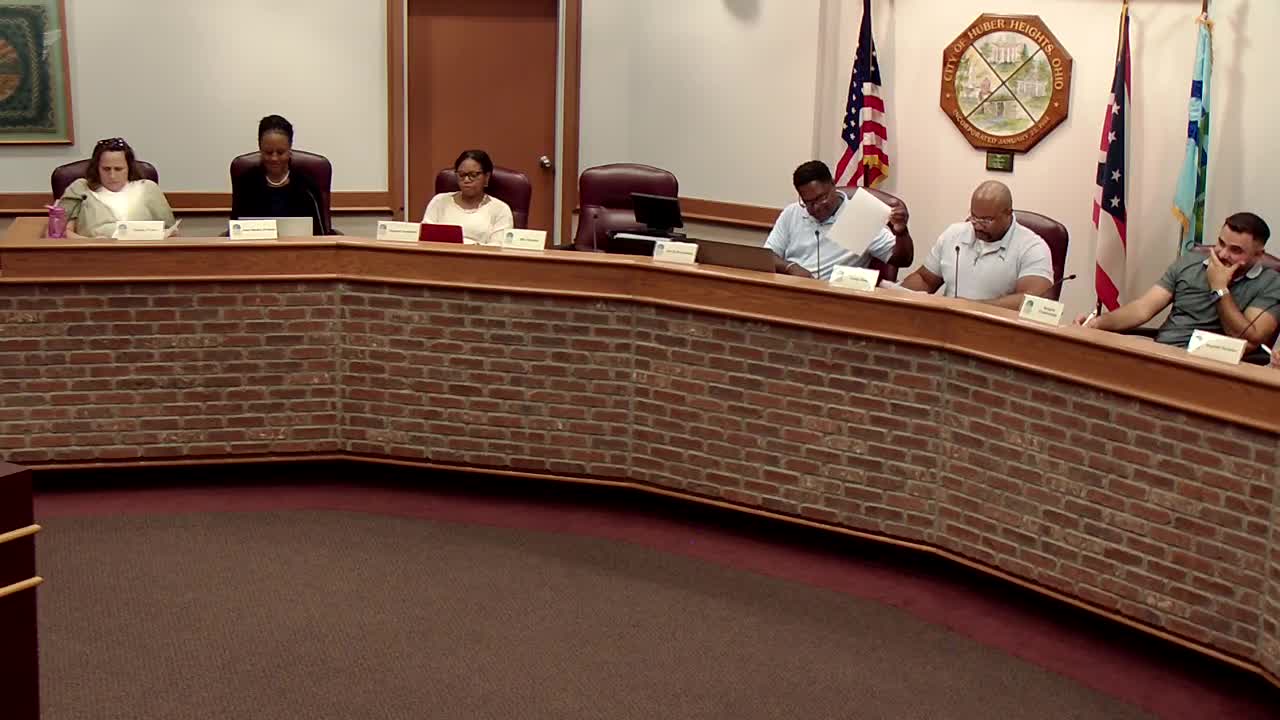
The Huber Heights Culture and Diversity Citizen Action Commission voted to recommend an amendment to the city ordinance establishing the Citizen Complaint Review Board to broaden membership criteria and allow the board to be formed.
The Huber Heights Culture and Diversity Citizen Action Commission voted to recommend an amendment to the city ordinance that established the Citizen Complaint Review Board (CCRB), asking city council to adopt broader membership criteria so the board can be staffed and begin hearing complaints.
The recommendation, presented by Tony Rogers, Clerk of Council, would replace the ordinance's narrowly prescriptive racial/occupation slots with language mirroring the commission’s membership standard: membership “will be balanced to reflect the culture and diversity of the community” and include members able to address discrimination and related community issues. Rogers told the commission the change is intended to reduce barriers that have kept the CCRB from forming and to allow qualified recent applicants to serve.
The move follows two years of limited recruitment. Rogers said the city had received five CCRB applications since the board was created in October 2023; one applicant withdrew and two high‑quality applicants remain but could not both be appointed under the ordinance’s original, narrowly defined slots. He said the city completed background checks for the two remaining applicants — Howard Adams and Tiara Bushire — and recommended sending the revised ordinance to council so the city can appoint them and continue recruiting toward a full board.
Commissioners debated process details and membership language during the meeting. Rogers also noted the ordinance retains the two originally proposed ex officio, nonvoting members (the city manager and the police chief). He said the amendment is a legislative change to the city code (section 168.04) and that if the commission supports it, the item will be taken to city council for formal consideration.
Commission members voted in favor of recommending the amendment in a roll call. The commission’s recommendation does not itself change the city code; city council must approve the ordinance for it to take effect.
What the change would do: it would broaden eligibility language from multiple narrowly enumerated slots (for example, slots tied to specific racial groups or a requirement of law‑enforcement/legal background for particular seats) to a standard focused on community representation, relevant knowledge, and ability to address discrimination. If council adopts the change, the two interviewed applicants would be eligible for appointment immediately, Rogers said.
Commissioners asked about outreach and future interview participation by commission members; Rogers suggested that while the established CCRB ultimately will participate in future selection, the Culture and Diversity commission could provide representatives to sit in on interviews until the CCRB is fully constituted.
The commission voted to recommend the amendment to council by roll call: Christy Trotter, Jane Newby Alvasair, Yolanda Stevens, Eric Richardson, Corey Hillman and Ibrahim Chachalitsa stated they were in favor. Rogers said he would take the commission’s recommendation to city council and continue recruitment.
The CCRB, as drafted in the original ordinance, is limited to reviewing complaints involving the Huber Heights Police Division and was conceived to provide a community resource for allegations involving discrimination on grounds such as race, color, religion or national origin. Rogers said the commission and staff expect to follow up with outreach and education once the board is seated so residents understand CCRB’s role and how to file complaints.
Next steps: the commission’s recommendation will be forwarded to city council for consideration as an ordinance amendment; if adopted by council the administration would proceed with appointments and further outreach.
Tony Rogers, Clerk of Council, presented the revision and framed the legal and administrative steps; commissioners who addressed the item included Christy Trotter and Yolanda Stevens.