Get Full Government Meeting Transcripts, Videos, & Alerts Forever!
Get email alerts on the Traffic Parking topic
No spam. Unsubscribe anytime.
Tamarac adopts neighborhood‑driven on‑street parking policy after months of debate
Summary
The City Commission amended code to remove a citywide overnight parking prohibition and created a process for neighborhoods to opt into enforcement via resident petition; commissioners also agreed to allow elected officials to add communities to the enforcement list in special circumstances.
The Tamarac City Commission on Sept. 10 approved changes to the city’s parking ordinance, eliminating a citywide overnight ban and creating a community‑driven process that lets neighborhoods decide whether on‑street parking should be restricted and enforced.
Under the new policy — adopted unanimously after extensive public comment — on‑street parking will be permitted citywide except in neighborhoods that either are already listed for enforcement or that obtain a petition signed by at least 55% of properties within the defined neighborhood boundary. The commission also added a provision allowing a commissioner to request that the commission add or remove communities from the restricted list by majority vote.
The ordinance revises Chapter 14 of the municipal code and adds an on‑street parking policy that defines neighborhoods, outlines petition and verification procedures, and establishes enforcement mechanisms. Staff told the commission they will assist neighborhoods with petition validation and mapping the neighborhood boundaries when requests are received.
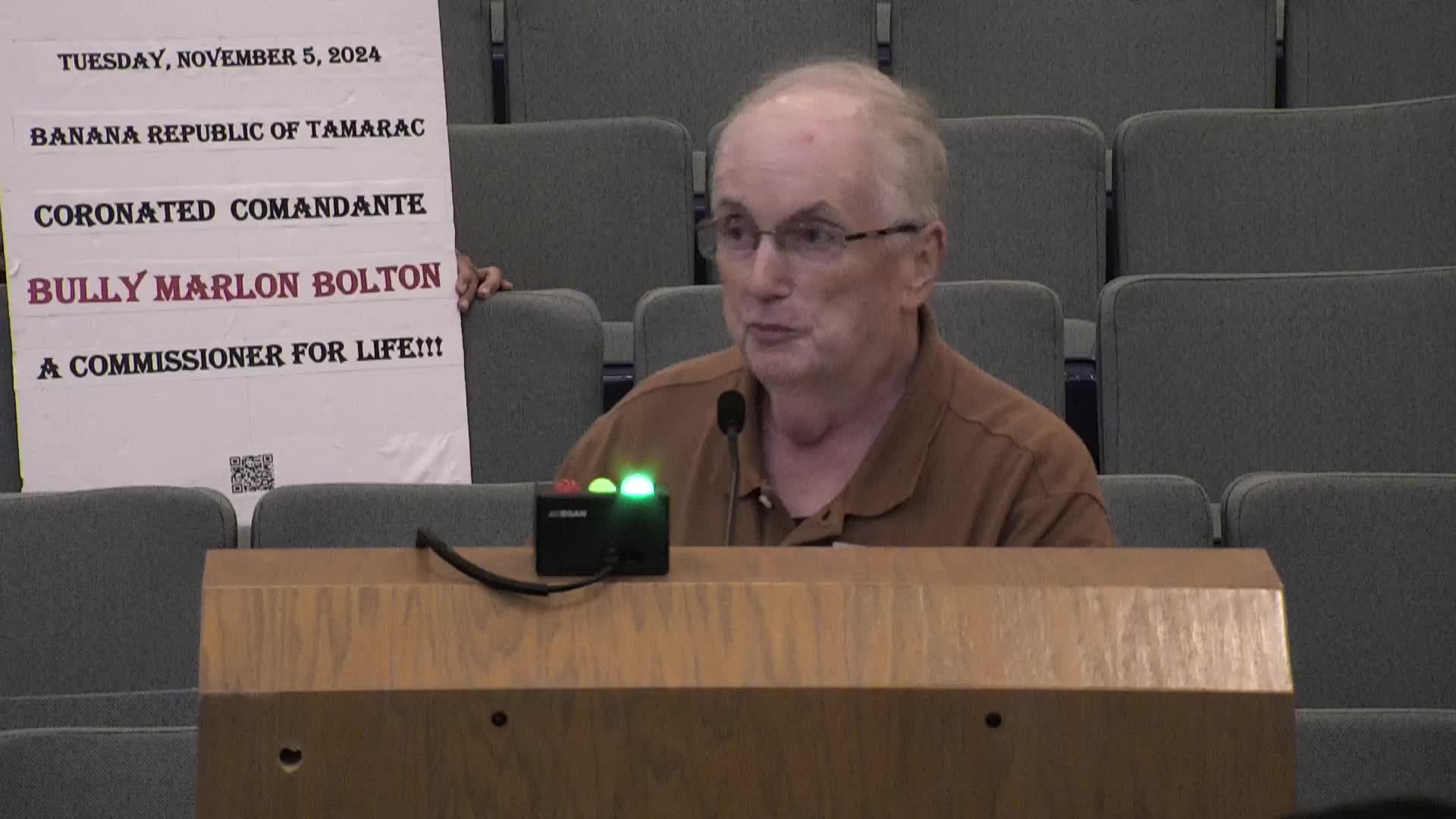
Public comment at the meeting was substantial. Several homeowners from older “Mainland” and Tamarac Lakes neighborhoods urged the commission to keep street‑parking restrictions in place, saying narrow streets and doubled‑parked cars create safety and emergency access problems. Other residents argued that many older homes have single‑car driveways and that blanket enforcement without flexibility would unfairly penalize families with multiple vehicles.
Commissioners and staff said the policy aims to balance those competing realities by letting each neighborhood decide. The policy also preserves existing enforcement agreements with neighborhoods that already contract with the city or otherwise have long‑standing restrictions.
The commission directed staff to clarify several administrative details before second reading, including how petition votes will be verified and how residents can secure temporary guest permits or limited exceptions for visitors. The ordinance passed on first reading and was amended to explicitly add several communities requested during the meeting (Tamarac Lake South and specified Mainlands) and to confirm the commission’s ability to add/remove neighborhoods as conditions change.
City staff and commissioners said they expect to return finalized language and administrative procedures at the second hearing.