Get Full Government Meeting Transcripts, Videos, & Alerts Forever!
Get email alerts on the Environmental Monitoring And Enforcement topic
No spam. Unsubscribe anytime.
Pollution Control warns staffing cuts would weaken air and emergency response; seeks sustained monitoring funding
Summary
Harris County Pollution Control said proposed personnel reductions and a loss of funding for a 24/7 air monitor at Friendship Park would reduce its ability to respond to emissions events and sustain community monitoring. The department emphasized that it supplements state monitoring and enforces county nuisance and environmental laws.
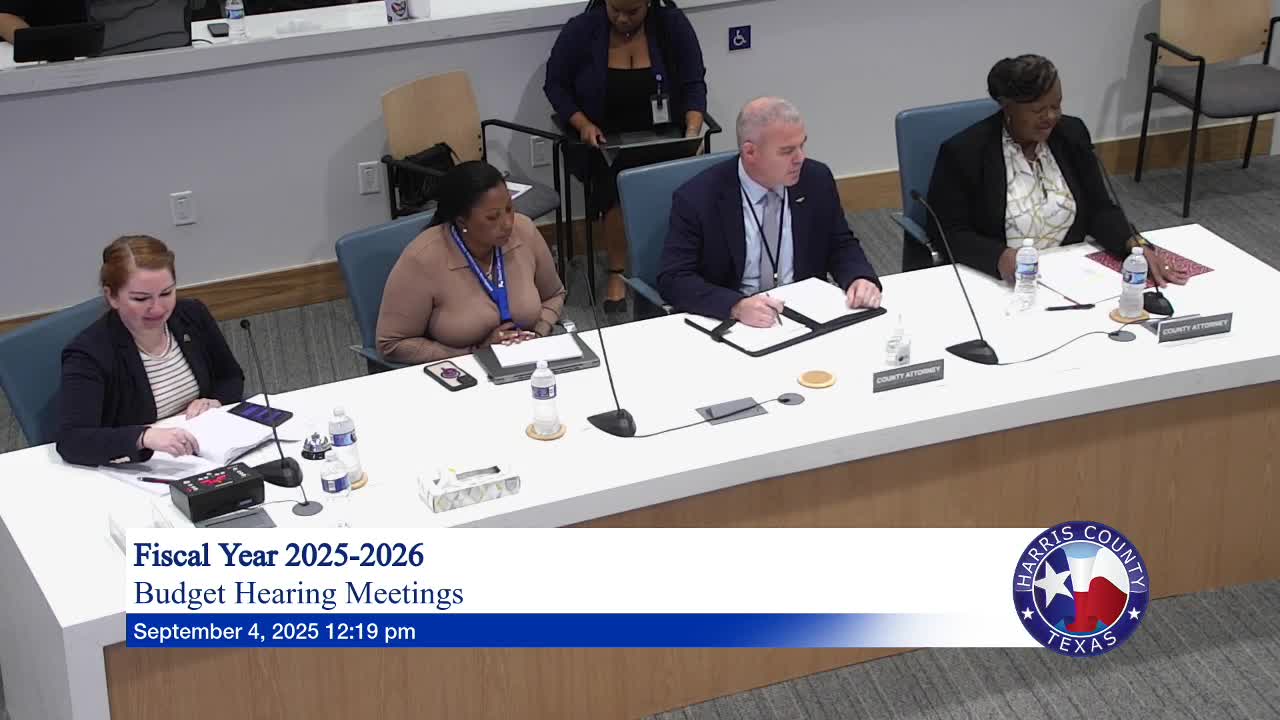
Dr. Babin, director of Harris County Pollution Control Services, told Commissioners Court the department has a long history of enforcing air, water and soil protections and that proposed staffing and funding cuts would hamper responses to emissions events, truck rollovers, fires and other incidents that affect public health.
The nut graph: Pollution Control emphasized the department’s role filling gaps left by state monitoring and enforcement, cited a 24/7 air monitor at Friendship Park as a critical community sensor the department currently funds, and urged the court to preserve staff and operational funding to avoid reduced monitoring and slower enforcement responses.
Dr. Babin said the department was established in 1953 and often enforces common‑law nuisance and public‑health rules in the absence of federal or state action; the office also partners with the Texas Commission on Environmental Quality (TCEQ) and city agencies. He described three core functions: enforcement for emissions events, broader scale litigation and federal regulatory engagement. His staff highlighted a recent case that led to EPA involvement in contamination near Union Pacific and the department’s role in ongoing site testing and community education.
Commissioners and staff pressed Dr. Babin on impacts of proposed reductions. He said the department currently maintains a network of air monitors (including 32 particulate/ozone monitors), field investigators, enforcement coordinators and a small emergency‑response team; reductions would slow response time and reduce maintenance visits to monitors, which the department said are typically checked two to three times weekly. Dr. Babin said five currently vacant PCNs would be at risk and that the department has already struggled to hire for specialized vacancies.
On monitoring, the director said a Friendship Park full‑suite monitor (a more comprehensive continuous monitor) was supported by grants that have ended; the department requested $200,000 in funds to sustain that monitor. He said losing that monitor would remove a valuable, high‑resolution data source for ethylene oxide and other industrial compounds in a heavily industrialized area.
Ending: Dr. Babin asked the court to weigh the department’s role in protecting vulnerable communities and maintaining compliance work that prevents recurring contamination, and he urged preserving staffing and the Friendship Park monitor funding while the court completes budget deliberations.