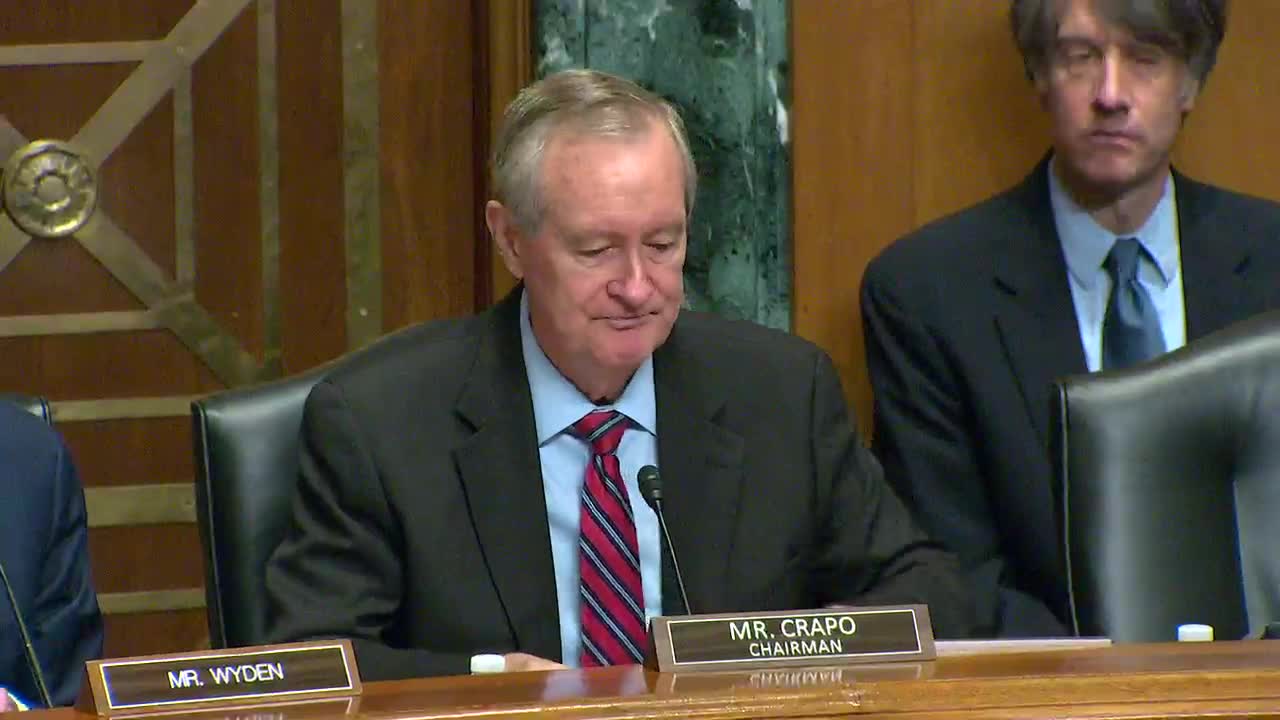
Senate Finance Committee grills HHS Secretary Robert F. Kennedy Jr. on vaccines, CDC shake-up, rural hospitals and drug costs
Get AI-powered insights, summaries, and transcripts
SubscribeSummary
The Senate Finance Committee heard testimony and extensive questioning on HHS policy from Secretary Robert F. Kennedy Jr. on Wednesday, with senators pressing him on changes at the Centers for Disease Control and Prevention, new vaccine guidance, rural hospital funding under the administration's "1 big beautiful bill," and drug-pricing and pharmacy benefit manager reforms.
Kennedy told the committee the administration is executing "a once-in-a-generation shift from a sick care system to a true health care system" and defended actions he said restore agency transparency and reduce waste. "Stopping this duplicate enrollment while working with states to ensure that individuals do not inappropriately lose coverage has the potential to save taxpayers $14,000,000,000 annually," he said, citing CMS work to eliminate duplicative Medicaid and marketplace enrollments.
Why it matters: Committee members said Kennedy's agenda affects core public-health systems, drug costs and rural access to care. Several senators warned that agency reorganizations and changes to vaccine advisory panels could reduce public confidence and vaccine uptake; Republicans and Democrats also pressed him on the budgetary and programmatic consequences of the administration's health legislation.
Topline discussion
- CDC leadership and vaccine policy: Ranking Member Ron Wyden and other Democrats sharply criticized Kennedy for removing long-standing advisory members and replacing CDC panels with appointees they called outside the scientific mainstream. Wyden said the administration had "elevated conspiracy theorists, crackpots, and grifters to make life or death decisions about the health care of the American people." Kennedy replied that the changes were needed to "depoliticize" panels and to restore public trust by being more transparent about evidence and conflicts of interest.
- Access to COVID and childhood vaccines: Senators repeatedly asked whether changes in federal recommendations would make vaccines harder for parents to obtain. Kennedy said he would not "recommend a product for which there's no clinical data for that indication" but also said vaccines remain available to those who want them. Multiple senators — including Republican and Democratic members — warned a lack of clear guidance or advance publication of evidence could create practical access and insurance-coverage problems at pharmacies and clinics.
- Rural hospitals and the "1 big beautiful bill": Kennedy defended a program in the administration's legislation that dedicates $50,000,000,000 over five years to rural health care, calling it "the biggest investment of federal money into rural health care in history." He and senators discussed how that funding relates to existing Medicaid flows to rural hospitals (which Kennedy said are roughly 6% of Medicaid funding today) and how the new dollars would be distributed to help stabilize local facilities.
- Drug pricing and pharmacy benefit managers (PBMs): Several senators, including Senator Catherine Cortez Masto, pressed the secretary on provisions in the administration's bill that they said exempt high-cost cancer medicines from negotiation and on whether the department is using its authority to lower prices. Kennedy said the administration is pursuing multiple pricing tools, including negotiations under MFN-like talks and reform of PBM practices to increase transparency.
- Reproductive health and mifepristone review: Senators asked whether FDA and HHS would reexamine safety data and telemedicine allowances for mifepristone. Kennedy said the agency is reviewing recent data and that he would follow up with senators about the review's scope and any planned epidemiological work.
- Research and long COVID: Senators asked about therapeutics and clinical trials. Kennedy said HHS is launching a long-COVID consortium and will partner with clinicians treating the condition to identify promising protocols and accelerate trials.
Substantive concerns raised by senators
- Scientific independence and agency morale: Democrats repeatedly said firing CDC experts and replacing advisory panels risks politicizing recommendations. Several senators asked whether career scientists were being sidelined and whether career CDC staff had been able to brief the secretary before major changes.
- Practical access to vaccines: Multiple senators described anecdotal reports from providers and pharmacies that the change in recommendation status for COVID boosters has introduced confusion about insurance coverage, off-label prescribing, and whether pharmacists may require prescriptions in some states.
- Budget and implementation risk: Senators pressed how quickly rural hospital funds would flow, how CMS will implement payment changes, and whether the administration's program-integrity actions would materially lower premiums or offset other cost increases.
What Kennedy said he's doing
- Reorganizing CDC and other HHS agencies to remove officials he said had conflicts and to increase transparency of evidence and advisory deliberations.
- Moving to detect and eliminate duplicative Medicaid and marketplace enrollments and expanding state eligibility-verification tools to protect program integrity.
- Advancing a rural health transformation fund and working on wage-index adjustments and Medicare program changes intended to shore up rural hospitals.
Quotes to note
- Secretary Robert F. Kennedy Jr.: "We are enacting a once in a generation shift from a sick care system to a true health care system that tackles the root causes of chronic disease."
- Senator Ron Wyden: "Robert Kennedy has elevated conspiracy theorists, crackpots, and grifters to make life or death decisions about the health care of the American people."
What to watch next
Senators were given the opportunity to submit written questions for the record; Chairman Crow set a deadline for questions and the committee signaled it will continue oversight through written follow-ups. Lawmakers who said they want more transparency also signaled potential legislative follow-up on PBMs, Medicare drug-price tools, and conditions for rural hospital support.
Ending
The committee did not take any formal votes during the hearing. Senators on both sides signaled continuing oversight: Democrats warned agency changes risk public-health harms and Republicans and some Democrats pressed the department to move faster on rural funding and program integrity. The secretary committed to provide follow-up briefings and data to senators who requested them.