Get Full Government Meeting Transcripts, Videos, & Alerts Forever!
Get email alerts on the Liquor License Distance topic
No spam. Unsubscribe anytime.
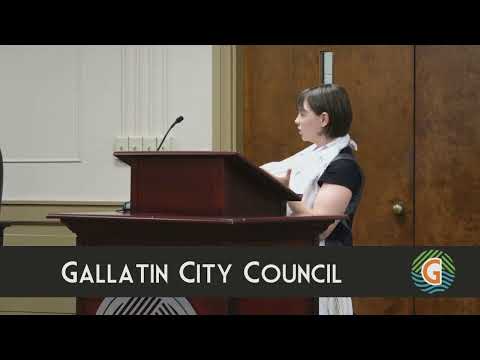
Gallatin council hears hours-long public debate before approving first reading to remove 1-mile spacing for retail liquor stores
Summary
After more than two hours of public comment, the Gallatin City Council approved first reading of an ordinance that would delete the municipal 1-mile distance requirement between retail liquor stores. The item drew dozens of citizens and lengthy council discussion about neighborhood impacts, historic license values and addiction concerns.
The Gallatin City Council on Sept. 2 approved on first reading Ordinance O-02509-46, which would delete the municipal distance requirement in Gallatin Municipal Code section 3.55 that currently separates retail liquor stores by a Bridal mile, moving the change to second reading for final action.
The measure drew an extended public-comment period in which residents, small-business owners and clergy urged both sides: some said closer liquor stores would improve neighborhood convenience and support small-business expansion, while others warned the change would degrade community character, reduce the value of existing licenses and increase temptation for people recovering from addiction.
Supporters of relaxing the distance requirement included small-business owners such as Cam Patel (citizen), who said neighborhoods on the city’s east side lack nearby retail liquor access and that a closer spacing would serve residents who lack reliable transportation. "We need something over here," Patel said during public comment. Several other local residents and small-business owners — including Crystal Woodmore and Misty Staten — spoke in favor, describing the applicant as a known local merchant and stressing job creation and convenience.
Opponents included long-time business owners and clergy. Dominic Wade, who identified himself as a manager and business owner, said the change two years ago already reduced existing license values and has harmed established shops; he told the council his store had experienced a "35% loss of sales." Bishop Michael Clark and several other speakers, including Ashley Smothers, described addiction and public-safety concerns. "There was a liquor store easily accessible to me less than half a mile from my house, and I drank every day," Smothers said, describing her recovery and urging caution.
Council discussion revisited the ordinance’s history and the special legal status liquor licenses once held. Several council members noted the ordinance change would not directly grant any specific license but would remove a local spacing limit that had previously been set based on population thresholds. "Those businesses had a different set of rules than your average businesses," Councilman Alexander said, reviewing the policy background; he also said he would personally abstain from purchasing alcohol but viewed this item as removing a government limit on business location.
The first reading passed on a council voice vote with four members in favor, two opposed and one abstention, moving the ordinance to a second reading where a final vote will decide whether to adopt the amendment to the municipal code.
The council and staff did not tie the ordinance to a particular applicant during the meeting; multiple residents spoke in support of a named local proprietor, but council members emphasized the change would apply citywide if adopted. The city clerk confirmed the municipal-code section referenced in the motion as Section 3.55. Mayor Brown and council members indicated they may seek additional background about the number of active liquor licenses in the city before final adoption.
The council opened and closed a broad public-comment period before making the motion. The item will return to a future meeting for second reading and a final vote.