Get Full Government Meeting Transcripts, Videos, & Alerts Forever!
Get email alerts on the Aging Services Funding topic
No spam. Unsubscribe anytime.
Central Minnesota Council on Aging requests $3,131 from Morrison County; commissioners approve funding
Summary
Central Minnesota Council on Aging presented services it provides to older adults in Morrison County and asked the county for $3,131 toward 2026 operations; the Board of Commissioners approved the request by roll-call vote.
Laurie Varlson, executive director of the Central Minnesota Council on Aging, told the Morrison County Board that the agency provides Older Americans Act services across 14 counties and requested $3,131 from Morrison County for 2026. Nathan Bertram, the county’s health and human services director, introduced the request and explained that counties historically provide a small match to draw down federal Older Americans Act funds.
Varlson said the council allocated roughly $4.6 million across the 14-county region in the prior year, funding 24 contracts and serving more than 24,000 older adults. She reported that approximately $363,696 was spent on services in Morrison County last year (presenter’s figure). Programs and contractors in Morrison County included senior linkage line counseling (about 794 units of options counseling), assisted transportation (about 1,258 rides), chore services (about 137 hours), homemaking (about 1,114 hours), evidence-based health-promotion classes (about 45 participants), 626 congregate meals, traditional home-delivered meals and frozen meal distribution sites with monthly distributions.
Varlson described demographic drivers: a rising older-adult population statewide and a higher share of residents age 60+ in Morrison County (presenter said almost 28% of county residents are 60 or older). She noted that federal ARPA funds previously bolstered services and that a new interstate funding formula plus sunsetting ARPA allocations reduced available resources; the council said it received a $250,000 statewide allocation in 2026 and will need to target services more tightly.
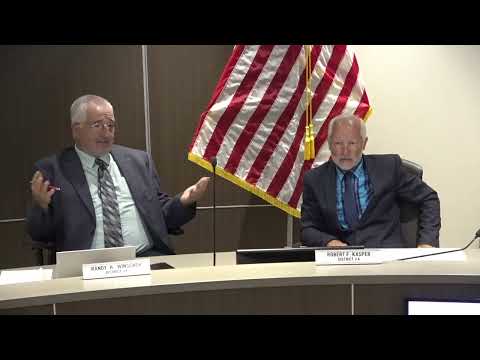
Commissioner Winter moved to approve the county contribution; Commissioner Casper seconded. The board approved the request by roll call: Commissioner Casper — aye; Commissioner Winter — aye; Commissioner Moran — aye; Commissioner Ramirez — aye; Commissioner Blaine — aye. County staff said the requested county contribution supports administrative match to draw down federal Older Americans Act funding and will be handled through the Health and Human Services budget.
Varlson and Bertram answered commissioners’ questions about how residents access services (via the senior linkage line and local provider partners) and clarified that Older Americans Act services are provided on a donation basis rather than means-tested eligibility.