Get Full Government Meeting Transcripts, Videos, & Alerts Forever!
Get email alerts on the Crop Insurance topic
No spam. Unsubscribe anytime.
Georgia farmers say federal hurricane crop product and weather-station failures left many unpaid
Summary
Farmers and crop insurance agents told the House study committee that a federally administered supplemental hurricane crop product paid some producers but left others unpaid after NOAA stations failed; witnesses described distress, lost roofs and livestock and rising input costs.
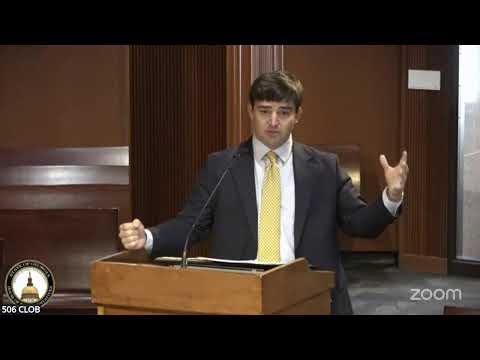
Ben Boyd, a row-crop farmer from Screven County and a member of the Georgia Farm Bureau board, described the aftermath of a recent storm and how a new crop insurance hurricane product failed to pay in parts of his county because weather stations were damaged.
“We woke up, and it looked like a movie. I mean, it was terrible,” Boyd said of the storm’s immediate damage in his county. He described clearing roads, checking on neighbors, lost homes and livestock, and nine days without power. He said Farm Bureau representatives inspected his damaged house and left with a check, but that other claims and losses remained unresolved.
Boyd recounted buying a supplemental RMA (Risk Management Agency) hurricane product that required a NOAA station to record specified criteria — a 40-mph wind trigger and six inches of rain — to produce a payment. He said local NOAA stations were destroyed in the storm, and later RMA modeling concluded many farms did not meet the 40-mph wind trigger. “They wouldn't go back and study,” Boyd said of the post-event review; “the modeling showed that we didn't have 40 mile per hour winds.”
Amanda Walker, a crop insurance agent with Alpecin Ag Insurance who works in Coffee County, told the committee that many agricultural lines were hit — timber, pecans, chicken houses, cotton and tobacco — and that a supplemental hurricane product is common in her book. “I would say 95 percent of my book of business takes the hurricane product on top of their regular crop insurance,” Walker said. She said most farmers bought more hurricane coverage for 2025 after recent storms, but that even when the product pays “it does not completely make up these losses. They are still in the hole. They are financially struggling.”
Walker and Boyd highlighted two practical problems that the committee discussed: first, NOAA-sensor and data interruptions that prevented direct observation triggers; second, that the hurricane supplemental product reduces but does not eliminate farm losses when damage also depresses commodity prices or increases cleanup costs.
Committee members asked whether farmers were increasing coverage for 2025 and whether prices for those supplemental products rose. Walker said the RMA sets product prices and she had not observed a price increase for the hurricane product between 2024 and 2025, but confirmed farmers were buying more supplemental coverage.
The hearing included multiple personal accounts of structural damage, displaced families and long-term financial stress. No formal actions were taken; committee members said they will continue to gather information across future meetings and explore mitigation and assistance options.