Get Full Government Meeting Transcripts, Videos, & Alerts Forever!
Get email alerts on the Budget And Taxes topic
No spam. Unsubscribe anytime.
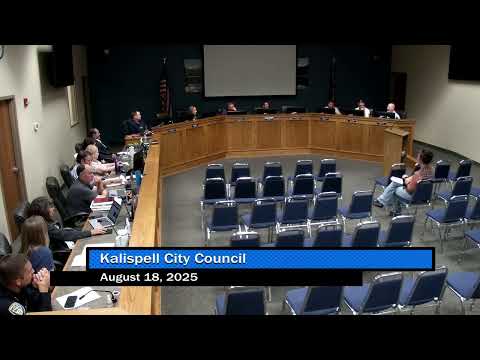
Kalispell adopts 2026 budget, mill levy and multiple special‑district assessments; council splits on mill levy size
Summary
The council adopted the fiscal 2026 budget and set the annual mill levy and appropriations, plus several special‑district assessments. Councilors debated keeping reserves and mills "on the shelf"; the mill levy resolution passed narrowly while final appropriations largely passed with majority support.
The Kalispell City Council on Aug. 18 approved the city’s fiscal 2026 budget, annual appropriations and a series of special‑district assessments while setting the municipal mill levy. The package included the general fund appropriations, a $600,000 reserved capital set‑aside for a future shop/central garage, and assessments for storm sewer, urban forestry, lighting, street maintenance and solid waste.
City Manager Doug Russell summarized the effects of recent state tax changes on valuation and mills, noting the value per mill had dropped to roughly $71,000 this year from about $76,000 last year. Russell told council that because the taxable value of many residential properties was reduced by state reclassification, jurisdictions must adjust mills to produce comparable revenue; he urged caution because the shift could push tax burdens to other property classes.
Council approved Resolution 62‑80 setting the annual mill levy for fiscal year 2026 after discussion about how many mills to keep "on the shelf." Councilor Dowd argued for retaining more mills as fiscal prudence; other councilors said the legislature’s recent actions make mills‑on‑the‑shelf more precarious. The mill levy resolution passed by roll call (Councilor Hunter, Councilor Nunnally, Councilor Carlson and Councilor Graham voting aye; Councilor Dowd, Councilor Fisher and Mayor Johnson voting no).
The annual appropriations resolution (Resolution 62‑81) passed with the majority of councilors voting aye; Mayor Johnson recorded a no vote. The council also adopted several special‑district assessments by roll call: storm sewer (Resolution 62‑82), urban forestry (62‑83), lighting (62‑84), street maintenance (62‑85) and solid waste (62‑86); those measures carried as presented.
Russell noted the budget maintains the city’s 20% reserve policy and that the council set aside $600,000 toward future capital for a shop/central garage. Council members debated reducing the levy further to add mills to the cupboard (placing more mill capacity “on the shelf”) versus maintaining reserves; staff warned reductions would make it harder to recover reserves if growth slows.
Why it matters: The package sets tax and spending authority for the city for fiscal year 2026 and funds ongoing operations and maintenance programs, including street and stormwater maintenance and urban forestry services. The council’s near‑split vote on the mill levy underscores tension between reducing taxpayers’ immediate burdens and maintaining financial reserves for future needs.
Implementation: Staff will implement the appropriation and assessment resolutions and return with any necessary follow‑up work sessions, including discussion of funding options for the new shop complex.