Get AI Briefings, Transcripts & Alerts on Local & National Government Meetings — Forever.
Developer presents 254‑lot settlement proposal for 101 acres; council presses for details on access, MUD and drainage
Loading...
Summary
At a special Parker City Council workshop on Aug. 14, developer Jordan Ramirez outlined a proposed settlement and development agreement for 101 acres that would allow 254 homes, while residents and council members pressed for clearer language on Gregory Lane emergency access, a proposed MUD, drainage and condemnation authority.
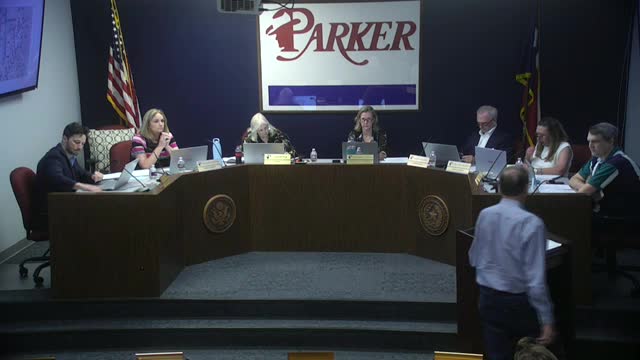
Developer Jordan Ramirez presented a proposed settlement and development agreement for 101 acres of land at a special Parker City Council workshop on Aug. 14, 2025, offering a plan for 254 residential lots and a package of agreements he described as a "peace treaty" intended to end years of litigation and neighborhood opposition.
The proposal prompted sharp questions from residents and council members about traffic and emergency access on Gregory Lane, the terms of a municipal utility district application that Ramirez said lists $44,000,000 in bonded debt, the potential need for a wastewater treatment plant, and legal language about eminent domain and drainage that council members called too vague to approve without redlines.
Why it matters: The 101‑acre tract, formerly owned by Barbara Turner and now tied to Huffines-related partnerships, has been the subject of multi‑year disputes, lawsuits and competing development concepts. Ramirez and supporters framed the settlement as an alternative to continued court fights and to higher‑density or nonresidential uses the landowner could pursue; opponents and several council members said the draft agreement lacks the technical and legal specificity the city would need to bind future actions.
Ramirez said the 254‑lot plan represents the lowest density the current economic model will support and emphasized features he said are intended to address neighbors’ concerns, including limiting new access through Gregory Lane to "emergency access only," commitments to restore Gregory Lane after construction, and removal of a proposed wastewater treatment plant if water and sewer can be provided by Parker or adjacent Murphy. Ramirez also said county fire‑marshal requirements for two points of access can be satisfied by installing sprinkler systems in homes so the county will allow emergency‑access arrangements.
Residents and council members pressed Ramirez and his team for missing details. Ray Heming, a Parker resident, told the council he opposed denser, smaller‑lot housing, saying the proposals could amount to a "significant, maybe even double digit increase to the population of the city of Parker." Emily Plummer, who said she owns part of Gregory Lane, urged that any emergency access be constructed to discourage future conversion to a full road, suggesting "concrete webbing in the grass that's strong enough to support a fire truck." Several council members and residents asked for explicit, written assurances and for technical exhibits that show exact lot sizes, drainage calculations, detention‑pond sizing, and a clear list of any offsite property that could be subject to condemnation or right‑of‑way use.
Council members repeatedly said the draft development agreement is sketchy on key points. One council member noted the document states a minimum lot size of 8,000 square feet but that the accompanying exhibit shows 53 lots at about 7,700 square feet. Other questions raised by council included whether variances would be required for lots on Panorama Drive, who would choose or control builders and lot sales, and what the city would be bound to allow in the future if it signed the settlement.
Ramirez said the development agreement has been open to negotiation and that the major items are negotiable except the 254‑lot density, which he described as the economic floor. He also described three paths the landowner could follow if the agreement is not approved: continued litigation and delay; alternative nonresidential uses such as warehouses that do not require city approvals; or a multifamily path that could proceed with a permitted wastewater treatment option.
Technical and legal points discussed at the workshop included: - A municipal utility district (MUD) application Ramirez said lists $44,000,000 in debt; council members expressed concern about household liability and long‑term MUD risk. Ramirez said legal counsel told him TCEQ hearings on a MUD are typically procedural and that denial would be unprecedented. - Drainage and flood liability: Ramirez cited "state law section 11.806," saying that state law would place liability on a developer for flooding caused by the development; council members asked for flood‑study exhibits and specifics on where detention basins and drainage easements would run. - Emergency access and county requirements: Ramirez said the county fire marshal indicated two points of access are required but that sprinklered homes can be an acceptable alternative that would allow the county to approve two emergency access points instead of two full public roads; Ramirez acknowledged he did not yet have that guidance in writing and said he would obtain it. - Imminent domain/condemnation language: Council members requested tightened language or removal of broad condemnation authority and asked Ramirez to identify specific parcels or infrastructure the developer might seek to use.
The workshop included multiple residents who urged the council not to approve a plan that would add traffic to local streets or rely on Gregory Lane as a construction or permanent thoroughfare. Several council members said they could not recommend signing the settlement as currently drafted and requested a redline process with the city attorney and the developer’s counsel to add technical exhibits and narrow legal language.
Next steps: Ramirez said he is available to work with the city and expects to supply requested details; he said he could meet council’s requested September 1 target if the city is willing to proceed. Councilmembers and staff said they would compile a list of specific redlines and technical items for Ramirez and his team and planned at least one additional workshop and an executive‑session attorney‑to‑attorney negotiation to consider legal issues. No formal council action or vote occurred during the workshop.
The council closed the workshop and recessed into executive session to discuss negotiation strategy and potential legal matters. Ramirez and neighbors were left with the choice posed repeatedly in the meeting: pursue the proposed settlement with detailed legal and technical redlines, or continue the existing litigation and regulatory paths that remain available to the landowner and opponents.