Get Full Government Meeting Transcripts, Videos, & Alerts Forever!
Get email alerts on the Dormant Entitlements topic
No spam. Unsubscribe anytime.
Commission seeks cautious approach to dormant entitlements for inactive PDDs; attorney warns of vested-rights constraints
Summary
Commission discussed criteria for treating planned-development entitlements as dormant and was advised by the city attorney that state vested-rights law and recent legislative changes limit the city's ability to cancel entitlements without due process and clear grounds.
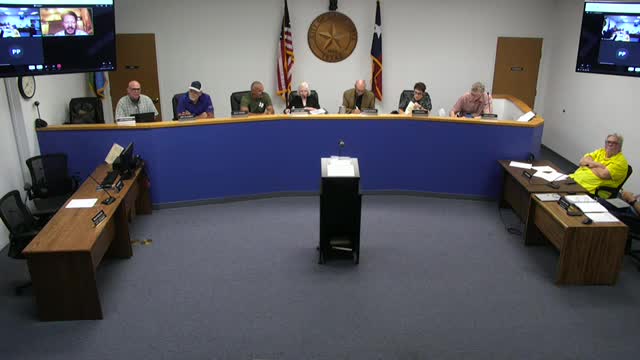
Planning and Zoning Commissioners discussed how to handle dormant entitlements for inactive Planned Development Districts (PDDs) and other developments on Aug. 14, and the city attorney cautioned the commission to proceed carefully because of state vested-rights law and recent legislative changes.
City Attorney Brad explained that Texas’s statutory and case law on vested rights (noted in the meeting as Chapter 245 of the Local Government Code) makes it difficult to declare a project dormant if a developer has taken steps in the project’s timeline that constitute ongoing activity. Brad said the law favors preserving vested rights so long as the project has not materially changed, and that municipalities face legal limits on retroactively rescinding entitlements. He added that recent legislative changes further constrain municipal regulatory authority.
Commissioners discussed practical approaches. They suggested creating a process that would: (1) identify potentially dormant entitlements, (2) notify owners and request proof that work or permit-related activity is ongoing (for example, engineering work, federal or state permits, or other expenditures tied to the project), and (3) only proceed with rezoning or entitlement revocation after due notice and a public hearing if the owner cannot show continuing project activity.
Why it matters: Deadlines and dormancy rules affect whether old entitlements remain valid, influence future land-use and zoning options for sites, and can have financial consequences if the city is perceived to have improperly taken away rights. Commissioners said they want clear, defensible criteria and a process that gives property owners opportunity to show they are actively pursuing the development.
Direction: The commission asked the city attorney and staff to prepare a memo outlining potential dormancy criteria and a recommended notification and hearing process; commissioners requested that staff include applicable state statutes and recent legislative changes in the memo.
Quotes: Brad summarized the legal constraint: “Texas is a developer-friendly state. The law is crafted in such a way that it makes it hard to establish dormancy.” Commission members proposed that if staff suspects dormancy they should ask the owner for documentation that work is ongoing; if no proof is provided, staff may initiate a public process to reevaluate entitlements.
Next steps: Staff and the city attorney will draft guidance and a procedural memo for the commission to review; commissioners said they will not move to alter entitlements unilaterally without that staff-supported process and required public notice.