Get Full Government Meeting Transcripts, Videos, & Alerts Forever!
Get email alerts on the Trails Recreation topic
No spam. Unsubscribe anytime.
Committee flags Loafer Mountain WMA licensing issue as it finalizes trail goals
Summary
Woodland Hills’ Community Development Committee reviewed draft goals for trails, maintenance and stewardship and discussed how a 2024 state regulation that can require a hunting or fishing license on some Wildlife Management Areas could affect plans for the Switchbacks Trail into Loafer Mountain WMA.
Woodland Hills’ Community Development Committee reviewed draft goals for trails, trail maintenance and stewardship on Aug. 11 and discussed how a 2024 state regulation affecting Wildlife Management Areas (WMAs) could affect plans for the Switchbacks Trail that continues onto Loafer Mountain WMA.
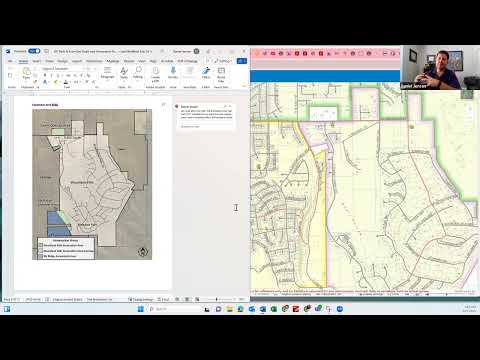
Daniel Jensen of Sunrise Engineering summarized the trails work and said the city’s contracted trails study focuses on logistical questions for the Woodland Hills Trail: right-of-way needs, trail width, cost, and where the trail should sit relative to the road. He noted the study is not a broad network plan but will inform final texts and goals in the general plan.
Jensen told the committee that recent state action requires a hunting or fishing license to access certain WMAs along the Wasatch Front and that Loafer Mountain is included in that list. “The new regulation that came in to the 2024 bill requires a hunting or fishing license to go on a WMA in a a certain area,” Jensen said. He added that the regulation is not statewide and that other WMAs farther from urban areas are not affected.
Committee members expressed concern that formalizing a trail connection into a WMA could prompt the state to increase enforcement or close informal access. Kirsten Thompson said she was unsure whether the city should include stronger language in the general plan: “This is my concern. I don't know if we should have something in there if it's not necessarily public now, maybe.” Committee members favored softer language: they suggested changing draft wording from “pursue potential” to “explore potential” to leave room for future changes in state policy or DNR authorization.
The committee also discussed trail maintenance and stewardship. Members and Jensen noted there is not currently a formal, scheduled maintenance program for trails and that volunteer coordination is informal. Jensen recommended a maintenance schedule, use of best-practice trail design (armoring, outsloping, water bars) to prevent erosion, and the use of trail counters to document usage data for potential grants.
Jensen said he had discussed the draft with at least one trails committee contact, Sherry, but had not yet shared the current iteration with the full trails committee. Committee members asked that Jensen distribute the draft goals and coordinate a future presentation by the city’s contracted trails study team to the committee and trails volunteers.
No formal policy or ordinance was adopted; the committee gave direction to refine wording in the trails chapter, coordinate with the trails committee, and circulate the updated draft for review.
A follow-up item: the committee requested distribution of the current draft to the trails committee and a future presentation by the city’s trails contractor so the committee can review maintenance scheduling and legal access implications with DNR.