Get Full Government Meeting Transcripts, Videos, & Alerts Forever!
Get email alerts on the Safe Haven Baby Boxes topic
No spam. Unsubscribe anytime.
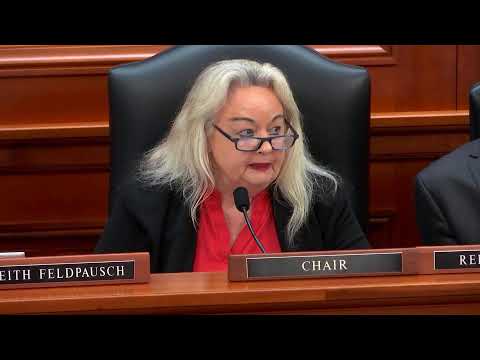
House committee holds hearing on bills to authorize voluntary ‘live baby’ drop boxes
Summary
Michigan House Families and Veterans Committee heard hours of testimony from legislators, charity representatives, medical providers and a baby-box vendor on three bills (HB 4067, HB 4069, HB 4368) that would authorize voluntary, privately funded newborn drop boxes at staffed public safety or hospital sites.
The Michigan House Families and Veterans Committee heard testimony and questions on three bills that would allow voluntary installation of “live baby” drop boxes at staffed safe-haven locations such as fire stations and hospitals.
The committee called on representatives Will Bruck, Katie Wirtz and Katie Wolford to present House Bill 4067, HB 4069 and HB 4368 and hear from more than a dozen witnesses, including a manufacturer representative, medical professionals, and nonprofit leaders. Proponents said the boxes provide an anonymous option intended to prevent infant abandonment and death; opponents raised concerns about medical safety, sufficient protections for laboring persons and potential gaps in oversight.
Supporters said the legislation expands Michigan’s 2000 Safe Delivery of Newborns law, which currently allows a parent to surrender a newborn in person at certain locations without criminal charge. Right to Life of Michigan and other advocates told the committee that allowing anonymous drop boxes can reach people who would not walk into a staffed facility. Genevieve Marnon, legislative director and senior policy adviser for Right to Life of Michigan, said the state’s law has resulted in hundreds of surrenders in hospitals but that boxes could offer greater anonymity and potentially save more newborns.
Joe Kelsey, senior project coordinator for Safe Haven Baby Boxes (remote), described product features the vendor uses: interior sensor-equipped bassinets, a three-alarm system that notifies 911 dispatch (including an alarm for loss of power), magnetic locks that prevent outside retrieval once the bassinet is closed, and an annual certification and support service. Kelsey said installation cost is about $21,000 and the vendor charges an annual service fee (Kelsey cited $600) to cover inspection and support; he said his organization has recorded 64 safe surrenders in its boxes nationally.
Committee members asked detailed operational and safety questions. Representative Pavlov asked about installation and maintenance costs; Kelsey and sponsors said the bills do not appropriate state funds and that boxes are expected to be purchased and maintained with private donations or local funds. Representative Burns and others asked what happens during power outages or when monitoring systems malfunction. Kelsey described fail-safes (an alarm that notifies dispatch if power is lost) and said most facilities have generator backup; witnesses also described regular testing protocols (initial seven-day verification, weekly tests thereafter) and a required first-responder retrieval window (locations must respond within five minutes per the vendor’s program and bill language as described in testimony).
Several legislators and witnesses raised concerns about unintended consequences or gaps. Health system representatives (submitted written testimony) and maternal-child advocates warned that an external box could reduce opportunities for immediate medical assessment of a person who gave birth outside a facility. Amy Zegman, representing maternal and child health interests, noted that in Michigan the vast majority of surrenders have occurred in hospitals and cautioned that striking the in-person, human-contact element could miss postpartum complications in the person who delivered.
Committee members also discussed anonymity vs. reunification. Under current law, a parent who surrenders a newborn in a hospital may reclaim the infant within a statutory window and undergo DNA confirmation; witnesses said the bills would preserve a period for reclamation and would require entries of each surrender on a state-maintained registry and checking against a federal missing-and-exploited-children database. Several members asked about trafficking concerns; witnesses said the registry and law enforcement checks are intended to help identify missing children but acknowledged limits where trafficked persons may not be able to access the registry themselves.
Witnesses included local nonprofit leaders and civic groups proposing to fund boxes privately. Caitlin Crane of the Wyandotte Rotary and Jan Kellogg (Kellogg Family Foundation) testified they would help raise private funds and that local fire and police chiefs in their communities had indicated support. Medical witnesses including longtime clinicians urged caution but did not oppose the purpose of saving newborn lives. Several jurisdictions and public-safety organizations filed written opposition or concern, including the Michigan Association of Chiefs of Police, Michigan Association of Fire Chiefs and the Michigan Health & Hospital Association, citing medical and operational risk and the need for clear technical and oversight standards.
No final committee vote on the bills occurred during the hearing. Sponsors and proponents asked the committee to report the bills favorably to the full House so localities and private groups could install boxes voluntarily if they choose.
If advanced, the bills would (by the language described in testimony) permit voluntary, privately funded installation of newborn safety devices at staffed safe-haven locations, require that surrenders be logged on a publicly accessible state site and require certain monitoring, alarm and reporting features. Funding for purchase and upkeep, as described in testimony, is expected to come from private donations or local entities; the bills do not include a statewide appropriation.