Get Full Government Meeting Transcripts, Videos, & Alerts Forever!
Get email alerts on the Child Protection topic
No spam. Unsubscribe anytime.
Meeker County HHS reports rising intake workload, outlines child protection, licensing and truancy work
Summary
Health and Human Services supervisors briefed the Meeker County Board of Commissioners about intake volumes, child protection response timelines, licensing, foster and respite capacity, truancy outreach and state policy challenges, including documentation burdens and an antiquated state case‑management system (SSIS).
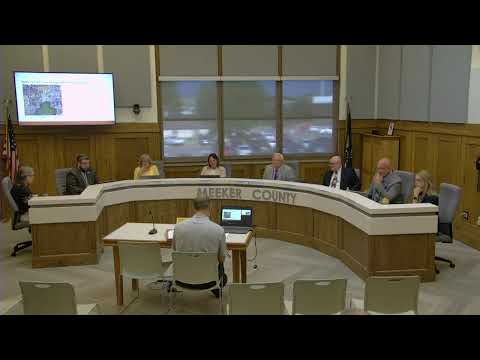
Meeker County Health and Human Services presented an overview of its intake, licensing and child protection unit and described recent caseloads, staffing and procedural timelines during the Aug. 25 board meeting.
Kristen Langerman, who supervises intake, licensing and the child protection unit, told commissioners the unit is made up of 10 workers: five child protection workers, a truancy worker, a parent support outreach worker, two intake/licensing staff and a case aide. Langerman said intake staff screened more than 2,000 reports in 2024 and had processed more than 1,200 reports for 2025 as of the week the numbers were pulled.
Staff described timelines required by Minnesota practice: child protection screening must happen within 24 hours of receiving a report; some investigations require seeing a child within that same 24‑hour window. Assessments and investigations carry faster turnaround requirements (assessments typically a five‑day response; investigations use a higher evidentiary standard and require a formal maltreatment determination when criteria are met).
Langerman and Beth Hess (child protection worker) outlined services available when reports are screened out, including voluntary family supports and a parent support outreach program the county has bolstered over the past 18 months. The office has shifted staff to increase outreach to schools and to encourage early referrals before cases meet the statutory threshold for formal child protection action. The county also assigns a worker to truancy outreach: last year the county recorded about 103 truancy interventions on a calendar basis; staff reported 57 so far in 2025 (data follow the calendar year, not the school year).
On licensing and placements, staff said Meeker County currently licenses 13 child foster care homes, three adult foster care homes, 16 community residential settings and 28 family childcare homes. Foster‑care placements are often made with relatives first, and staff said placements and reunification typically are shorter than in prior years. Staff reported 108 assessments in 2024 and 73 so far in 2025; they reported 30 investigations in 2024 and 19 in 2025 to date. For family childcare licensing the office saw 14 licensing activities last year and four new requests this year.
Speakers described operational challenges: state policy changes (including the active‑efforts standard under Indian Child Welfare Act‑type rules and the Family First Prevention Services Act) can increase documentation, training and billing requirements; staff said some state programs require new fidelity monitoring and multiple case notes to bill for services. They also highlighted persistent technical problems with the state SSIS case management system — including slow log‑ins, duplicated data entry and non‑interoperable tabs — that increase front‑line workload.
Commissioners asked about staff safety and on‑call procedures; staff said they coordinate closely with law enforcement for higher‑risk responses and use multidisciplinary team screening (including the county attorney and sheriff) for intake triage. They described strategies for debriefing and staff support after difficult field responses, including team‑based decision making and shared case reviews.
Commissioners praised the team’s work and asked staff to continue reporting on implementation of state changes and how funding or administrative changes affect local capacity.