Get Full Government Meeting Transcripts, Videos, & Alerts Forever!
Get email alerts on the Municipal Finance topic
No spam. Unsubscribe anytime.
Council advances ordinance to formalize capital equipment and general fund reserve rules
Summary
On second reading, Council approved Ordinance 22-94 revising city code to create a capital equipment reserve limited to equipment and fleet purchases and a general fund reserve target of 25% of general fund expenditures; the ordinance adds emergency-use procedures and would repeal Resolution 17-14.
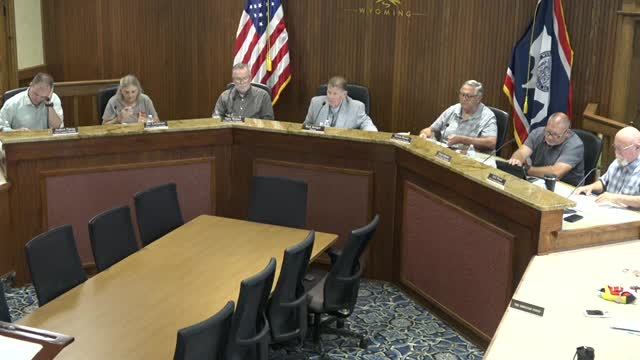
The Sheridan City Council approved the second reading of Ordinance 22-94 on Aug. 4, which revises city code to formally define a capital equipment reserve and set a 25% general fund reserve target, along with procedures for emergency withdrawals.
City Attorney Brad Timish explained the ordinance would create a capital equipment reserve confined to maintenance, purchase or replacement of city fleet and equipment and limit annual appropriations to that reserve to 10% of the city’s total revenue in a fiscal year, consistent with Wyoming statute 16-4-105(b), the provision Timish cited. The ordinance also replaces existing language for the general fund reserve and sets the target balance at 25% of the general fund expenditures for the fiscal year. If the reserve falls below 25%, funds should be added annually as the budget allows; transfers that would reduce the reserve below 25% must be approved by the governing body and require a plan to replenish the reserve.
Timish said staff added emergency-use procedures after council feedback. The procedures require the city administrator or their designee to present proposed emergency expenditures to the governing body, explain why the expenditure is an emergency and why the city lacks funds separate from the reserve, and present a replenishment plan. The draft ordinance lists example emergency categories (temporary decreases in revenue that impair necessary operations; unexpected upkeep, maintenance or repair costs; flood, winter weather or other natural disasters; expenditures necessary for public health, safety or welfare; and employee salaries and benefits when supported by a sustainable financial plan). Timish recommended revoking Resolution 17-14 to avoid conflicting policies.
Council discussion focused on definitions and scope. One councilor asked whether the 25% target uses general-fund expenditures as reported in the municipal budget and whether exclusions (for example, GPET or special taxing funds) should be carried forward from Resolution 17-14; Timish and the city treasurer said the ordinance, as drafted, uses total general-fund expenditures without the earlier resolution’s exclusions, and staff would report the calculation each budget cycle. Council members debated whether employee salaries should be eligible emergency uses and whether the ordinance should define “necessary operations.” The city administrator and city attorney said those determinations are intended to be governed by council discretion at the time emergency measures are proposed.
Finance figures discussed in the meeting: council heard that the general fund reserve balance was approximately $6,000,000 at the time of the meeting and that the capital equipment reserve balance was effectively $0. Council members discussed options for allocating amounts above the new target and asked staff to propose the appropriate mechanism (resolution or budget transfer) if council wants to direct one-time allocations from the reserve.
After discussion the council voted to approve the ordinance on second reading.