Get Full Government Meeting Transcripts, Videos, & Alerts Forever!
Get email alerts on the Humanitarian Gaza topic
No spam. Unsubscribe anytime.
UN: Gaza aid shortfalls driving child malnutrition as access and visas remain constrained
Summary
The UN says aid reaching Gaza is far short of needs, reporting rising child malnutrition, frequent denials or impediments to humanitarian movements, and obstacles including hostilities, administrative restrictions and limits on visas for UN staff. The UN reiterated calls for a ceasefire and full humanitarian access.
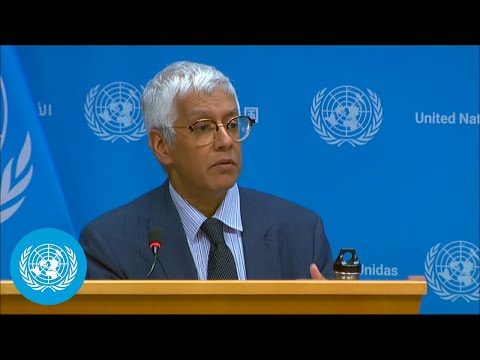
The United Nations spokesperson, Farhan, told reporters the UN and its partners are unable to bring sufficient aid into Gaza because of a mix of "bureaucratic, logistical, administrative, and other operational obstacles imposed by Israeli authorities," ongoing hostilities, incidents of looting and dangerous conditions around convoy routes.
Farhan said UN teams were able to collect some food aid "mainly flour" yesterday from the Kerem Shalom and Zikim crossings, but stressed that the quantity is nowhere near sufficient to meet survival needs. "If this situation doesn't clear up, if this does not get better soon and more aid go through all the various checkpoints, people will die," he said.
The Office for the Coordination of Humanitarian Affairs (OCHA) reported that, of 16 attempts to coordinate humanitarian movements yesterday, eight were facilitated; two were initially approved then impeded on the ground; three were denied (including retrieval of medical supplies); and three were canceled by organizers. OCHA and partners told the briefing that aid brought in over the past two months is "woefully insufficient to curb starvation or sustain life-saving operations."
The UN gave specific malnutrition figures. In the first two weeks of July, nearly 5,000 of 56,000 children under age 5 who were screened in Gaza's Deir al-Balah and Khan Younis governorates were found to be acutely malnourished — a roughly 9 percent rate, up from 6 percent in June and 2.4 percent in February. UNRWA Commissioner-General Filippo Lazzarini told the UN that, according to agency findings, "1 in every 5 children in Gaza City is malnourished." The briefing also said more than 1,000,000 children are bearing the brunt of deepening starvation and malnutrition.
Farhan updated reporters on movement and access constraints: many families are now squeezed into about 12 percent of Gaza's area, while the briefing said the remaining 88 percent of the strip is either within Israeli militarized zones or subject to displacement orders. The entry of critical shelter items has been banned by Israeli authorities for over 20 weeks, and the limited amounts of fuel allowed in are insufficient, the UN said.
The spokesperson corrected an earlier statement on maternal deaths: the 220 pregnancy-related deaths reported by the Palestinian Ministry of Health refer to stillbirths, not maternal deaths, the briefing clarified.
Journalists and humanitarian staff were a recurring theme in questions. In response to a reference to a joint statement by four news organizations saying journalists in Gaza are starving, Farhan said, "We certainly support that call," and stressed that access for journalists and the population generally is necessary. On visa restrictions, Farhan said that while Israel, like any state, exercises sovereign control over visas, "as is clear from the UN Charter, member states are supposed to allow for the work of UN officials in their countries," and that the question of whether visa denials violate ICJ rulings would be for the International Court of Justice to determine.
On the expulsion of a senior UN official, the spokesperson said, "We support Mr. Whittall and his work wholeheartedly," referring to Jonathan Whittall, who has been identified in reporting as the head of OCHA in the territory.
The UN and its partners continued to call for a ceasefire and unimpeded humanitarian access. The UN warned that unless procedures and permissions to move and offload aid are improved, humanitarian workers will be unable to sustain life-saving operations and civilian deaths will increase.
Ending: The UN press briefing signaled continued diplomatic and humanitarian engagement, but officials said immediate operational changes on access, permissions and the flow of essential commodities are needed to prevent further starvation and to sustain humanitarian services.