Get Full Government Meeting Transcripts, Videos, & Alerts Forever!
Get email alerts on the Downtown Development topic
No spam. Unsubscribe anytime.
Downtown Columbus grows into ‘live, eat, play’ hub as leaders debate housing, safety and reuse
Summary
Panelists at a Columbus Metro Club forum described rapid residential growth and major public projects that are reshaping downtown, while flagging affordability, construction costs and perceptions of safety as continuing challenges.
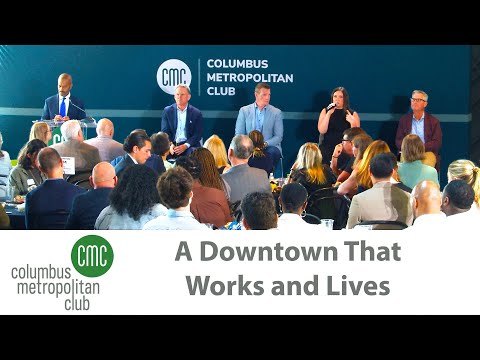
Columbus Metro Club convened a panel of city officials, developers and resident leaders on Oct. 25 to discuss the future of Downtown Columbus as a growing mixed‑use neighborhood and economic engine.
At the forum, Michael Stevens, director of development for the City of Columbus, said the city has a regional housing target of 200,000 new units over 10 years and that city elected leaders plan to build 100,000 of those units. “We need housing that’s available for everybody across the continuum,” Stevens said, citing voter‑authorized affordable housing bonds totaling $250,000,000 that the city is deploying across neighborhoods, including downtown.
The panel framed downtown’s near‑term transformation around three themes: more residents, more visitors and more reused office space. ‘‘Old downtown was drive in, work, drive out. New downtown is live, eat, play, go to work,’’ said Greg Davies, chief executive officer of Downtown Columbus Inc., noting the downtown population has grown to about 13,000 residents and visitor counts in recent years have been in the millions.
Why it matters: Downtown accounts for a disproportionate share of the city’s income‑tax revenue and is central to the municipal budget and the regional visitor economy. Panelists said sustaining that economic engine requires continued investment in housing, transportation and public safety while ensuring a range of housing types for service workers, families, seniors and artists.
Panelists outlined several tools and projects intended to accelerate housing production and reuse of vacant office buildings. Brad DeHayes, founder and president of Connect Real Estate and Connect Construction, described an office‑to‑residential conversion using modular units in a former state building, a method he said can cut timelines and costs for difficult downtown sites. "Later this year you're going to see cranes set up... apartments just getting slid into a building," DeHayes said, calling the approach a potential model for other rehabilitations.
Davies and Stevens described public‑private measures to support such work, including tax abatement policies, historic tax credits and state and federal programs that developers draw on for conversions. Stevens said abatements are structured to reduce risk by abating only the improved value so development can pencil where the market would not otherwise cover renovation costs.
Panelists also discussed affordability. Stevens said city bonds and partnerships are being used to create permanently affordable and workforce units downtown; he cited a recent example of a repurposed YMCA building and Topiary Crossing, a roughly 98‑unit affordable project purchased and developed with public support. Mindy Justice, advocacy chair for the Downtown Residents Association of Columbus, urged more small, lower‑cost unit types and family‑friendly housing to broaden who can live downtown. "We need more flats... one‑and‑a‑half bed, one‑and‑a‑half bath" units, Justice said.
Safety and perception of safety were raised repeatedly. Davies said the business community helped launch a Safer Columbus camera center that aggregates private and public cameras to give real‑time data to police; he described the center as another tool but not a complete solution. Several panelists and residents emphasized that safety is both "a fact and a feeling," and that improving lighting, slower vehicle speeds and 24‑hour street activity from residents and entertainment can change perceptions.
The panel identified broader placemaking measures—riverfront activation, more arts venues and neighborhood branding—as complements to housing and reuse. Davies pointed to the Scioto Mile, reopened fountains and weekend activations such as free kayak days as examples that draw new users. Brad DeHayes and others said a planned Capital Line transit project and expanded performance venues could increase downtown’s attractiveness to visitors and residents.
Audience members pressed the panel on equitable outcomes. Elena Biffle, a board member of the Downtown Residents Association, asked how developers and city leaders ensure that affordable housing also produces belonging and access to amenities rather than only physical units. Stevens pointed to programs that subsidize rents for small businesses and daycare components in some developments as ways to create neighborhood supports.
Panelists acknowledged constraints: construction costs, subcontractor shortages and higher interest rates make large conversions expensive. DeHayes said contemporary downtown projects commonly cost tens of millions of dollars and “if we don’t have projects, we don’t get state dollars.” Stevens added that a near‑term city capital budget approaching $1 billion for infrastructure is intended to support growth across neighborhoods while acknowledging downtown generates a large share of the city’s tax base.
The forum concluded with a recurring theme from panelists that downtown branding and neighborhood identity should emerge organically through residents and businesses rather than be forced by institutions. Several panelists encouraged continued coordination among developers, the city, transit agencies and cultural organizations to keep downtown growing while addressing affordability and equity concerns.