Get Full Government Meeting Transcripts, Videos, & Alerts Forever!
Get email alerts on the Humanitarian Aid Gaza topic
No spam. Unsubscribe anytime.
WFP: Gaza hunger crisis deepens as convoy attack kills and injures dozens; aid movements blocked
Summary
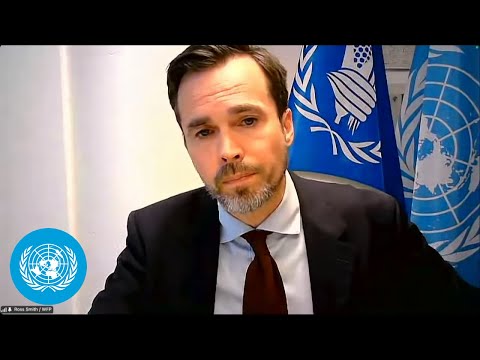
Ross, a World Food Programme official in Rome, told reporters that a third of Gaza’s population is skipping meals for multiple days and that a recent attack on a WFP convoy left dozens killed and many more injured.
Ross, a World Food Programme official in Rome, told a United Nations Correspondents Association briefing that the humanitarian situation in the Gaza Strip has deteriorated sharply and that recent violence directed at an aid convoy underscored dangers to civilians and relief operations.
"A third of the population are not eating for multiple days in a row," Ross said, adding that "a quarter of the population are facing famine-like conditions." He said "more than almost a hundred thousand women and children are suffering from severe acute malnutrition and need treatment as soon as possible."
Ross described a convoy incident the previous day in which WFP staff initially reported that at least 40 people had been killed and many more injured; other reports since then have given higher figures. He said WFP cannot independently verify final casualty totals. "I don't have a final number on that," Ross said. He characterized the incident as "one of the greatest tragedies we've seen for our operations in Gaza" and "completely avoidable."
The agency reiterated a set of "minimum operating conditions" it says are required to move food at scale inside Gaza: reliable crossing points, predictable routing and approvals, reduced waiting times, and the absence of armed actors near distribution points and convoys. "We need more than a 100 trucks a day that we need to move in, in order to have sufficient scale to alleviate the desperation that's there," Ross said, adding that during an earlier ceasefire WFP moved more than 200 trucks a day of food assistance to the area served by WFP.
Since May, Ross said WFP has been able to deliver "less than 10% of what's needed" in terms of the number of trucks. He said WFP has substantial prepositioned supplies outside Gaza and the logistics capacity to scale up if the operating conditions are met, but that fuel, spare parts and secure internal movement are necessary. "We do not use armed escorts for our convoys," Ross said, and he stressed that aid must reach people where they are rather than in predetermined locations.
When asked about possible involvement of armed groups or organized gangs in the convoy incident, Ross said there was no evidence the incident "was organized by communities on the ground," and said the crowd that moved on the checkpoint appeared motivated by extreme desperation. On questions about a proposed collaboration with the Gaza Humanitarian Foundation (GHF), Ross said WFP "does not have an operational relationship with GHF" and that WFP works operationally only with partners that "uphold those values and principles by which we are able to operate."
On classification of food insecurity, Ross reiterated that the entire Gaza Strip remained at emergency levels and that "one quarter of the population is under IPC, phase 5, facing famine-like conditions." He said IPC assessments are updated regularly and that WFP expects further updates.
On accountability and follow-up, Ross said WFP has maintained regular contact with Israeli authorities about the convoy incident and that investigations and further responses were being awaited. "There was a lot of dialogue yesterday and continued dialogue today as follow-up to that incident," he said.
The briefing included questions from multiple reporters seeking casualty figures, details on trucks and operational capacity, medical treatment at distribution sites and the possibility of third-party partnerships; Ross repeatedly emphasized that WFP could not operate at required scale until the agency's minimum operating conditions were consistently met and adhered to by all actors on the ground.
WFP's public statements at the briefing focused on humanitarian needs, operational constraints and the immediate urgency of expanding safe access and scale of deliveries. The agency said it holds sufficient supplies outside Gaza for up to two months of assistance if a ceasefire and free movement allow distribution.
Reporting on the ground, casualty totals and whether any party will be held responsible for the convoy attack remained under investigation, and WFP said it was awaiting further responses from authorities and ongoing inquiries.