Get Full Government Meeting Transcripts, Videos, & Alerts Forever!
Get email alerts on the Personnel Compensation topic
No spam. Unsubscribe anytime.
Marion County commissioners express support for $1 across‑the‑board pay increase and moving top-out to 20 years; health insurance costs rise
Summary
Commissioners discussed a proposed $1 across‑the‑board pay increase, reducing the top-out from 25 to 20 years, and absorbing family health insurance cost increases; staff presented payroll and insurance estimates and outlined cost implications and options for compressing the pay scale.
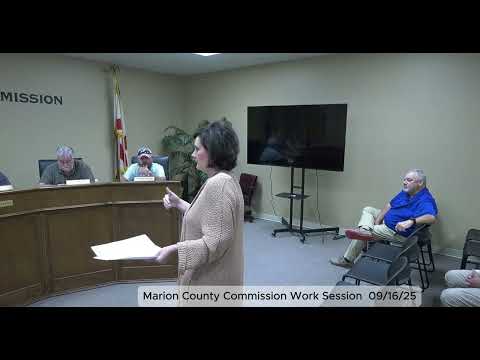
Marion County commissioners spent a substantial portion of a work session reviewing employee pay scales, payroll impacts and health insurance costs and expressed general support for a $1 across‑the‑board pay increase combined with reducing the pay-scale top-out from 25 years to 20 years.
County staff presented payroll figures and a health‑insurance update. A county staff member identified in the transcript as Scott summarized health coverage costs and said the county’s single-coverage premium would increase and that family-coverage increases have been absorbed by the county in recent years. “We pay all single coverage... and the last few years we’ve absorbed all the increases on family coverage,” Scott said. Scott gave an estimate of current and projected costs but characterized some numbers as high-end estimates because employees may decline some coverage options.
Commissioners discussed alternatives for compressing the pay scale (moving the top-out point to 20 years and redistributing previously scheduled 25‑year increases into the 10–20 year range). One staff cost summary given in the session listed a roughly $222,669 per year cost for a uniform $1 raise under one scenario; other options (moving top-out years or changing step schedules) produced different estimated totals that staff discussed in general terms. Scott noted the county payroll and benefits are significant budget items and that changes must fit within available revenues.
Commissioners voiced support repeatedly for a $1 across‑the‑board increase and for moving the top-out down to 20 years. “I’m in favor of a dollar across the board and 20 year,” one commissioner said; another said they preferred a 10‑year top-out but judged 20 years more feasible financially. Commissioners discussed spreading added pay increases across intermediate steps (for example, dividing the moved funds between 10–20 years so employees receive incremental increases rather than a single jump at top‑out).
On insurance, commissioners asked whether the expected 4.5% increase in insurance premiums had been included in projections. Scott confirmed it had been considered in staff estimates. Scott and other staff also reviewed overall payroll totals and retirement/benefit contributions and noted the county contributes significant sums annually to employee retirement and other benefits.
No formal motion or recorded roll-call vote on the pay plan or benefit changes appears in the transcript; the commissioners indicated consensus or a sense of the board in favor of the dollar increase and compressing the pay scale to 20 years, and staff said they would draft specific proposals for formal action.