Get Full Government Meeting Transcripts, Videos, & Alerts Forever!
Get email alerts on the Economic Development topic
No spam. Unsubscribe anytime.
Board delays vote on Lodi Winery Business Improvement District after contentious public comment
Summary
After contested public comment from winery operators and attorneys, the San Joaquin County Board of Supervisors agreed Aug. 12 to continue consideration of a proposed Lodi Winery Business Improvement District to Sept. 9 to allow more outreach and review of petition methodology.
The San Joaquin County Board of Supervisors on Aug. 12 voted to continue consideration of a proposed Lodi Winery Business Improvement District (BID) and related resolution of intention to Sept. 9 after heated public comments and disagreement among local wineries.
County staff and consultants from Civitas presented the BID concept: a special assessment district in which wineries within the Lodi American Viticultural Area would pay an assessment—proposed at 1.5% of direct‑to‑consumer wine sales—to fund regional marketing, business improvement and tourism promotion. The feasibility study estimated annual revenue of about $630,000 under current sales figures. Staff said the district would be managed by a new nonprofit trade association and that the county would act as lead jurisdiction for formation.
Lodi Wine Grape Commission Executive Director Stuart Spencer said the commission and winery leaders had conducted outreach, reduced an earlier proposed rate from 2% to 1.5% and collected petitions from 35 wineries representing about 68.6% of the proposed assessment budget. Spencer said the BID is designed to create a stable funding source to market the region and grow visitation.
Many winery owners and operators spoke during the public comment period with divided views. Supporters—including several small‑winery owners—said the region needs coordinated marketing to attract visitors and that the assessment is commonly passed to customers, not paid directly by wineries. Opponents—represented at the meeting by attorneys and some winery operators—said they did not receive adequate data and questioned the petition weighting and whether the county or Civitas should disclose the sales‑data methodology. Citizens and some wineries said the petition method and weighted vote raised concerns about fairness to smaller producers.
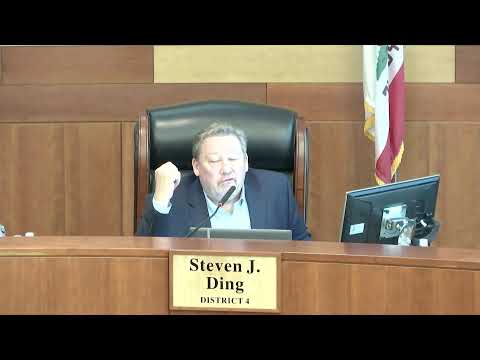
Board members said there had been extensive outreach but acknowledged the concerns raised about transparency and petition weighting. County counsel explained that the county holds the tax data disclosed to the consultant under statutory confidentiality and can verify that formation thresholds were met, even if the raw vendor sales detail cannot be made public. After public comment, Supervisor Ding moved to continue the item to allow more time for outreach and clarification; the board voted unanimously to continue the item to Sept. 9.
The board did not form the district or adopt the final resolution at the Aug. 12 meeting. If the district proceeds, the county will circulate notices, hold two public hearings and the final formation vote will occur after the public hearing process; consenting jurisdictions (parts of Sacramento County, Elk Grove, Galt and the city of Lodi) would also need to consent before formation.