Get Full Government Meeting Transcripts, Videos, & Alerts Forever!
Get email alerts on the Chinatown Foundation Workshop topic
No spam. Unsubscribe anytime.
Chinatown Fresno Foundation outlines history, preservation and development priorities
Summary
The Chinatown Fresno Foundation presented a historical overview and current initiatives to the Historic Preservation Commission, urging coordinated planning and mixed‑use development to preserve cultural heritage and avoid concentrated low‑income housing in the neighborhood.
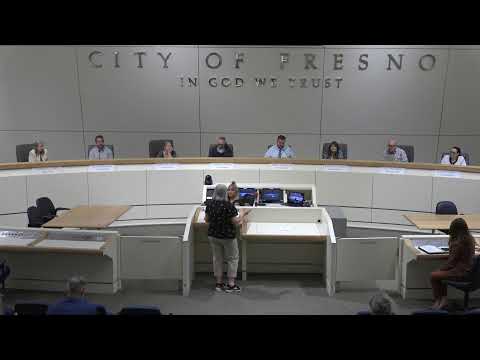
The Chinatown Fresno Foundation presented a historical overview of the neighborhood and a summary of its current programs during a workshop with the Fresno Historic Preservation Commission on Monday.
"Fresno's diversity starts in Chinatown," Jan Minami, executive director of the Chinatown Fresno Foundation, said as she opened a historical narrative that traced Chinatown's roots from the 19th century through Japanese immigration, incarceration during World War II and later infrastructure changes that reshaped the neighborhood.
Minami described Chinatown's evolution — including 1916 and earlier building phases, the presence of Nippon 1 and Nippon 2, the Azteca Theater (listed on the National Register of Historic Places), and long‑running family businesses such as the Ikeda family's confectionery — and said the Foundation formed in February 2018 to provide a united community voice and coordinate neighborhood projects funded through the Transformative Climate Communities program.
Grama Cipolla, chair of the Foundation board, introduced the presentation and Minami outlined three program pillars: cultural heritage (including a Cultural Heritage Center that the Foundation said will launch regular hours in September), economic empowerment (pop‑up retail, business support and property data management) and neighborhood development (housing advocacy and transportation coordination). The Foundation described property and business inventories, regular workshops and ongoing efforts to promote adaptive reuse — including a note that 13 Chinatown buildings retain second‑floor residential space historically used as hotels or boarding houses.
Minami and Foundation board members emphasized coordination among multiple infrastructure projects in and near Chinatown. They said projects have often proceeded without cross‑agency sequencing, producing repeated street closures and community disruption during construction cycles. The Foundation urged more coordinated planning with High‑Speed Rail, city utilities and other programs to reduce cumulative impacts.
Foundation members also expressed concerns about the concentration of low‑income housing in a small footprint. Community members at the meeting said they favor mixed‑use and "middle‑scale" housing (roughly two to 12 units) that keeps ground‑floor commercial activity along core blocks and adds residential uses on upper floors. Grama Cipolla and other speakers said the Foundation is working to gather F Street property owners to discuss shared goals and to protect a two‑block commercial core while allowing second‑floor housing.
The Foundation cited ongoing outreach with the High‑Speed Rail Authority on interpretive and activation opportunities at the future station and mobility hub, and encouraged civic partners to consider cultural interpretation and partnerships to highlight Chinatown's historic role. Minami suggested small interpretive installations and urged the commission and city to keep neighborhood history part of station planning.
Commissioners asked about boundaries, historic surveys and potential for adaptive reuse. Minami referenced published historic‑resource surveys (including surveys dating to 2006) and said the Foundation can help convene property owners; she noted that funding and owner willingness remain obstacles to fast change. The Foundation requested continued city coordination and offered to return for follow‑up workshops.
No commission action was taken; the presentation was an informational workshop and public comments were reserved for a later portion of the meeting.