Get Full Government Meeting Transcripts, Videos, & Alerts Forever!
Get email alerts on the Community Development Cdbg topic
No spam. Unsubscribe anytime.
City of Bangor to resubmit CDBG annual action plan after HUD flagged language; new grants platform launched
Summary
City staff said the Community Development Block Grant annual action plan must be resubmitted after HUD flagged committee-name language; staff also briefed the committee on a new digital grants platform, an upcoming community survey and a request-for-proposals process for subrecipients.
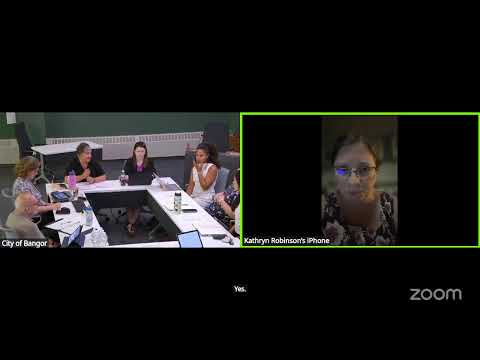
City community-development staff told the Advisory Committee on Racial Equity, Inclusion and Human Rights on Aug. 26 that the city must resubmit its U.S. Department of Housing and Urban Development (HUD) Community Development Block Grant (CDBG) annual action plan after HUD flagged specific wording that named the committee in the document.
Robin Saniki, the city’s community development officer, said HUD rejected the July submission because the plan used the committee name; staff will remove or replace the specific committee name and resubmit, which staff estimated would be a short delay (staff said they expected to correct and resubmit within a few days). Saniki said some project activities tied to the action plan may be put on a short pause while the resubmission is processed.
Saniki also briefed the committee on a new online grants-management platform launched July 1 (the “neighborly” platform). The platform will host subrecipient applications and allow staff to accept and score proposals more efficiently. Saniki said the city posted a request-for-proposals for housing, health and education services and will invite a small panel of citizen reviewers (including committee volunteers) to score applicant proposals on merit and capacity.
Staff described planned community engagement for the action-plan year: a mailed postcard survey with a QR code and a community-wide online survey (staff estimated an expected electronic response of roughly 1,500 people), plus neighborhood meetings and a student-led survey administered at local middle and high schools. Staff also reported that a homebuyer-assistance posting on the platform drew 140 online applications in one week after launch.
Committee members asked whether federal funds are paused while HUD reviews the resubmitted action plan; staff answered that the pause would be short and that staff were working to meet HUD’s requested edits quickly.
Committee members were invited to volunteer as proposal reviewers and to coordinate with staff on outreach and neighborhood-engagement questions to avoid duplicating existing data collection efforts.