Get Full Government Meeting Transcripts, Videos, & Alerts Forever!
Get email alerts on the Cdbg Funding topic
No spam. Unsubscribe anytime.
Sunbury holds first public hearing on 2025 CDBG allocation; $308,916 identified for city projects
Summary
City staff outlined how the 2025 Community Development Block Grant (CDBG) funds may be used, including low- and moderate-income (LMI) requirements, anti-displacement rules and Section 3 preferences; residents and organizations proposed downtown and recreation projects for consideration.
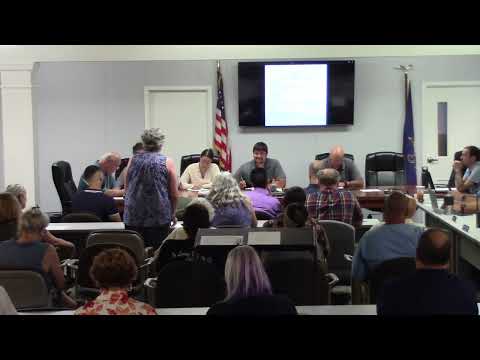
Sunbury City Council convened a first public hearing on the city’s 2025 Community Development Block Grant (CDBG) program, during which staff said the city’s 2025 allocation is $308,916 and outlined eligibility rules, regulatory requirements and a timeline for applying for projects.
The hearing matters because CDBG funds can pay for water, sewer and street reconstruction and other community development projects but must meet federal rules that prioritize benefits to low- and moderate-income (LMI) residents. Council and staff emphasized that the money will not be available to the city until 2026 and that federal requirements — including prevailing wage rules and program-level reviews — apply to successful projects.
City staff told the council that the 2025 allocation for Sunbury is $308,916 and that the funds will pass from the U.S. Department of Housing and Urban Development (HUD) through the Commonwealth of Pennsylvania before reaching the city. “The city will not have these funds in hand until 2026,” the staff member said during the hearing. Staff explained three primary ways projects may qualify: (1) projects that principally benefit LMI persons (the primary objective used by the city, which staff said requires about 70% of funds to meet the national objective), (2) elimination of slum or blight (up to 30% of funds), and (3) an urgent need category that requires a formal emergency declaration and events within the prior 18 months (also limited to 30% of funds).
Staff walked through program rules attached to the agenda packet: a fair-housing notice, an anti-displacement plan, and a Section 504 (accessibility) annual review. The city administrator serves as the Section 504 officer, staff said, and the packet invites public comment on accessibility needs for city facilities and programs. Staff also reviewed Section 3 provisions — HUD guidance to promote job and contracting opportunities for low-income residents — and encouraged local businesses and residents to contact the city to receive bid solicitations.
Several residents and nonprofit representatives proposed candidate projects during the public comment portion of the hearing. Jody Archer, representing Subregion Revitalization Incorporated, described a Strill Alley Improvement Project that the Blueprint Communities Downtown Sunbury team has identified and which already has a separate $10,000 grant. Archer said the alley needs resurfacing, stormwater fixes, shade, seating, ADA curb cuts and lighting and described the project as aiming to make a more inviting downtown gathering space. Archer also proposed an accessible kayak system at the city docks for users with disabilities and additional shade for the amphitheater.
Other suggestions from the public included expanding basketball courts, repairing tennis courts, and a firefighter request for new hose replacement. A resident representing a North Sixth Street and Line Street project asked that the city note funding gaps for specific street work; staff said citywide LMI data from the American Community Survey can be used to qualify citywide-benefit projects. Staff cautioned that infrastructure-type projects must account for federal prevailing wage and other compliance costs and urged prospective applicants to provide a project summary form (included in the packet) and to indicate match or “skin in the game.”
Staff said the city will solicit projects from municipal authorities, nonprofit organizations and other local entities and that final public comment on the CDBG plan will be scheduled for Sept. 22, when the council expects to execute a resolution to submit the application. Staff reiterated that projects needed before 2026 cannot be funded with the 2025 allocation.
The hearing produced no final project approvals; staff invited written project summaries and said the city will post notice of any timeline changes.
The council will hold a final public hearing and likely vote on the CDBG application resolution on Sept. 22, according to the staff presentation.