Get Full Government Meeting Transcripts, Videos, & Alerts Forever!
Get email alerts on the Broadband topic
No spam. Unsubscribe anytime.
Sunnyvale broadband study shows large fiber gap; council and staff weigh fixed wireless and towers as faster, lower-cost options
Summary
Consultants reported that more than 1,200 locations in Sunnyvale still lack fiber coverage and identified a smaller set of addresses eligible for BEAD funding; councilors pressed staff for a faster path to improved mobile and home Internet and asked for an RFP that includes fixed wireless and cell-tower options.
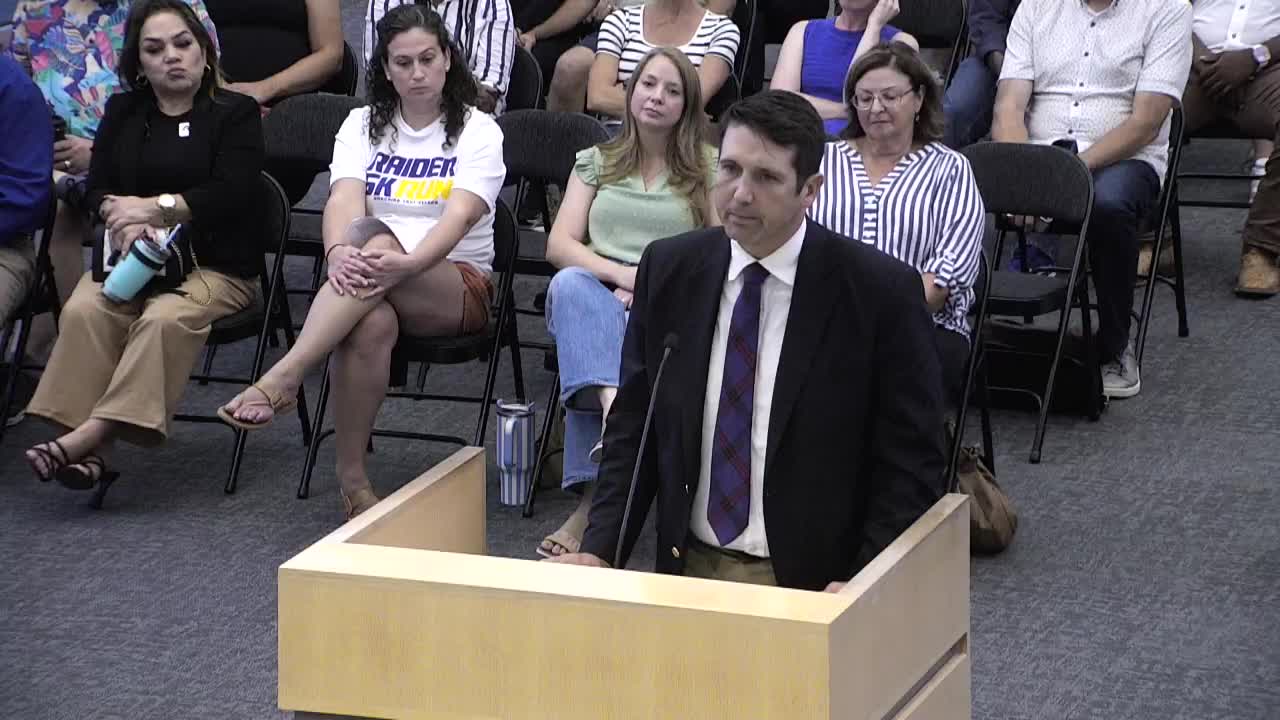
Town consultants presented a broadband study update to the Sunnyvale Town Council on Aug. 25 that identified significant remaining need for fixed, high-speed Internet and outlined next steps the town could take to expand service.
Rob Svota of Cobb Finley told the council that, according to the analysis, more than 1,200 Sunnyvale locations still need fiber, and roughly 30 locations have neither cable nor fiber available under current FCC data. The presentation also showed four areas in town eligible for BEAD (Broadband Equity, Access, and Deployment) grant funding; multiple applicants had applied for those locations.
The consultants described immediate opportunities to improve service through fixed wireless and improved mobile coverage. Staff noted Verizon had signed a lease for a tower on school property and that a new tower should improve mobile coverage in parts of town; the tower could also support fixed wireless backhaul depending on equipment and provider choices. Consultants said adding fixed wireless coverage and working with mobile carriers could more quickly raise effective speeds for many residences than waiting for full fiber builds.
Council members pushed staff for speed and clarity. "We knew this issue a year and a half ago," one council member said, criticizing the pace of progress and urging a direct path from RFI (request for information) to an RFP (request for proposals) and implementation. Staff and consultants said the next step is an RFP to solicit firm proposals and cost estimates from providers for mobile/fixed wireless solutions, fiber extensions, or public-private partnership options. They estimated that, with an RFP and negotiations, improvements could move quickly and that some mobile equipment upgrades might be achievable without constructing new towers.
Staff also discussed using existing town towers or the town's planned water tower as potential sites for equipment; staff estimated structural modifications and mounting work on the water tower could cost in the low hundreds of thousands of dollars, depending on engineering and load requirements. Council members noted that a 100% coverage goal would require multiple approaches and urged staff to pursue an RFP that addresses both mobile/fixed wireless and fiber where cost-effective.
No binding procurement decision was made at the Aug. 25 meeting. Council directed staff and consultants to proceed to an RFP stage that would provide concrete proposals and costs for council to evaluate.