Get Full Government Meeting Transcripts, Videos, & Alerts Forever!
Get email alerts on the Disability Access topic
No spam. Unsubscribe anytime.
Village of Clemmons reviews draft ADA transition plan; adoption expected in November
Summary
Consultants from Kimley‑Horn briefed the council on a draft Americans with Disabilities Act (Title II) transition plan funded by an SS4A grant; the plan inventories barriers, estimates costs and proposes a 30-year implementation schedule with adoption targeted for November 2025.
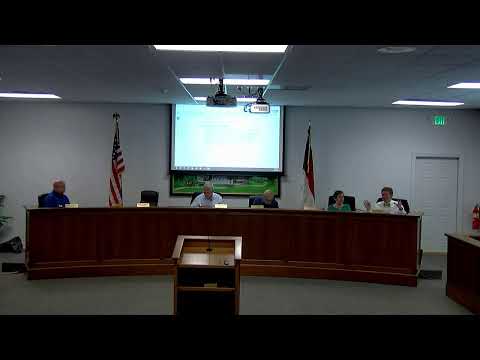
The Village of Clemmons received a briefing on a draft ADA transition plan on Aug. 25, 2025. The presentation, led by Matt Poole of Kimley‑Horn, described a program- and facilities-focused self-evaluation required under Title II of the Americans with Disabilities Act and said the village could expect to return in November for formal adoption.
"This is a master plan for accessibility for all programs as well as facilities that are offered to the public," Poole said, summarizing the plan's purpose. He described the draft as a long-range implementation document that catalogs barriers, provides methods to remove them, estimates planning-level costs and proposes a schedule.
Poole said the project was funded through the SS4A (Safe Streets and Roads for All) planning grant received in 2023 and that the deliverables include a GIS-based database and an online dashboard for staff to manage facility reports, priorities and budgets. He said field work evaluated public facilities and rights-of-way across the village, noting the draft counted two public buildings, two public lands, 14 signalized intersections and about 28 miles of sidewalk in the inventory.
The consultant team used GPS-enabled data collection, smartphone LIDAR and photo documentation to produce location-specific facility reports. Poole said the draft establishes priorities from an accessibility lens, includes programmatic reviews (website content, public notices and staff procedures) and recommends a 30-year horizon for full implementation — consistent with practices in other communities.
Council members asked whether the plan would help the village pursue implementation funding. Poole said yes, explaining that the data-driven inventory and planning-level cost estimates provide leverage when applying for federal and state grants. He also said title-2 obligations apply to the village's public programs and facilities, while private businesses fall under Title III.
The council received the presentation and requested follow-up; the consultant team said it will return with a final package and adoption request in November.