Get Full Government Meeting Transcripts, Videos, & Alerts Forever!
Get email alerts on the 2026 Cdbg Home Rfp Interviews topic
No spam. Unsubscribe anytime.
Dane County review team holds interviews for 2026 CDBG/HOME RFPs; applicants clarify program details
Summary
The Dane County application review team heard clarifying interviews with nonprofit applicants for 2026 CDBG and HOME funding, reviewed scoring criteria and process timelines, and scheduled a final funding recommendation meeting for next week.
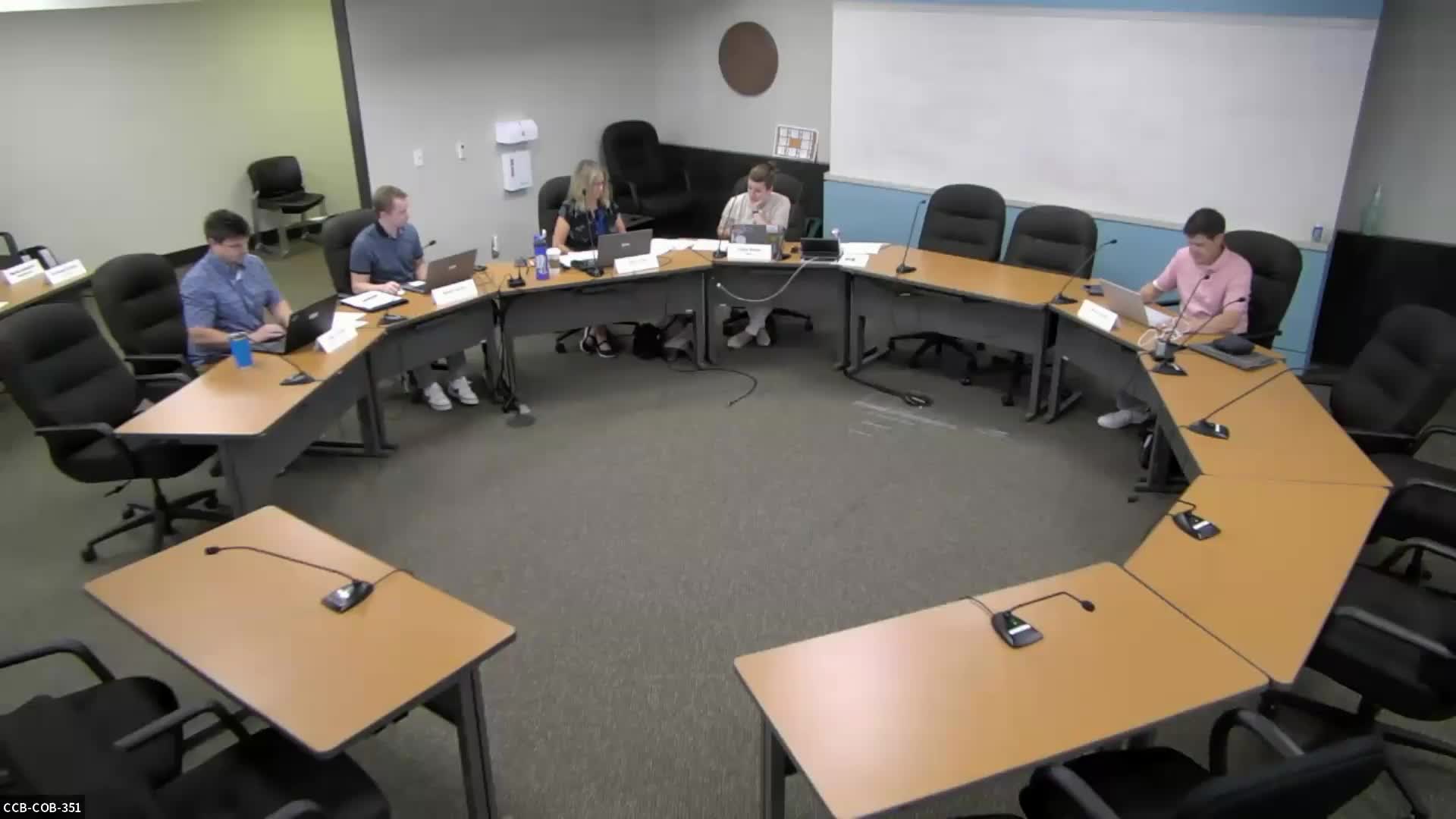
Dane County’s application review team held interviews with nonprofit applicants this week as part of the competitive process to allocate 2026 CDBG and HOME funds, county staff said.
The interviews are intended to clarify information already submitted in written proposals and are not scored, Cindy (Dane County staff) told the panel at the meeting. The county expects to receive about $1.6 million annually in combined Community Development Block Grant (CDBG) and HOME Investment Partnership funds from HUD for distribution through the RFP process.
Why it matters: These federal funds support housing preservation, repair and mortgage assistance for low- and moderate-income households across Dane County. The review team’s preliminary funding recommendations will go to the full CDBG Commission, and an approved recommendation will be followed by a public hearing to finalize allocations.
The scoring framework approved earlier this year and reiterated to applicants assigns 100 points total: national objective (20), project approach (35), experience and qualifications (15), financial information (15), partnerships (5), shovel-ready status (5), and past performance (5). County staff emphasized that “no other criteria will be used to evaluate the applications or the proposals,” and that all interviews and the funding recommendations meeting are open to the public and recorded.
Applicants interviewed included Habitat for Humanity of Dane County, Movein’ Out, Project HOME, Metropolitan Milwaukee Fair Housing Council, and Operation Fresh Start. Key clarifications and requests presented to the panel included:
- Habitat for Humanity of Dane County: Hillary Parker, CEO, said Habitat has a dedicated site supervisor for its home repair program, and said the organization has invested $125,000 to seed an internal fund so it can start projects while grant decisions are pending. Parker said Habitat proposed a baseline capacity of 10 minor-repair projects at $7,500 each in its application but has a goal of serving 20 households per year if additional internal or external funds are available. Parker said Habitat serves all of Dane County and uses internal tracking to ensure CDBG funds are spent only where eligible within the Urban County Consortium.
- Movein’ Out: Theo Yancey, senior housing counselor, said the agency expects to serve at least five households with its requested minor home repair funding and described an intake process that begins by email or phone and collects household income and size. Staff clarified a lifetime cap and waiting period tied to mortgage reduction assistance: a $100,000 lifetime cap with a three-year waiting period affecting subsequent use of related county subsidy programs.
- Project HOME: Grants administrator Wollanda Singleton said Project HOME would serve a minimum of 14 households with the requested minor home repair funds. Executive Director Denise Smitika described the agency’s inspection and eligibility process for major home repair, explaining that the program brings homes “up to code” and will not invest county funds in properties that cannot be feasibly rehabilitated. Smitika also told the panel she will retire in September and that successor Jessica Linebach will be introduced to county staff.
- Metropolitan Milwaukee Fair Housing Council: A representative identified as Megan said the council provides comprehensive fair-housing services across the Dane County Urban Consortium, including complaint intake, outreach and technical assistance upon request from consortium communities.
- Operation Fresh Start: Executive Director Brian McMahon said Operation Fresh Start seeks $60,000 in CDBG funds to provide no‑interest deferred second mortgages — $30,000 each — for two first‑time buyers in a partnership homebuilding project in Sun Prairie’s Town Hall Crossing. McMahon said the homes are part of a broader paid construction-training program for young adults and that buyers will be at or below 80% of area median income. He acknowledged that construction costs originally included in the application were ineligible under the mortgage-reduction category and said the applicant agreed to move forward with review of the mortgage‑assistance portion only.
Panel and staff questions focused on program capacity, geographic eligibility inside versus outside the City of Madison, documentation and compliance capacity (including radon testing and other HUD requirements), outreach methods in multiple languages, and how applicants track and separate city CDBG spending from county-eligible uses. Staff confirmed that interviews are strictly to clarify written proposals, that applicants may not present new materials during the interviews, and that each interview was limited to 20 minutes.
Next steps: The application review team will reconvene next week to review scores from the written proposals, set preliminary funding allocations and forward recommendations to the full CDBG Commission. County staff said a presentation on collaborative scoring will be on the agenda for the review-team meeting on Monday, Aug. 25, at 2:30 p.m., and that no funding levels are final until federal grant awards for 2026 are received.
The meeting adjourned by motion, which was approved by voice vote.