Get Full Government Meeting Transcripts, Videos, & Alerts Forever!
Get email alerts on the Budget And Finance topic
No spam. Unsubscribe anytime.
Harrisonburg Housing Authority approves 2026 budget, hears updates on grants and unexpected repairs
Summary
The Harrisonburg Housing Authority approved its 2026 budget and accepted June/July financial reports, while staff warned of several unplanned expenses — HVAC, an office sewer collapse and Microsoft 365 migration — that will draw from reserves. Commissioners opened 45‑day public comment periods on the agency's annual and five‑year plans.
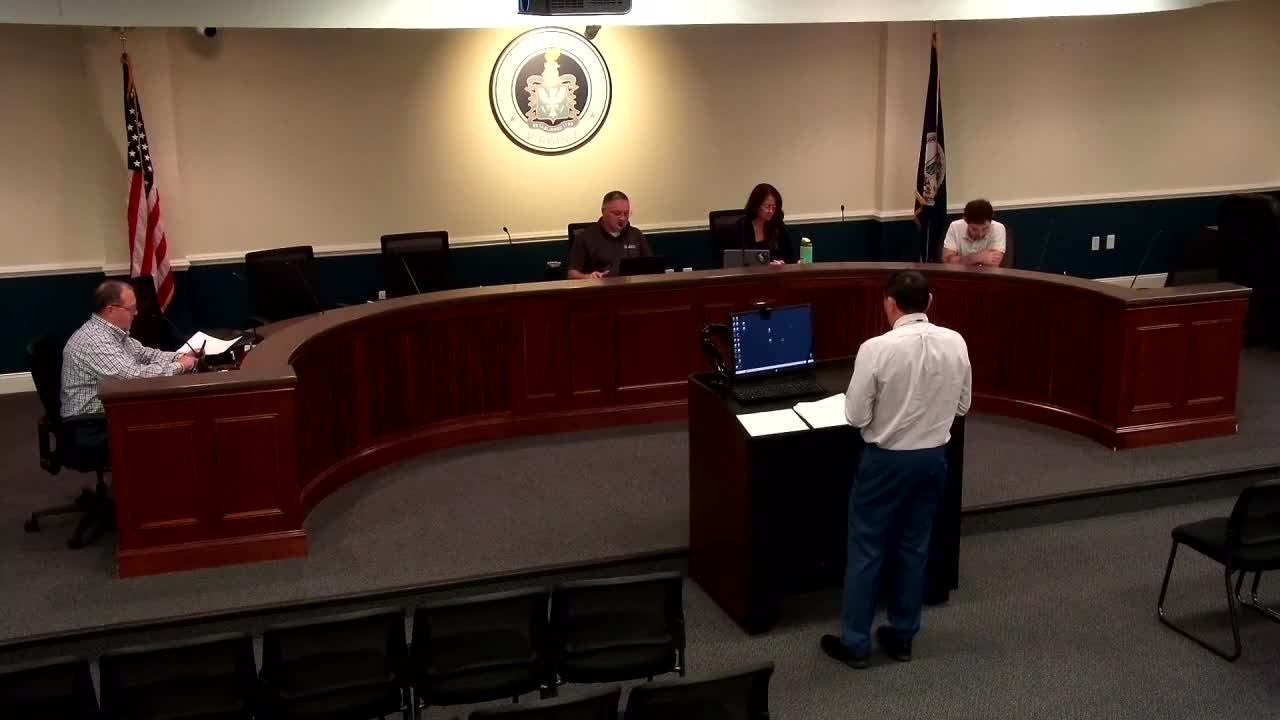
The Harrisonburg Housing Authority on Aug. 20 approved its proposed 2026 budget and accepted the June and July financial reports, after staff described several unplanned costs and said federal housing funds and targeted grants are expected to increase revenue for upcoming programs.
The budget adoption authorizes the salary and operational plan for 2026 and was approved by voice vote after a motion and second. Executive Director Michael (last name not specified in the record), who presented the financial summary, told commissioners the agency’s reserves remain positive but would be reduced by several one‑time or near‑term expenses.
Michael said the authority has received unusually high Housing Choice Voucher (HAP) funding this year — HAP funding moved from roughly $6 million previously toward “almost $8,000,000” in anticipated HAP expenses — and that staff expect to continue replacement funding for vouchers as recipients turnover. He also said grant contracts for Virginia Homeless Solutions Planning (VHSP) funds and service‑coordinator grants were delayed at the state level but were expected to arrive “coming up.”
At the same time, Michael listed three unplanned costs that will be covered from reserves: an emergency HVAC repair at a Whichport building (about $30,000), a Microsoft 365 transition that requires new equipment and licensing (an estimated $30,000), and a sewer line collapse at the Roosevelt Street office that staff estimated at “about a 20‑some thousand dollar cost.” He said those charges will reduce unrestricted reserves but will not, in his view, create a structural budget problem.
Staff also described operational impacts: Roosevelt Street office staff have adjusted schedules and used the Kelly Street office because of limited restroom access while the sewer repair proceeds; staff reported the city agreed to cap a line but could not schedule the work fast enough, so the plumbing contractor proceeded with city permission. Michael told commissioners the sewer work should be completed “by the end of next week,” barring weather delays.
Commissioners asked whether the M365 migration has a line item; staff said the cost would be pulled from general reserves and that typical procedure is a budget revision if a large unexpected expense arises. Michael said unrestricted reserves were about $1.4 million in July (down from $1.85 million in June after a payment tied to Franklin Heights), and that from a practical cash‑flow standpoint the authority likes to retain at least about $500,000 in unrestricted funds to avoid shortfalls.
Commissioners approved the June 18 minutes and the financial reports by voice vote and then voted to approve the 2026 budget by voice vote; no roll call was requested for those votes. Following routine motions the board adjourned to other agenda items.
The authority also opened and closed required 45‑day public comment periods for the 2025 annual/five‑year plans and for the 2026 budget (staff said comments will remain open 45 days and close in early October). Staff said the agency posted the plans on its website, the minutes and the quarterly newsletter, and will present any public comments to HUD if substantive feedback is received.
The meeting packet and management reports show stable occupancy across properties: Commerce Village at full lease‑up, Franklin Heights near full occupancy, and the Lineweaver Annex at about 93 percent at the time of reporting. Staff flagged maintenance workload — HVAC calls and unit turnovers — but described timely turn‑around and relatively few emergency work orders.
The board approved the budget and management reports and asked executive staff to return with any substantive public comments at the September meeting.