Get Full Government Meeting Transcripts, Videos, & Alerts Forever!
Get email alerts on the Childcare And Zoning topic
No spam. Unsubscribe anytime.
Council approves ordinance to expand neighborhood childcare options
Summary
The council adopted an ordinance amending Chapter 50 to ease zoning barriers for daycare facilities, a move supporters said will help expand neighborhood childcare capacity.
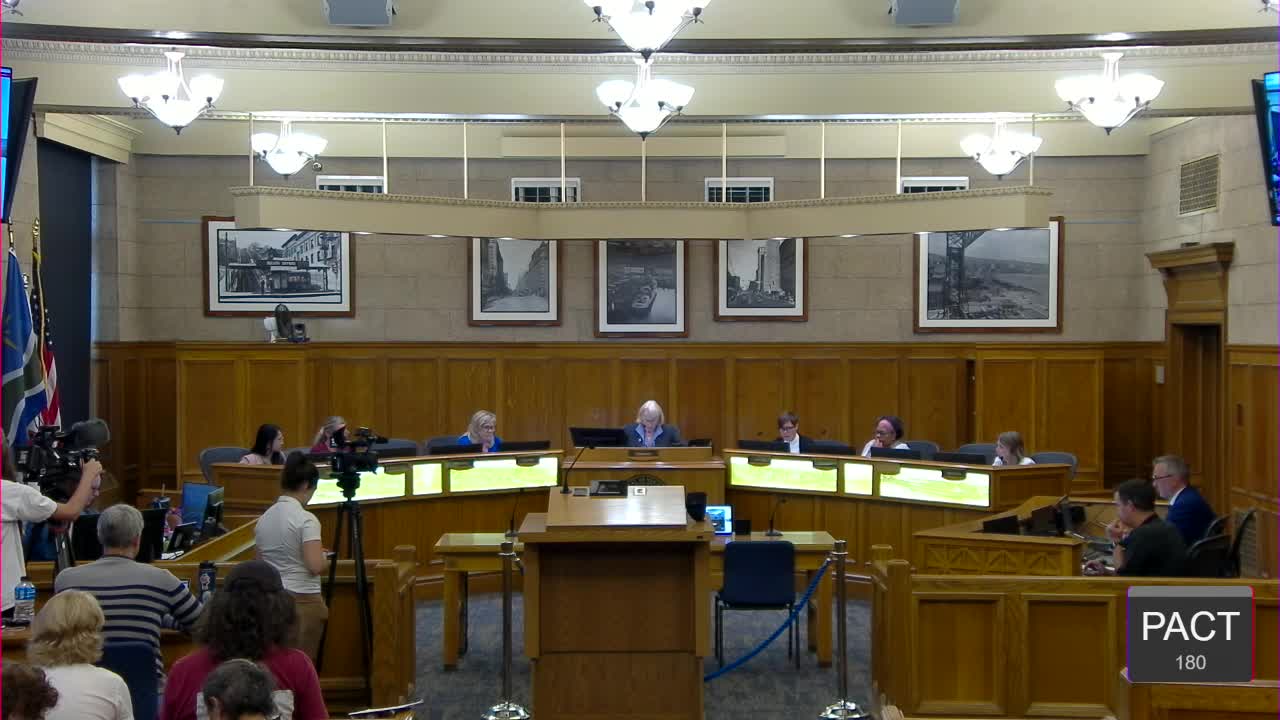
The Duluth City Council adopted an ordinance amending Chapter 50 of the city code to clarify daycare definitions and expand where licensed child care facilities can operate, with an 8–0 vote.
Vice President Nephew, who sponsored the change, said the ordinance will open zoning in more neighborhoods “and hopefully create some more community day care or childcare facilities in the neighborhoods.” He urged colleagues to support the measure as one of the limited tools the city can use to support childcare providers.
Councilor Swenson, who worked on edits to the ordinance and solicited feedback from local providers, said the changes reflected that outreach and would make it easier to bring new childcare operations into residential areas.
The ordinance was read for a second time during the meeting and passed on roll call. The clerk recorded votes of yes from all eight councilors present; no abstentions or dissents were recorded.
Council discussion focused on the policy’s limited but practical scope: to remove zoning barriers where appropriate and rely on licensing and building standards to ensure safety and neighborhood compatibility. The ordinance amends specific definitions and sections in Chapter 50 related to daycare facilities, though the council did not read the complete amended language aloud during the vote.
Councilors and staff said the change is intended to create more small-scale, neighborhood childcare opportunities rather than large commercial centers.