Get Full Government Meeting Transcripts, Videos, & Alerts Forever!
Get email alerts on the Street Art topic
No spam. Unsubscribe anytime.
Planning unveils pilot street-art program; Shropshire Avenue demo to test safety and placemaking
Summary
The Division of Planning presented a street-art (asphalt art) pilot to the Environmental Quality and Public Works Committee, proposing a community-led selection process, estimated project costs and a temporary demonstration on Shropshire Avenue tied to a September selection process.
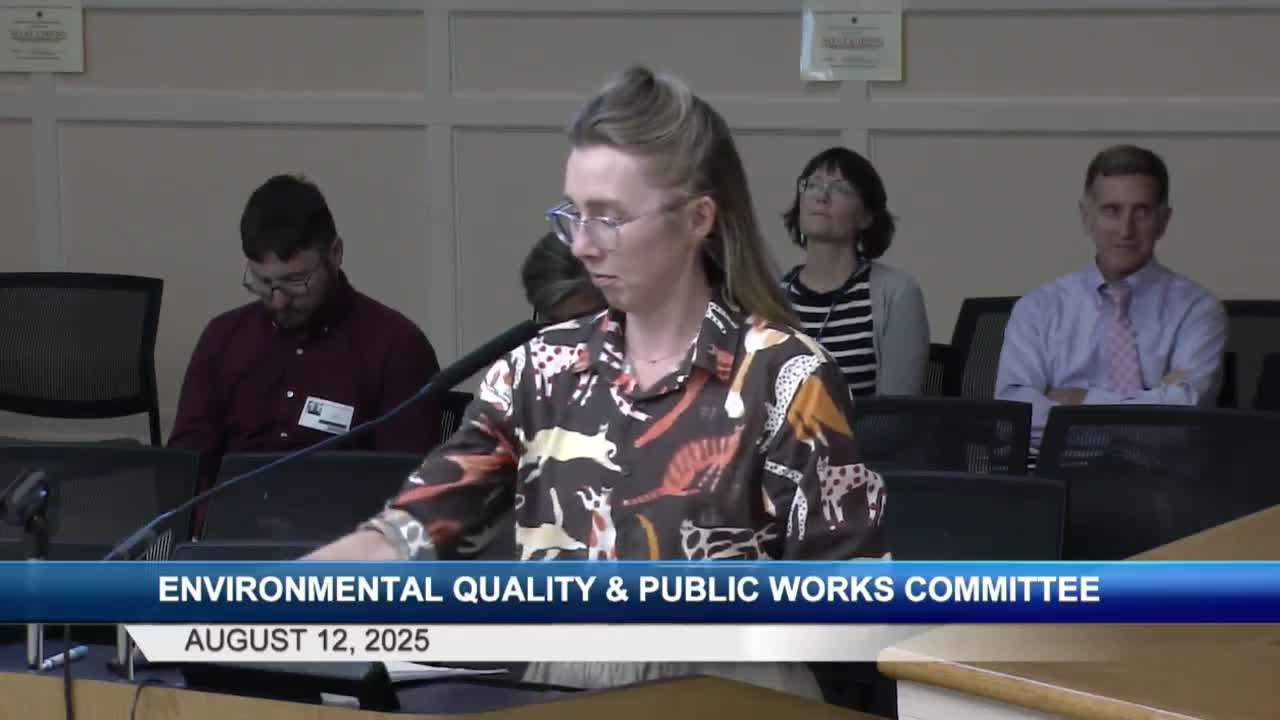
Hannah Kreps, principal planner with outreach and strategic planning, presented a proposed street-art program to the Environmental Quality and Public Works Committee on Aug. 12, describing the installations as temporary, context-specific interventions that can support traffic calming and placemaking.
Kreps said street murals can be applied to intersections, curb extensions, crosswalks or midblock areas and that they are “one tool out of many” in a Complete Streets toolbox. She cited national research showing reductions in vulnerable-user crash rates and near-miss incidents when street murals are used in conjunction with traffic engineering measures and said city staff plan to collect before-and-after qualitative and quantitative data for pilot projects.
The planning division described a community-driven pilot in District 1 that grew from a temporary chalk demonstration at the city’s StreetFest event. The pilot will invite local artists to submit letters of interest and proposals; a community Art Selection Review Committee will convene to recommend a final design. Staff estimated individual street-art projects typically cost about $20,000, though Kreps said costs can vary and that “more is better” for durable installations. Traffic engineering will review all designs to ensure compliance with safety standards, and the Public Art Commission will be involved if its funding is used.
Council members praised the pilot and underscored the need for community-led selection, interdepartmental coordination and attention to traffic-engineering standards. Council Member Morton and others said the program should prioritize local artists and neighborhood engagement; Kreps said staff will coordinate community meetings and artist outreach as part of the pilot.
No committee vote was required; the presentation closed with members expressing support for the pilot and for continued collaboration among planning, traffic engineering, community outreach and the council office.