Lexington staff outline MS4 stormwater program, volunteer monitoring and maintenance manual due Jan. 2026
Loading...
Summary
City staff updated the Environmental Quality and Public Works Committee on Lexington's Municipal Separate Storm Sewer System (MS4) permit, changes to illicit-discharge screening, a new countywide water-quality monitoring plan and a post-construction maintenance manual expected in January 2026.
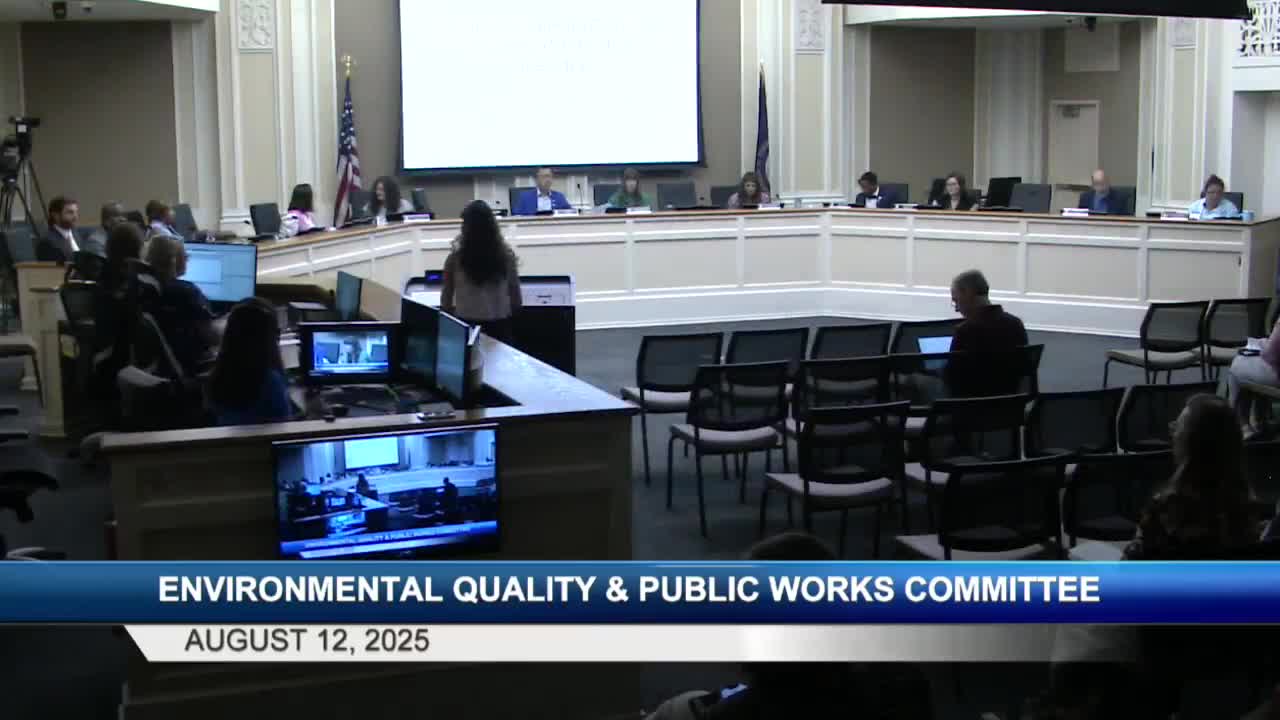
Bailey Young, MS4 section manager for Lexington City, told the Environmental Quality and Public Works Committee on Aug. 12 that the city’s MS4 program continues under a stormwater discharge permit issued by the Kentucky Department of Environmental Protection and that staff have shifted monitoring and outreach strategies over the past year.
Young said MS4 — municipal separate storm sewer system — covers stormwater that drains directly into local creeks and streams rather than to wastewater treatment plants. “Just normal everyday activities like car washing and pet waste and oil and grease from automobiles can transport directly into our storm sewer system and then get washed into streams and creeks,” Young said.
The presentation highlighted four program elements that changed over the past year. For illicit-discharge detection and elimination, staff said they plan to shift from repeating dry-weather screening at the same large outfalls to a risk-ranked approach that targets subwatersheds and outfalls with higher likelihood of nonstormwater discharges, such as locations near sanitary sewer defects or high-density commercial areas. Young said other jurisdictions have adopted similar risk-based screening and that Lexington has consulted with peers about the practice.
Young also reviewed post-construction stormwater management. Lexington currently tracks almost 3,000 stormwater control features and performs more than 5,000 inspections a year. To clarify owner responsibilities, staff are preparing a comprehensive maintenance manual for post-construction stormwater controls that will distinguish commercial and residential responsibilities; Young said staff expect to publish the manual in January 2026 and will convene a developer-and-resident work group at the end of August to review drafts.
On water-quality monitoring, Young said the city moved from a one-watershed-a-year approach to a countywide annual monitoring program. Lexington’s proposed program, approved by the state in January 2025, includes 64 monitoring sites countywide and combines grab samples, wet-weather sampling, macroinvertebrate surveys, habitat assessments and fish surveys. Young said volunteer groups assist with quarterly grab sampling and that a volunteer training is planned for February 2026.
Committee members thanked Young for the update and asked how residents could volunteer; Young said interested people should contact her division and that staff could provide materials for council newsletters. The committee had no further questions and the presentation concluded.