Get Full Government Meeting Transcripts, Videos, & Alerts Forever!
Get email alerts on the Library topic
No spam. Unsubscribe anytime.
Williamsburg council hears support for new downtown library as cost estimate rises to about $26 million
Summary
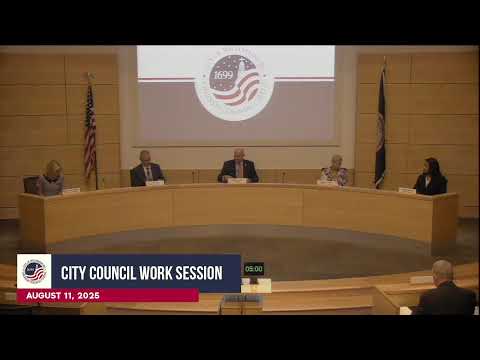
Williamsburg City Council on Aug. 11 heard broad community support for replacing the downtown Williamsburg Library and received detailed findings from a library evaluation committee and architects, who said the recommended project would replace the existing facility and proceed to an initial design phase.
Williamsburg City Council on Aug. 11 heard broad community support for replacing the downtown Williamsburg Library and received detailed findings from a library evaluation committee and architects, who said the recommended project would replace the existing facility and proceed to an initial design phase. City staff and the committee said the project estimate has increased from a previously budgeted $20 million to about $26 million.
Supporters told the council the library serves multiple generations and diverse users and said accessibility, programming space and updated infrastructure justify a new building. "A library is a really great window into our community's values," resident Amy Quirk told the council, describing the downtown library as one of the city's most diverse public spaces.
The evaluation committee, which included representatives from City Council, library staff, the Williamsburg Regional Library Board of Trustees and the Friends of the Library, presented survey and public-input results collected in May. Committee chair Nina Simone said the current building "has reached the end of its lifespan" and that population growth and modern library practices require flexible, accessible space. The committee recommended entering a phase‑1 interim agreement with the project team to continue public engagement and advance design work.
Architect Michael Schneckser of Tymof Moss Architects summarized the public outreach: two in‑person sessions drew about 250 attendees and an online survey and other virtual responses produced roughly 600 additional responses for a total of about 850 public responses. Schneckser said respondents favored flexibility, improved parking and a mix of traditional and modern architectural elements. The committee and library staff recommended a program that would replace roughly 42,000 square feet of existing library space with a new 40,000‑square‑foot library and an additional 10,000‑square‑foot theater.
Speakers who use the library for children's programs, teen and family services, makerspaces and other services stressed that renovations to the existing structure would not fully solve accessibility and layout problems. City staff and the committee cited a 2018 architectural assessment by RRMM Architects that concluded a renovation would cost roughly as much as rebuilding while failing to address core issues such as Americans with Disabilities Act (ADA) deficiencies, elevator access and an inefficient, piecemeal layout.
Not all commentary was only supportive. Resident David Cranbiel said he supports substantial investment in the library but criticized the project's public process, saying some key committee decisions and reports were not shared early enough with the community. Cranbiel said he would support $20 million and was open to additional public discussion and transparency on alternatives and funding before the council moved ahead.
Council members asked staff and the committee to provide additional information before taking a formal vote. Specific requests included a clearer breakdown of what would be cut if the project were scaled back to the previously budgeted $20 million, details on the regional operating agreement among the partner jurisdictions and how a proposed James City County branch (a separate 25,000‑square‑foot project) would affect usage patterns at the downtown site. City staff said the longstanding regional cooperative agreement dates from the late 1970s and that the interjurisdictional operating contract (noted in the record as last updated in 2012) is under review; staff told council leaders that jurisdictional partners are engaged in ongoing discussions about any adjustments.
Council had no final vote on the library during the Aug. 11 meeting. Instead, members asked the library team and city staff to return with additional cost‑tradeoff scenarios, what program elements would be lost under a $20 million cap, and clearer language on the regional operating agreement and partner contributions. The council then moved on to a presentation from the city's financial advisor on the municipality's overall debt capacity and options for financing the project.
Davenport & Company provided an overview of Williamsburg's debt profile and its capacity to absorb additional borrowing. The firm summarized recent credit‑rating commentary saying the city enjoys strong ratings and a sizeable unassigned fund balance, and it noted that staff and the bond agencies factored the library borrowing into their prior analysis. Davenport's presentation said that while the proposed library borrowing would increase the city's debt payments over the coming years, the increase was within the city's self‑imposed policy limits and the city's reserves and revenue profile give it capacity to manage the project. The advisor and staff agreed to return with financing scenarios that would show the tax‑rate equivalent, amortization lengths and other options for council consideration.
Councilors and city staff emphasized timing and next steps: the body will not take an immediate vote, but will expect a follow‑up package that includes (1) an itemized list showing what program elements would be omitted to reach a $20 million target, (2) proposed changes or safeguards in the regional operating agreement, and (3) financing scenarios that translate borrowing into tax‑rate equivalents and other funding options. The council then moved on to other agenda items.
The meeting recorded formal procedural votes on unrelated items (entry into and certification of a closed session, and adjournment). No final authorization to begin construction or permanent financing for the library was taken at the Aug. 11 meeting; councilors directed staff to return with the clarifications requested before any formal action on the project.