Lifetime Citizen Portal Access — AI Briefings, Alerts & Unlimited Follows
Statement says BARDA is beginning to terminate 22 mRNA vaccine contracts; agency cites limits of mRNA for respiratory viruses
Loading...
Summary
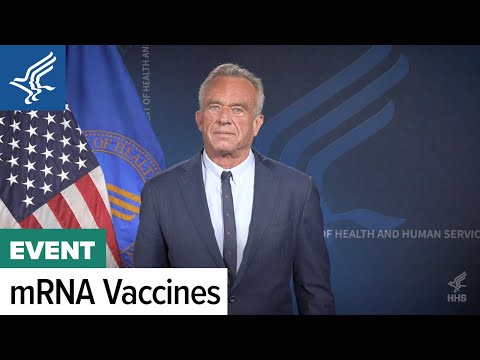
A recorded statement that identified the speaker as Robert F. Kennedy Jr., calling himself "your HHS secretary," said the U.S. Department of Health and Human Services' Biomedical Advanced Research and Development Authority (BARDA) has reviewed 22 mRNA vaccine development investments and begun the process of terminating the contracts.
A recorded statement that identified the speaker as Robert F. Kennedy Jr., calling himself "your HHS secretary," said the U.S. Department of Health and Human Services' Biomedical Advanced Research and Development Authority (BARDA) has reviewed 22 mRNA vaccine development investments and begun the process of terminating the contracts.
The statement said BARDA's review covered mostly influenza and COVID-19 vaccine projects and that the contracts totaled "just under $500,000,000." It said HHS consulted experts at the National Institutes of Health and the Food and Drug Administration before reaching its decision and that the agency will prioritize "safer, broader vaccine strategies, like a whole virus vaccines and novel platforms that don't collapse when viruses mutate."
Why it matters: BARDA is the HHS component that funds advanced development of vaccines and medical countermeasures. An announced termination of multiple BARDA-funded mRNA development efforts and a shift in platform priorities could affect ongoing research programs, industry partners and future federal investments in respiratory-virus vaccines.
The recording laid out the rationale in technical terms. It asserted that mRNA vaccines typically "code for a small part of the viral proteins, usually a single antigen," and said a single mutation can render such vaccines ineffective. The speaker described this dynamic as driving "a phenomena called antigenic shift," and said it can "paradoxically encourage new mutations" and "prolong pandemics as the virus constantly mutates to escape the protective effects of the vaccine." The statement referenced the Omicron variant as an example in which vaccinated people were infected despite prior vaccination.
The statement also put the decision in financial terms: "After reviewing the science and consulting top experts at NIH and FDA, HHS has determined that mRNA technology poses more risk than benefits for these respiratory viruses. That's why after extensive review, BARDA has begun the process of terminating these 22 contracts totaling just under $500,000,000." The recording concluded, "Let me be absolutely clear. HHS supports safe, effective vaccines for every American who wants them."
What the record shows and what it does not: The recording presents an agency position and cites consultations with NIH and FDA, but it does not identify which specific contracts will be terminated, the names of contractor partners, the precise dollar amount per contract, the legal or contracting steps to be taken, or a timeline for terminations and reallocation of funds. The recording also states a scientific interpretation of how mRNA vaccines interact with viral mutation; the statement attributes that interpretation to the recording's speaker and to unspecified consultations with NIH and FDA rather than to peer-reviewed evidence in the record.
Next steps and context: The statement says BARDA will "prioritize" whole-virus vaccines and other platforms, but it does not provide a schedule for new solicitations, details about funding reallocation, or how BARDA will manage ongoing contracts while terminations proceed. The recording ends with the line, "Produced by the US Department of Health and Human Services."